
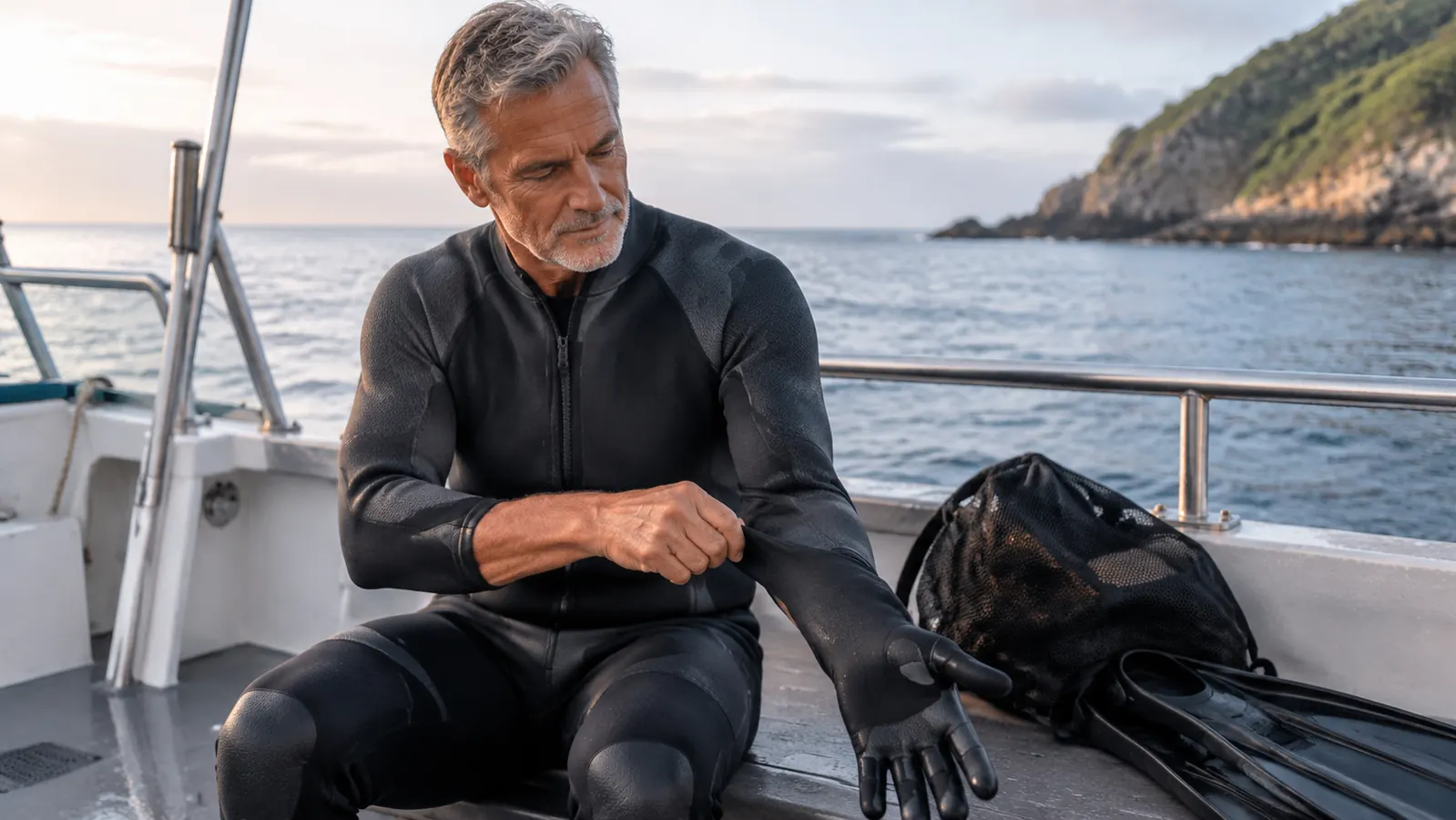
I bought my XUKER gloves in the spring of last year, in the same order as a mesh duffle, a pair of boots and a dive light, because the old bag split on a charter boat deck and put half my kit in the scuppers. Eighteen months and about ninety dives later, they are still the pair that lives in my bag. That is the sum of my authority here: one pair, one diver, a lot of salt water and a rinse tub under the carport.
So when a dive buddy asked whether he should spend the extra money on Cressi Ultra Grip gloves or just buy a second pair of what I wear, I answered him in about ten seconds. Then I went home and wrote the answer out properly, because ten seconds hides the one place where the Cressi pair genuinely earns its keep.
The short version: the XUKER Water Gloves are the pair I would buy again, and the pair I recommend to anyone diving 20 to 60 feet in Florida water who wants gloves that do the job without a second thought. The Cressi Ultra Grip is the better glove in one specific job, which is holding onto something slimy while it tries to get away from you. If your diving is mostly anchor line, pipe and rail, pay for the Cressi. If it is ladders, rough limestone entries and digging in sand, the XUKER pair does the same work for less money, and the difference buys you a second thickness.
| XUKER Water Gloves | Cressi Ultra Grip | |
|---|---|---|
| Cost to put a pair in your bag | Less, so a spare pair or a second thickness is realistic | Costs more, so most divers buy one pair and look after it |
| Palm grip on slime and line | The listing describes no grip panel | The grip palm is the whole reason the glove exists |
| Thickness choice | 3mm and 5mm in the same glove | Depends on the model, so read the listing |
| Getting the fit right | Size chart and a range from XS to 2XL | Dive shop staff and a pair you can pull on first |
| Seams | Glued and blind stitched | Not spelled out on the listing I read |
| Wrist closure | Hook and loop | I cannot judge a cuff from a shop counter |
| Care | Hand wash only | Hand wash, like every neoprene glove |
| Best for | Ladders, limestone entries, sand hunting, warm water | Anchor line, pipe and rail, anything slimy |
How I Compared Them
One thing to get out of the way: I own the XUKER pair and I do not own the Cressi. I have handled the Ultra Grip on a shop counter in Key Largo, turned it over, made a fist in it and read the listing twice. Everything I say about it comes from that, plus the published specs. I would rather tell you that up front than write a comparison that sounds like I have dived both when I have not. There is enough of that on the internet already.
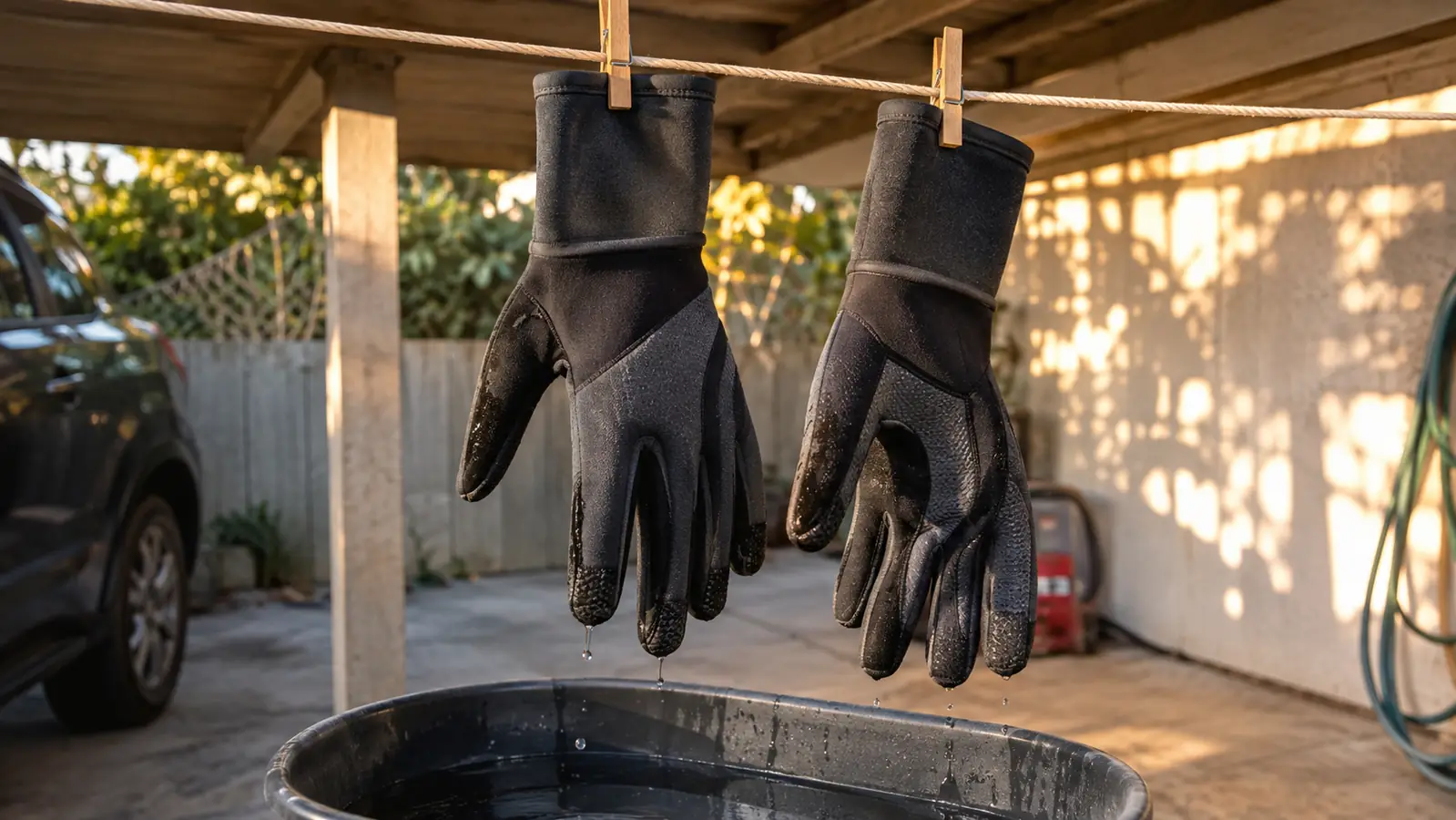
What I can report first hand is about ninety dives on one pair of XUKER 3mm gloves over eighteen months: charter boats out of Tavernier, shore entries over rough limestone, night dives on guided trips, and sand hunts at public beaches where the rules allow it. They get rinsed in the tub under the carport after every dive and dried on the line. That routine is part of why they have lasted, and I would be lying if I left it out of the count.
Where XUKER Wins
Money is the first place, and I am not going to be shy about it. The XUKER pair costs less than the Cressi, which means a diver can own both the 3mm and the 5mm and still be out less than one premium glove. I dive the 3mm from November through April and on any rough entry the rest of the year. If I were heading north to colder water, I would add the 5mm rather than squeeze into a 3mm and be miserable by the end of the first dive. Two pairs of a decent glove beat one pair of a better glove in the wrong thickness.
Sizing is the second place, and it matters more than people admit. The XUKER runs from XS to 2XL. My hands are not large, and I have spent years in gloves cut for hands bigger than mine, gripping fabric instead of anything solid. A glove that fits is a glove that works. A small-handed diver, or a woman shopping this category, has a real range to pick from here instead of hoping a men's small is close enough.
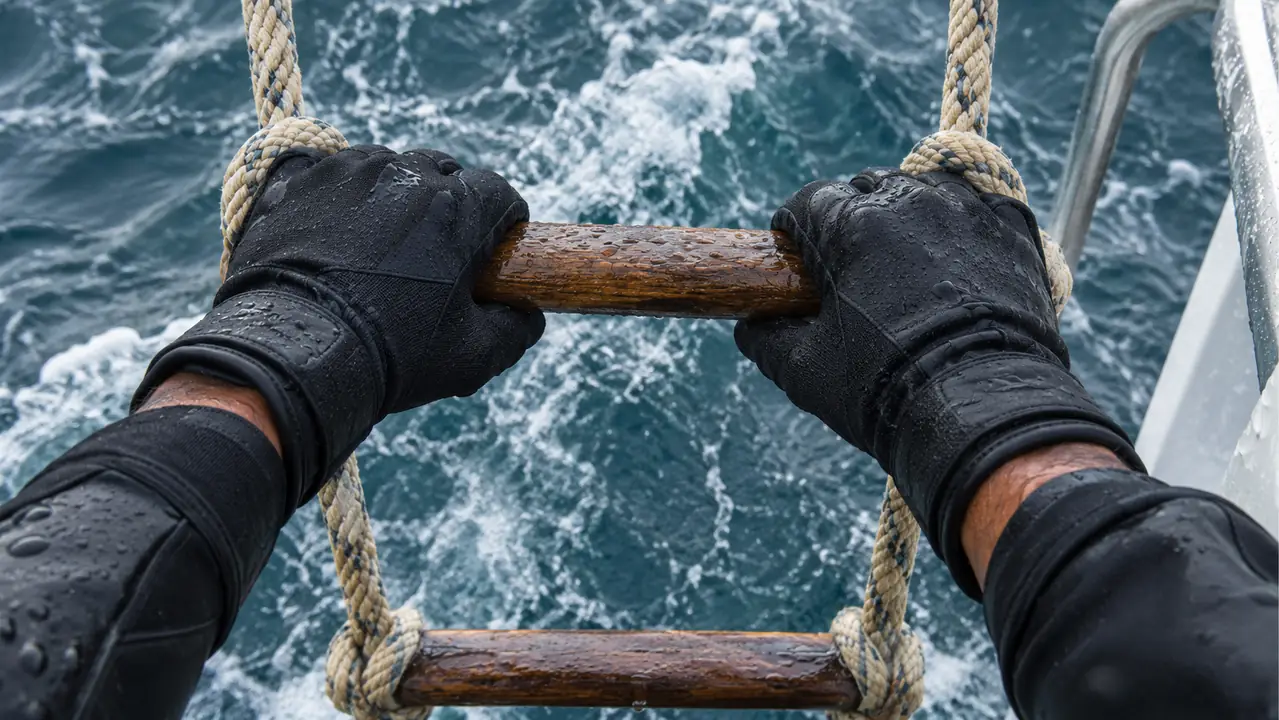
The third is the cuff. The closure is hook and loop, and on a wet ladder that is exactly what you want, because pulling yourself up a rung with a loose cuff will peel a glove off your hand at the worst possible moment. Mine still grabs after eighteen months of salt water and sand. It also collects sand, which I will get to.
The fourth is the cut. The listing calls it pre-shaped and ergonomic, which sounds like catalogue talk until you put them on. The fingers are curved slightly instead of lying flat, so making a fist around a rung or a detector handle is not a fight. The pair is listed at 3.2 ounces, and they fold flat into a mesh bag pocket, which is why they live in the bag all year instead of in a box at home.
Where Cressi Wins
Grip, and I want to be straight about what that means. The Ultra Grip exists because a smooth neoprene palm is a poor handhold on wet rope, on pipe that has grown a coat of algae, and on the rail of a wreck. That grip palm is the reason the glove carries the name, and it is the one thing the XUKER pair does not offer. The XUKER listing describes no palm panel at all. On a ladder rung or in the sand, it does not matter. On a rope that is slick and moving, it does.
The second place Cressi wins is the shop counter. You can walk into a dive shop, pull a pair on, make a fist and see whether the fingers are right for your hand before you commit to anything. That is worth more than any spec sheet, and it is why plenty of divers never switch brands. I have handled the Ultra Grip. I have not dived it. My opinion on that side of the table comes from ten minutes of handling and a careful read of the listing, and it should be weighed as exactly that.
The third is the support that comes with an established dive brand. Cressi has been at this a long time, and a shop that sells the glove will usually have the next size up in the back if the first one is wrong. That is not a small thing when you are three days out from a trip and the glove in your hand does not fit. There is also a trade-off with any grip palm: texture you can feel through the glove is texture that dulls your fingertips a little when you are working a mask strap buckle with cold hands. Neither design is free of compromise.
Buy the thickness you actually dive, not the one somebody else dives
XUKER lists the same glove in 3mm and 5mm, in sizes XS through 2XL, with glued and blind stitched seams and a hook and loop cuff. My 3mm pair has about ninety dives on it. Check the size chart before you order and rinse them after every dive.
Amazon Check Today's Price on Amazon →The Details That Decide It in Salt Water
Glued and blind stitched is the phrase to look for, and the XUKER gloves are built that way. What it means in practice is that the seam is glued and then stitched without punching a line of holes straight through to the inside. No row of pinholes for water to work through, no thread ends to fray against the inside of your wrist. On my pair, the seam at the base of each thumb is still closed. That is the joint that goes first on a cheap glove, because it takes the load every time you close your hand around a rung.
Hook and loop is both the best and the most irritating part of the design. It holds the cuff shut when you are pulling yourself up a ladder in a chop, and it picks up sand the way a magnet picks up filings. Rinse it, work the sand out with a fingernail, and let the cuff dry open rather than folded shut. Closed and wet is how a glove starts to smell like a bait bucket.
The 3mm is a warm water glove and I will not sell it as anything else. January water here runs about 71 degrees, and at the end of a 45 minute dive my hands are cool but still working. If you are diving in the fifties, the 3mm will not save you and the 5mm is the one to buy. A glove is not a substitute for a thicker suit, and I have never understood divers who try to make it one.
The material is listed as 90 percent neoprene and 10 percent nylon, hand wash only. Hand wash means hand wash. Fresh water, a little soap if they have gone ripe, dry them out of direct sun on the line under the carport, and never leave them balled up in the bag for a week. My pair has been rinsed after every single dive and has not delaminated anywhere.
The seam at the base of each thumb is still closed after about ninety dives, and that is the joint that goes first on a cheap glove.
What Ninety Dives Did to My Pair
The honest wear report. The neoprene has softened across the knuckles. The cuff has stretched just enough to go on easier than it did in month one. The hook and loop still grabs. There is a stain across the palm that rinsing will not lift. No split seams, no missing stitching, no hole in a fingertip, which is where I expected the first failure. The only thing that has actually degraded is my own discipline about drying them.
The one thing I would change is the palm. Digging in sand is fine, because sand is gritty enough to hold onto. Pulling myself along an anchor line in a chop is where I notice the missing grip panel, and I have had the line slip a hand's width more than once while wearing these. That is not a defect. It is the limit of the design, and it is the exact limit the Cressi pair was built to remove.
They also stink if you forget them. Mine went into the bag wet after a night dive and stayed there three days in July. Two rinses and a day on the line sorted it out. That is a user problem rather than a glove problem, but it is the sort of thing worth knowing before you buy your first pair of neoprene gloves and treat them like cotton work gloves.
What I Liked
- Glued and blind stitched seams that have held for about ninety dives
- The same glove in 3mm and 5mm, so you can match the water you dive
- Sizes from XS to 2XL, which covers small hands properly
- Hook and loop cuff stays put on a wet ladder
- Folds flat and packs light at 3.2 ounces
Where It Falls Short
- No grip panel on the palm, so a slimy line is a negotiation
- Hand wash only, and they will smell if you leave them wet in the bag
- The cuff picks up sand and needs working out
- The 3mm is a warm water glove and nothing more
What Neither Glove Will Do
Neither of these will keep your hands warm in cold water, because no 3mm glove will. Neither will protect you from a sea urchin spine driven in at an angle, and neither is a reason to put a hand on living reef. I do not touch coral, gloves or no gloves. Mine are for ladders, lines, rough limestone entries and digging in sand, and that is the whole job description.
Neither glove replaces a knife, a cutting tool or a bit of sense about where you put your hands. A glove buys you protection from abrasion and a little warmth. It does not buy you grip on everything, and it does not make a wet rope behave. If a line is moving fast enough to peel a glove off, the answer is a better hold or a different plan, not a thicker palm.
Who Should Buy Which
Buy the XUKER if you are a recreational diver working 20 to 60 feet, if your water is warm for most of the year, if you want a spare pair or a second thickness without it being a decision you have to think about, or if you dig in sand and want your hands protected from shell and rubble. It is also the pair I would put on a new diver, because the fit range is wide and replacing a lost glove does not wreck the trip budget.
Buy the Cressi Ultra Grip if grip on slime is the specific thing that has been letting you down, if your diving is line and pipe and rail, or if you have hands that never fit a mail order chart and you want to pull a pair on first. It is a serious glove made by a serious brand. It is also one pair for the money, so buy it for the job it does rather than as a general purpose glove you wear for everything.
If you travel once or twice a year and dive locally the rest of the time, the two-pair answer is the one that has worked for me. The 3mm goes in the bag for home water. The 5mm goes in the duffle for the trip. You will spend less than one premium pair and you will never be the diver on the boat trying to force a cold hand into a glove that was never meant for the water you are in.
Gloves are the cheapest piece of gear you own and the one you notice most when they fail, because the failure happens with your hand on a ladder in a chop. Buy the pair that fits the diving you actually do, not the diving you read about. For most of the divers I know in the Keys, that is the XUKER pair, and mine goes back in the bag again this weekend.
Start with the 3mm and add the 5mm when the water turns
Same glove, two thicknesses, XS through 2XL, glued and blind stitched with a hook and loop cuff. Read the size chart before you order, and rinse them in fresh water after every dive.
Amazon Check Today's Price on Amazon →