
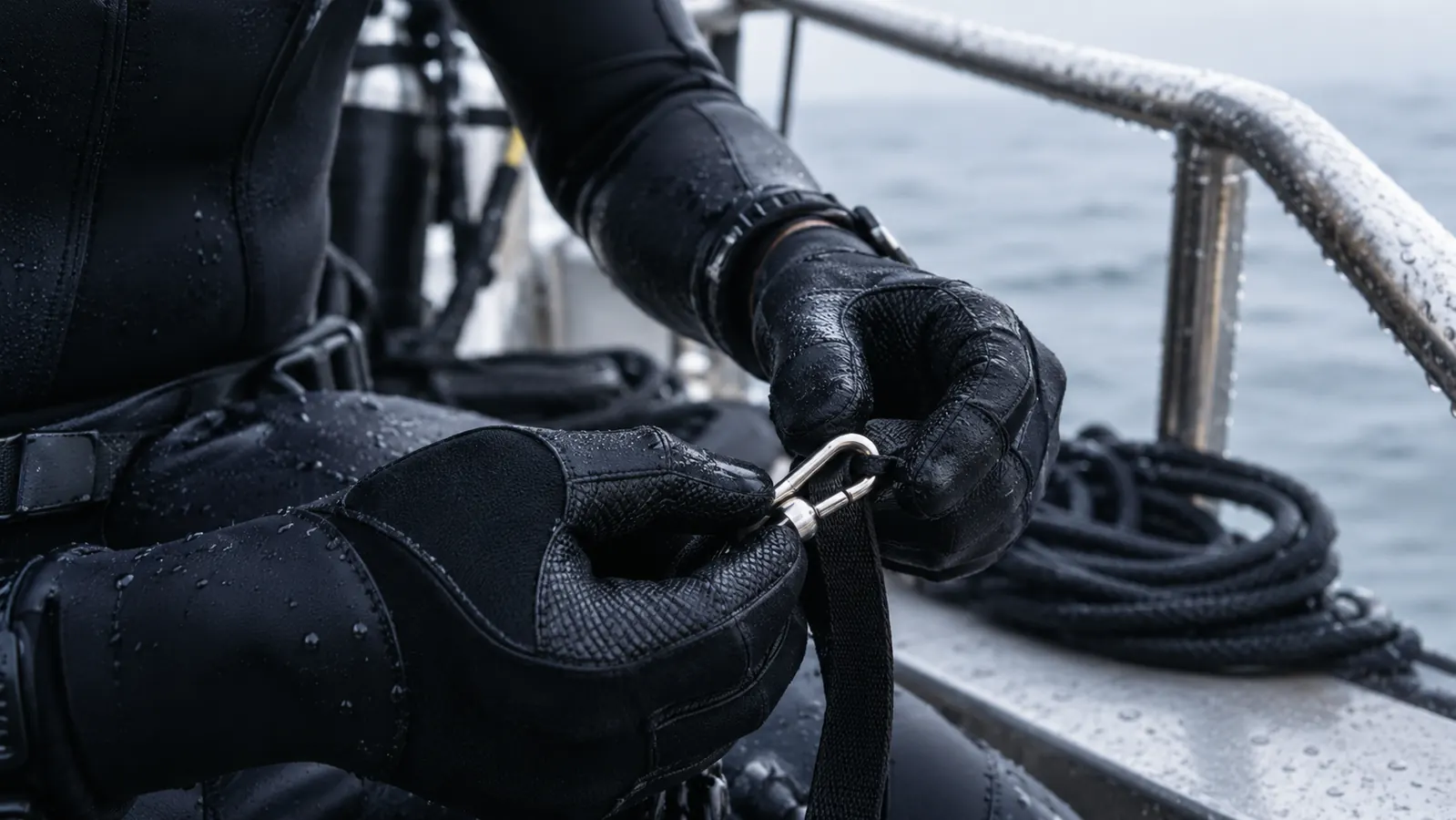
I bought my XUKER gloves in the spring of last year, in the same week I bought four other pieces of gear, after the mesh bag I had carried since my Open Water class finally split down the seam. Eighteen months and about 90 dives later, they are still the pair I reach for on the shelf.
Here is the part people get wrong about cold water. It is not really about the water. The water off Tavernier runs about 71 degrees in January, which sounds like nothing on paper. It is not nothing on your hands at minute 45. Once your fingers stop doing what you tell them, the dive is over whether you are ready for it or not. Before these, I used cotton work gloves, which hold water against your skin and make things worse, or bare hands, which is just a slow countdown. The 3mm neoprene pair fixed a problem I had been working around for years.
Your hands are the first thing to quit on a cold dive
The 3mm XUKER pair is what I wear from November through April, and on every rough entry or sand hunt the rest of the year. Check the current sizing and thickness on the listing.
Amazon Check Today's Price on Amazon →They buy you the last twenty minutes of a cold dive
At 61 I feel January water in my hands before I feel it anywhere else. My typical dive is 20 to 60 feet, 45 minutes to an hour. Bare-handed I can go about 30 minutes before my fingers stop cooperating, and a clip gets stubborn and a buckle will not release. With the gloves on I finish the dive with hands that still work. That is the whole argument in one sentence, and the other nine reasons are details underneath it.
Blind-stitched seams stop water pumping in and out
The listing says glued and blind stitched, and that phrase means something specific. On a cheap stitched-through glove, the needle goes clean through both panels, and every one of those holes is a tiny pump. Move your hand, water goes in. Move it again, water goes out, and each cycle carries your body heat away with it. Blind stitching joins the panels without punching through the outer layer. Mine have been in salt water about 90 times and the seams have not opened up or gone stiff.
Five separate fingers means you can still run a buckle
Five fingers sounds obvious on a glove. It is not obvious when you are buying for cold water. I have borrowed mitts and three-finger gloves from people who dive colder water than I do, and they are warmer, no argument from me. You also cannot thread a strap or flick a buckle with them on. These are pre-shaped with all five fingers separate, so I can run a fin strap, work a mask buckle and hold a light with the glove still on my hand.
Wet hands on a wet ladder is a bad combination
Charter ladders are wet. So are mooring lines, dock cleats and the handle of the rinse tub under my carport. The surface on these gloves grips well enough that I come up the ladder without thinking about it, and I have handed a fully loaded mesh bag up to a deckhand without the bag taking a swim. That sounds like a small thing until the one time it is not. A glove you cannot grip with is a glove you will pull off halfway up.
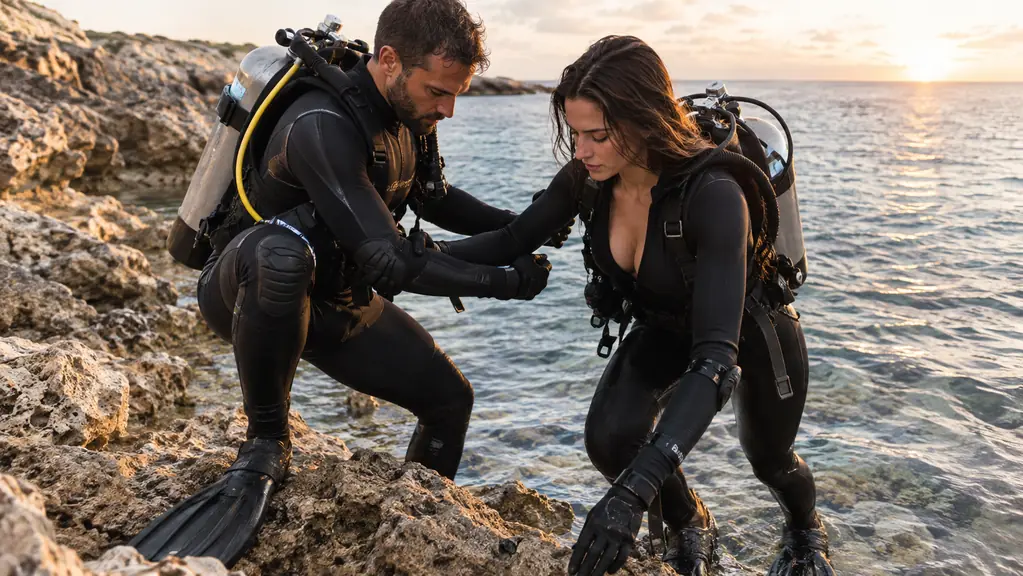
Limestone takes skin off a knuckle with no drama at all
I do my shore entries over limestone, and limestone is not smooth. It is pocked and sharp, and it removes a knuckle without any fuss whatsoever. I steady myself on the bottom on the way out and again on the way back in, and I have been doing that with these gloves on for a year and a half. Same story at the rough concrete by the boat ramp. I am not gentle with them and they have held up better than I expected for the material.
Sand hunting chews up bare hands
Five years now I have hunted lost metal in the sand, waist deep to about 30 feet, at public swim beaches and around docks and ramps where the rules allow it. Sand hunting means fanning, digging and reaching into places you cannot see. Bare hands come out scraped and stinging. These come out wet. I check the local rules before I go anywhere and I never take anything off a protected wreck or a sanctuary. Gloves do not change any of that, they just keep my hands intact while I follow it.
3mm for a Florida winter, 5mm if you feel cold more than I do
The listing covers both 3mm and 5mm. Mine is the 3mm, and for Florida that is the right call. It is what I wear from November through April, and on any rough entry or sand hunt the rest of the year. If you feel the cold more than I do, or you dive water in the fifties, get the 5mm and do not talk yourself out of it. What I would tell you is that thickness is not a substitute for fit. A thick glove that fits loose is colder than a thin one that is snug.
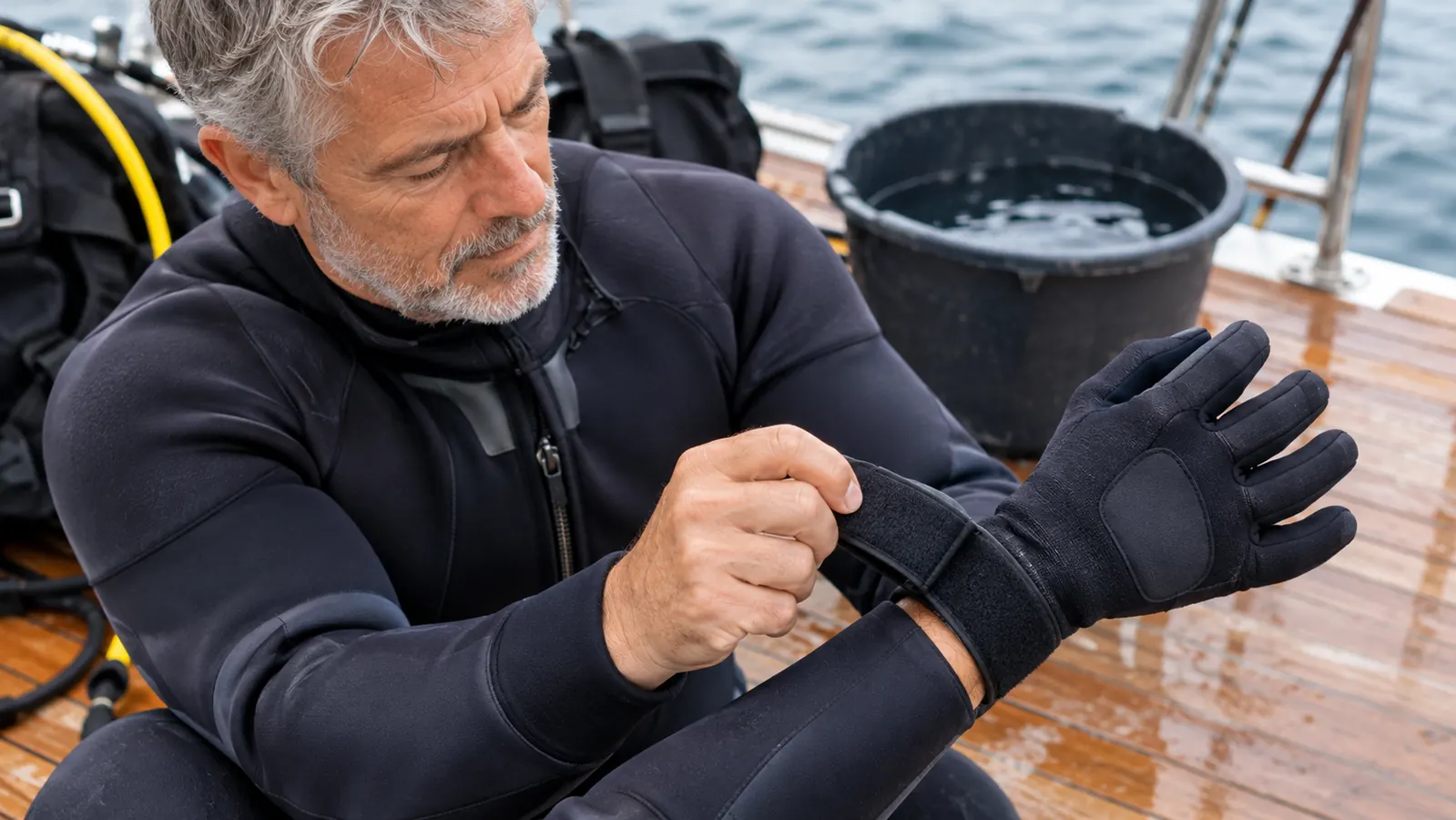
A cuff you can close one-handed on a moving boat
The cuff closes with hook and loop, and the reason that matters is you can do it with one hand. Pulling the second glove on with the first one already on is the whole trick. Get that cuff snug against the wrist or the glove fills with water on the first descent and stays full for the rest of the dive. That is the difference between a warm dive and a cold one, and it costs you about four seconds on the boat bench.
Light enough that you forget they are on
The pair weighs about 3.2 ounces, which is less than the cotton work gloves I used for years, and those were not keeping anything warm. Weight matters over a long dive because your hands are working the entire time, and it matters on the surface when you are carrying gear. Hand orientation is ambidextrous, so there is no left and right to sort out in a bag at six in the morning. You grab two and you go.
Sized XS to 2XL, which is the part most dive gloves get wrong
Sizing runs XS through 2XL, and that is not a small thing if your hands do not fit the one-size-fits-most approach a lot of dive gloves take. Fit is the whole game with neoprene. Too loose and it pumps. Too tight and it cuts circulation, which defeats the entire point of wearing it. Care is hand wash only, so mine get rinsed in the tub under the carport, squeezed out once and hung on the clothesline to dry. They have come back every time.
What I'd Skip
Skip the 5mm if you dive Florida year round and run warm. I have watched people buy the thickest glove on the shelf and then leave it in the bag because it is too much for 75 degree water. Skip the cotton work gloves entirely. I used them for years, they hold water against your skin, and in some ways they are worse than bare hands. Skip any glove that fits loose and hopes you will not notice, because you will notice at minute 35 and there is nothing you can do about it at that point except surface. And skip the idea that a glove makes it fine to put a hand on the reef. It does not. I do not touch coral with them on or off, and neither should you.
A glove that fits loose pumps water on every hand movement, and pumping water is the whole reason your hands get cold in the first place.
Ninety dives on one pair and they are still the ones I grab
Salt water, limestone, sand, and a rinse under the carport every time. The 3mm XUKER gloves have taken all of it without a seam letting go. Check the current price before your next cold dive.
Amazon Check Today's Price on Amazon →