
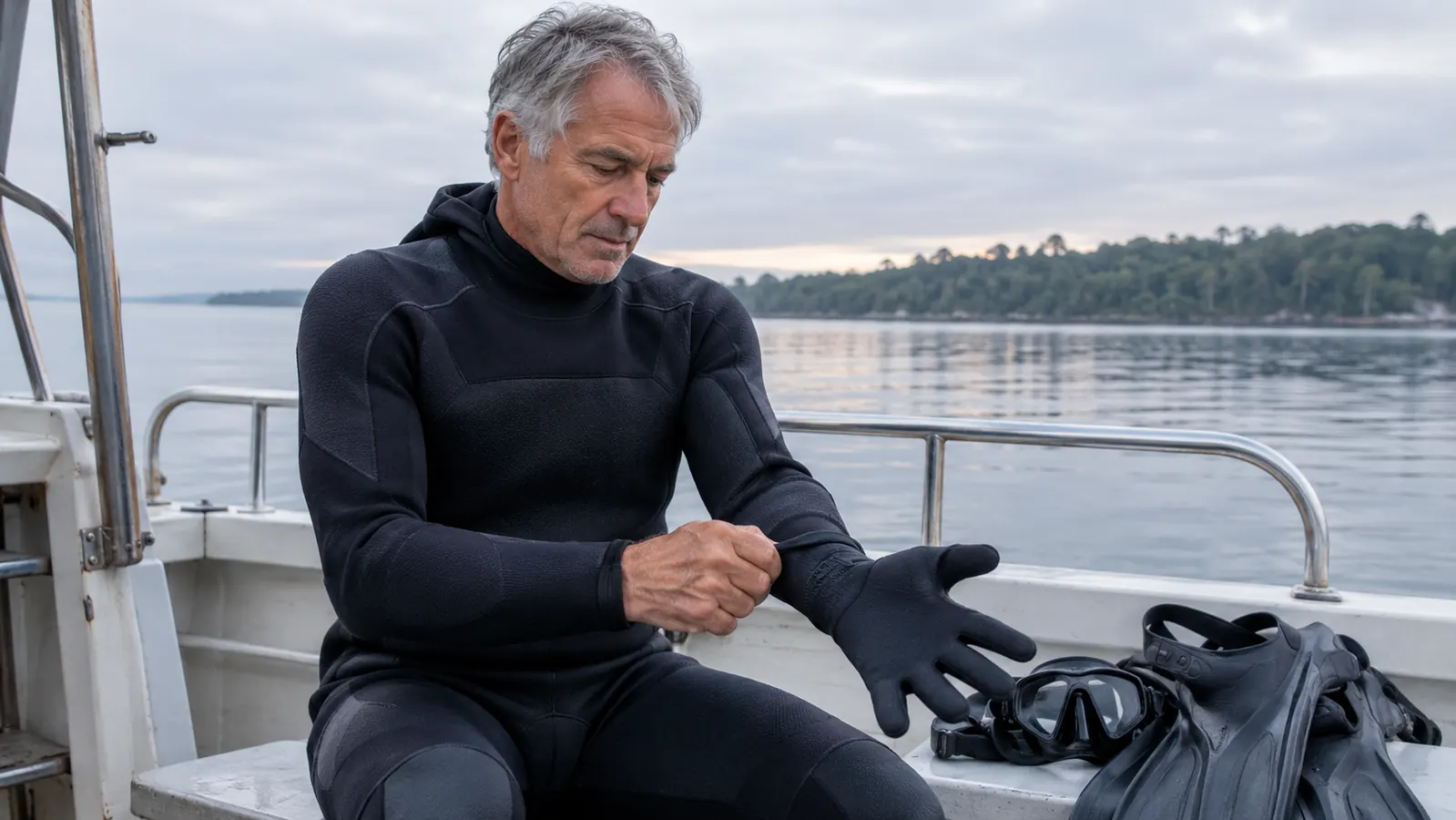
The water off Tavernier runs about 71 degrees in January. That reads comfortable on a page. It does not feel comfortable on a pair of 61-year-old hands twenty feet down, with a piece of brass boat hardware wedged under a rock and no feeling left in the fingertips.
I tried to solve that the cheap way for three winters. Cotton work gloves from the hardware store. They keep the sun off and nothing else. Four minutes in the water and they are soaked, an hour on the boat and they are stiff as cardboard, and the wet cotton sits against your skin holding the cold right where you do not want it. Cal watched me fight a fin strap with them one morning and told me to stop fooling myself.

So when my old mesh gear bag finally split down the seam, I rebuilt the whole kit in one go. Bag, boots, light, detector, and a pair of XUKER water gloves in the 3mm. That was about eighteen months and ninety dives ago. They have been wet every month since, and on every single dive from November through April.
The first time out with them was a night charter in February and I expected to spend the dive annoyed. I did not. Pulled them on dry on the bench, splashed in, and forgot about them by the time I reached the bottom.
The construction is not complicated, which is the point. 90 percent neoprene, 10 percent nylon. Glued and blind stitched seams, so the stitching does not run clean through to the inside where it would wick water against the skin. A hook and loop strap at the wrist closes the gap. Five fingers, pre-shaped so the hand sits slightly curled rather than flat. The listing puts the weight at 3.2 ounces, and that feels about right in the hand.
None of that is exotic. It is basic neoprene done properly, and the difference between done properly and done badly tends to show up around dive forty, not dive one.
Ninety dives in, the seams are still glued shut. The cotton pair did not survive ninety minutes in salt water.
The pair my hands have been in since November
The 3mm XUKER gloves are the ones I own and dive. The listing also carries a 5mm if your water runs colder than mine, and the sizes run XS to 2XL.
Amazon Check today's price on Amazon →What I actually use them for is less about warmth than people assume. The ladder on the back of a charter boat is wet aluminum with a little growth on the rungs. The shore entry down by the park is rough limestone. Bare hands slip on both. These do not, and at 61 that matters more to me than any thermal rating.
For the metal hunting they do a different job. Sand is abrasive, shell edges cut, and I spend a lot of time on my knees fanning silt away with the PulseDive in one hand. I want a barrier on the other hand, not a second skin. The 3mm is thick enough for that and still thin enough that I can feel the edge of a coin before I start digging at it.
I expected to fight them on the small stuff and I do not. I can work the clip on my detector lanyard, thumb the switch on my light, and clear my mask without pulling a glove off. That is the whole test for a dive glove as far as I am concerned.
Here is what they do not do. They are not dry gloves. Water finds its way in at the wrist no matter how snug you pull the hook and loop strap. Once your hands are wet inside, the neoprene slows the chill down, it does not stop it. On a February charter I come up with numb fingertips somewhere past the forty minute mark. The gloves buy you time. They do not buy you warm hands.
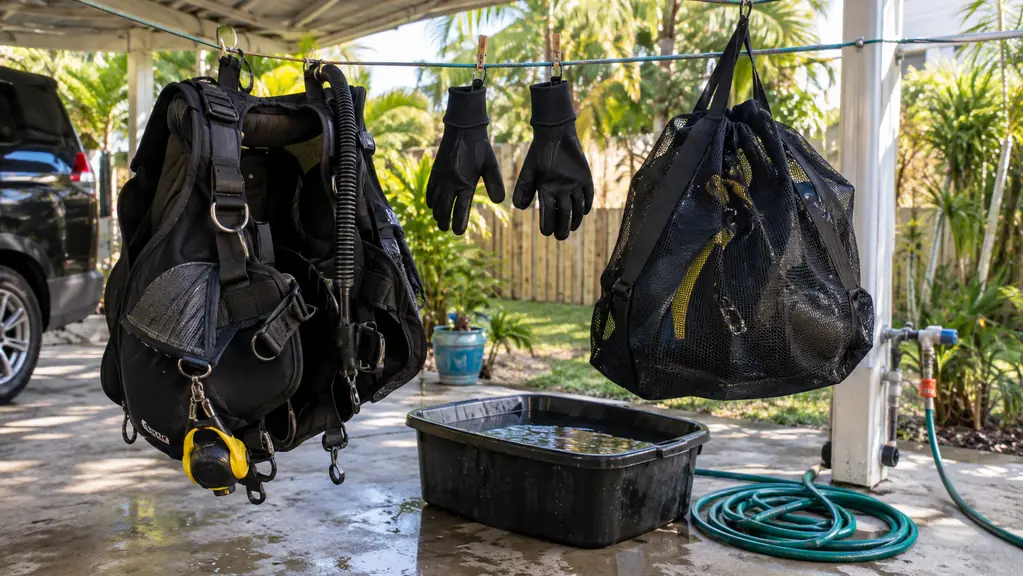
Care is simple. Hand wash only, per the maker, and mine get rinsed in the tub under the carport and hung on the line with the rest of the gear. They have not gone stiff, they have not lost their shape, and there is no split seam yet. That is more than the mesh bag managed.
One plain warning about fit. Too loose and you get a fold across the palm that rubs raw by the second dive. Too tight and your hands ache before the dive does. The pre-shaped cut is forgiving and the sizes run XS to 2XL, but with neoprene the fit is the whole game. Measure your hand, do not guess.
Two more things I would want to know. They are ambidextrous, so there is no left and right to sort out in the dark on a moving deck when the boat is rolling. And they dry fast enough that a morning dive and an afternoon dive are not a problem, which is not true of anything made of cotton.
What I'd Tell You If We Were Sitting at My Kitchen Table
I would tell you a pair of gloves will not fix cold water. It takes the edge off, it keeps your palms off the rough stuff, and it buys you maybe fifteen or twenty extra minutes of fingers that still do what you ask. If that is the deal you want, the XUKER pair has delivered it for ninety dives and I have not had to think about them since. If what you want is genuinely warm hands in January, you are shopping for a drysuit and a much heavier glove, and that is a different purchase and a different conversation. Do not buy a 3mm glove expecting it to be something it is not.
And check the rules where you dive before you go poking around in the sand with your hands. That has nothing to do with gloves and everything to do with staying out of trouble.
Ninety dives in, still the pair I reach for
3mm for water like mine, 5mm if yours runs colder. Hand wash only, so rinse them in fresh water and hang them to dry.
Amazon See the XUKER gloves on Amazon →