
Gloves are the piece of dive gear I replace more often than anything else in the bag, and usually for dull reasons. A seam opens at the finger crotch. The wrist strap goes fuzzy and stops gripping. The neoprene stiffens up and quits doing the one job it had. About 18 months ago I bought a pair of XUKER water gloves in the 3mm cut, mostly because my old cotton work gloves were soaking up water on the boat and were still wet two days later. I have worn them on roughly 90 dives since, from charter boats out of Tavernier and from shore entries up and down the Keys. What follows is the honest version, including the parts the product page leaves out.
One thing to get straight first. Nobody sent me a free pair to talk about, and I am not on anybody's list. I am 61, I dive inside recreational limits, and I care about whether gear survives salt water, sun and being stepped on in a gear crate. I am not going to tell you these are the finest gloves ever made, because I have not worn every glove ever made. I can tell you what 18 months of real use did to this pair, and where the design shows its limits.
The Quick Verdict
A well-built 3mm glove that keeps your hands working in cold water and shrugs off ladders, lines and limestone. The wrist closure is the weak point, and the fit is generous rather than precise.
Amazon Check Today's Price →The pair I reach for from November through April
3mm neoprene, glued and blind stitched seams, hook and loop wrist closure, sizes XS through 2XL. Check today's price and the size chart before you order, because the palm runs generous.
Amazon Check Today's Price on Amazon →What This Review Is and Is Not
You can read the spec sheet anywhere. The gloves are 90 percent neoprene and 10 percent nylon, they are listed at 3.2 ounces, the seams are glued and blind stitched, the wrist closes with hook and loop, and sizing runs from XS to 2XL. What a spec sheet cannot tell you is which of those numbers still matters after the fortieth dive and which ones are there to fill out a bullet point. That part I can speak to, because I have been in the water in them.
The other thing worth saying up front is that these are wet gloves, not dry gloves. Water comes in at the wrist. The neoprene traps a thin layer against your skin and your body heats it, and that is how every wetsuit glove on the market works. It is not a defect. It does mean the first thirty seconds of a January dive are cold no matter what the packaging claims, and anybody who tells you otherwise has not done a January dive.
How I Have Actually Used Them
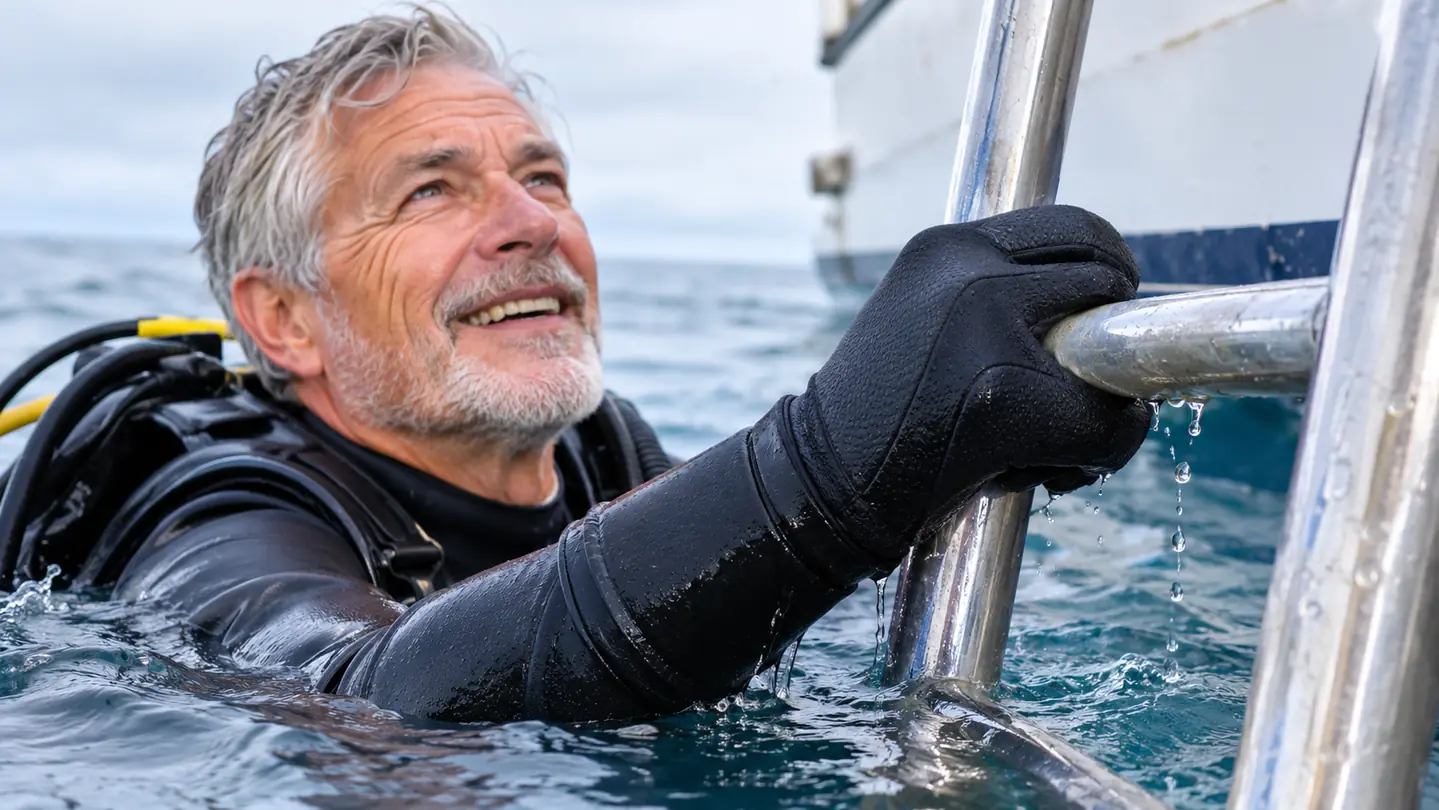
My diving is unglamorous. I am on a charter boat most weekends, I work between 20 and 60 feet, and I spend a fair amount of time on sand bottoms hunting lost metal with a pulse induction detector. Gloves earn their place in my bag for three jobs: holding a ladder rung when the boat is rocking, grabbing a line or a mooring, and pushing a hand into sand and limestone rubble without coming up bleeding. Everything else is a bonus.
I wear the 3mm pair on every dive from November through April, when the water at home sits around 71 degrees in January and I feel every degree of it. From May through October they stay in the bag until I need them for a rough entry, a night dive, or a hunt where I expect to be digging. That works out to a little over 90 dives on this pair in 18 months, plus a lot of hot afternoons on docks where the limestone gets too warm to kneel on.
They went on easily from the first dive. There was no break-in worth describing, which I would normally not bother mentioning, except that a stiff neoprene glove is miserable for the first three dives and these were never stiff. That tells you something about how the material was cut and finished, and it is the reason I stopped carrying a backup pair in the crate for the first four months.
Ninety dives in, the seams are still closed and the wrist straps still grip. That is most of the review, honestly.
Fit: Ambidextrous Sounds Like a Marketing Word Until You Use It
The listing calls the hand orientation ambidextrous, which means there is no left glove and no right glove. I expected to dislike that. I wore handed work gloves for 33 years on boats and I assumed a symmetrical cut would put the thumb in the wrong spot and rub a blister by the second dive. It did not. The five finger pattern on the XUKER glove is pre-shaped with a slight natural curl, so the glove sits on a relaxed hand instead of lying flat like a mitten.
The real benefit shows up on the boat, in the dark, with cold hands and a bag full of wet kit. You do not have to sort them. You grab whichever one is on top and it goes on. If one develops a problem, the spare in the crate is not a left when you need a right. For a diver my age doing this at six in the morning, that is worth more than it sounds like it should be.
Sizing is the part to slow down on. The gloves come in XS through 2XL and the cut is generous through the palm. My hands are about average for a man my size and I did not need to go up a size, but the palm has room in it. A diver between sizes has a real decision. Snug means warmer and less water sloshing around your fingers. Loose means easier to strip off with cold hands on a rolling deck. I would not go up a size to be comfortable, because a loose neoprene glove is a cold neoprene glove.
Warmth: What 3mm Really Buys You
Three millimeters is not much insulation. In 71 degree water I am comfortable for a 45 minute dive and I am starting to notice my fingertips on the second dive of the day. In water around 66 degrees, which is what you find on some of the deeper wrecks in February, I am glad of them for about 30 minutes and then I am ready to be on the boat. That is not a flaw in these gloves. That is what 3 millimeters does, and any honest review of a 3mm glove will tell you the same thing.
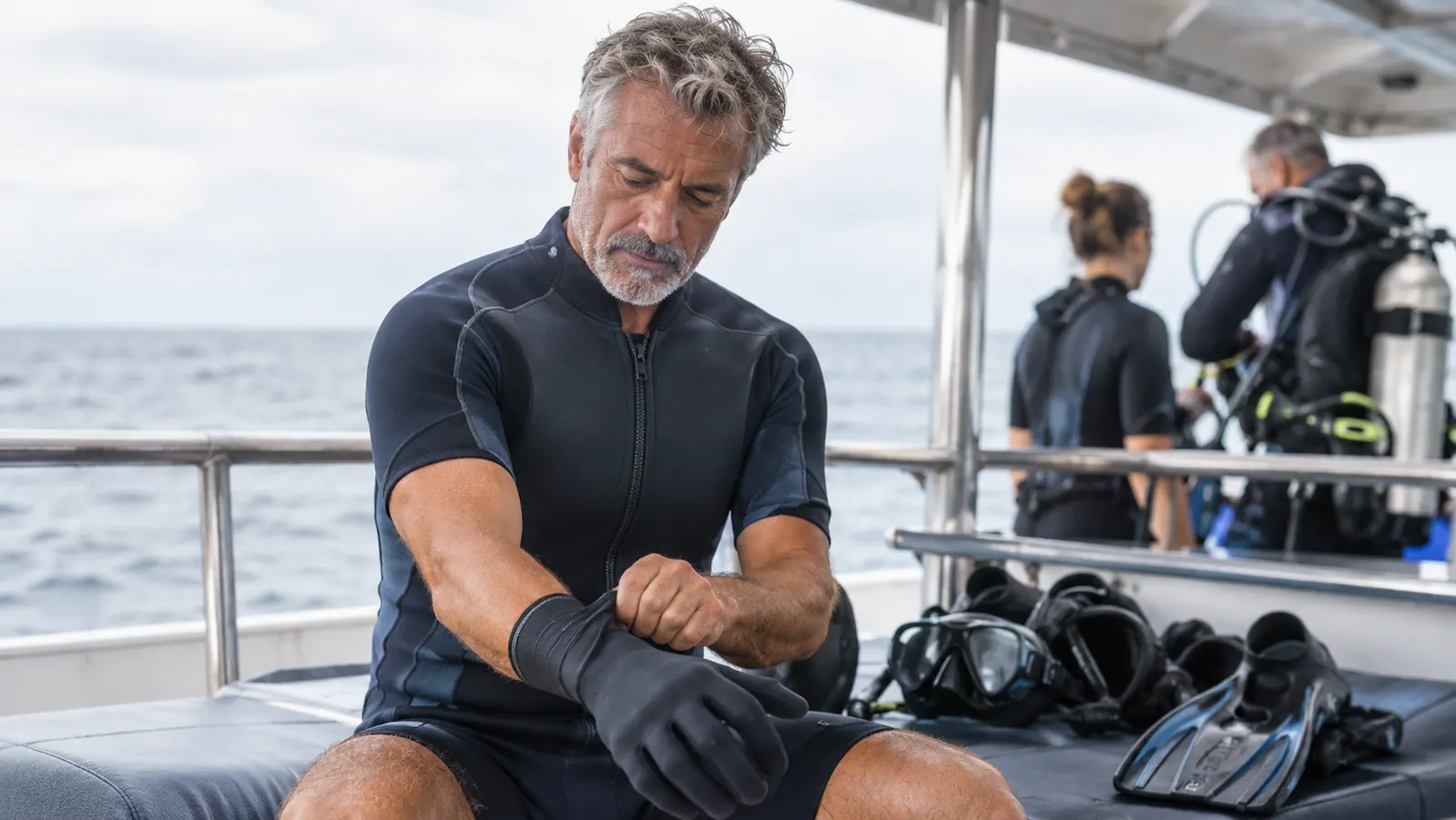
Where they earn their keep is the wind. Coming up a ladder with wet hands into a 15 knot breeze is what actually ruins a dive day, and a wet glove with a snug wrist is a completely different experience from a bare hand or from a cotton glove that stays soaked for hours. The hook and loop closure lets you pull the cuff down over a wetsuit sleeve, which cuts the cold flush that happens every time you flex your hand. It is not a dry seal. Nothing at this level is. It is enough to keep you functional.
There is also a 5mm version in the same XUKER line. I have not worn it and I am not going to pretend I have. If your water runs in the low 60s, or you run cold the way my dive buddy Cal does, 5mm is the sensible buy and I would not argue with you. For the Keys in winter, 3mm is the right weight. A 5mm glove down here leaves my hands tired from fighting the material by the end of a two tank trip.
What I Liked
- Glued and blind stitched seams, which is the construction that keeps a glove from splitting at the finger crotch
- Ambidextrous cut, so there is no left and right to sort on a rocking boat with cold hands
- Hook and loop wrist closure snugs down over a wetsuit sleeve and cuts the cold flush
- 90 percent neoprene and 10 percent nylon, and the nylon facing slides under a cuff instead of grabbing it
- Sizes XS through 2XL, which covers smaller hands as well as large ones
- Light enough to forget in the bottom of a mesh bag and quick to hang on a line
Where It Falls Short
- Hand wash only, so they never go in the machine with the rest of the kit
- The seams are glued and blind stitched but not taped, and pulling a glove off by the fingers is how you eventually lose one
- The hook and loop strap collects lint, mesh fuzz and sand, and needs a fresh water rinse after every trip
- Dexterity is limited. Buckles, small clips and knots are a two hand job with these on
- The first minute of a cold dive is cold, and wet gloves do not change that
- The palm runs generous, so a diver between sizes has to make a judgement call
Durability After 18 Months and About 90 Dives
Here is the part that decides whether a glove was worth buying. The seams are still closed on both gloves. The glued and blind stitched construction has held at every finger crotch, and those are the first places a cheap glove goes. The nylon facing has not gone slick or baggy, and the neoprene has compressed a little across the palm, which is normal and does not affect warmth. What has aged is the hook and loop closure. The strap still grips, but it has picked up fuzz and a few grains of sand that no amount of rinsing fully removes.
The wear pattern is telling, though, and it is a direct result of the ambidextrous design. Because either glove fits either hand, the same glove does not always end up on the same hand, so the thumb web takes wear on both sides instead of one. That is not a failure, it is a tradeoff, and it means you get more even wear across the pair rather than one glove dying while the other looks new. The fingertips on my right hand, which does the digging, are noticeably smoother than the left.
I have had exactly one repair to make, and it was my own fault. I pulled the right glove off by the middle finger after a dive while my hands were cold and clumsy, and I stretched the seam at the base of that finger. It did not split, but it opened enough that I noticed it. I have since made a habit of stripping them by the cuff, and the seam has not moved in the eight months since. That is the whole repair history on a pair of gloves that has been in salt water roughly 90 times.
The Cons I Would Want to Know About
Hand wash only is not a joke on these. They go in a bucket of fresh water, get worked over with my hands, and hang to dry. If you are the sort of diver who throws everything in the machine on Sunday night, these will not survive it and the care instructions say so plainly. That is a real inconvenience for a piece of gear that lives in a crate with everything else.
Dexterity is the other honest limitation. These are 3mm neoprene gloves. You are not going to clip a bolt snap one handed, thread a strap through a buckle, or tie a knot without looking. I take one glove off to work the detector controls, and I take both off to deal with a jammed fin strap. If your diving involves a lot of fine work with your hands, a thinner glove or no glove at all is the smarter choice.
The wrist strap is the piece I would redesign. It works, and after 18 months it still works, but the hook side of the closure grabs every bit of lint and mesh fiber it touches, and once that happens it holds less firmly. Rinsing it and picking the fuzz off with a fingernail keeps it serviceable. Left alone for a season in the bottom of a bag, it would not be.
Care, Drying and the Small Habits That Keep Them Alive
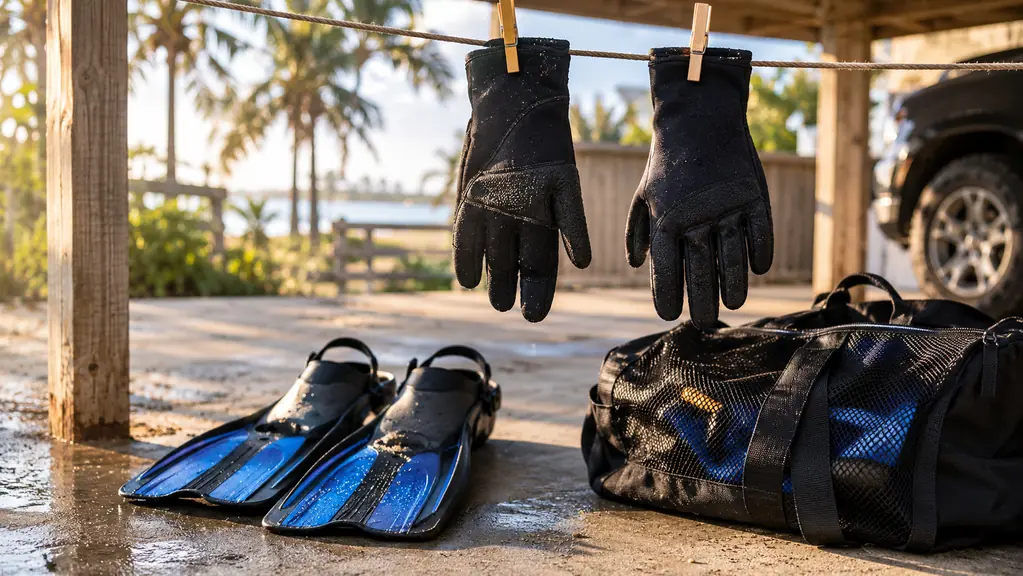
My routine is simple and it has kept this pair going. They come off the boat into a rinse tub of fresh water in the carport, get worked over finger by finger to flush the salt out of the seams, and then hang on the clothesline under the carport roof where they get air but not direct sun. Neoprene and sunlight do not get along, and a glove left on a dock rail all afternoon will go stiff faster than one that gets put away.
Drying matters more than people think. A glove turned inside out and hung overnight is dry by morning. A glove left balled up in a mesh bag in the back of the 4Runner is still damp three days later, and damp neoprene starts to smell like a bait bucket. That is not a knock on the XUKER gloves. It is true of every pair I have owned, and it is the single easiest way to shorten the life of a good one.
Who This Is For
This glove suits the recreational diver who is in water from the high 60s upward and wants their hands to keep working without spending a lot. It suits the diver who does rough entries off limestone, grabs mooring lines, climbs ladders in a swell, or digs in sand. It suits anyone who has ever stood on a boat in the dark trying to figure out which glove is the left one, because the XUKER ambidextrous cut ends that conversation. If you are doing two tank days in Florida water and you want a warm, tough, uncomplicated glove, this is a sensible buy and the price is not the reason to hesitate.
Who Should Skip It
Skip these if your water is in the low 60s or below and you feel the cold. Get the 5mm version, or get a glove with taped seams from a brand that builds for cold water, and do not talk yourself into thinking 3mm will be fine because it was fine for somebody in Florida. Skip them if your diving involves fine work with your hands, because neoprene at this thickness costs you your fingers as tools. And skip them if you will not hand wash and hang a pair of gloves, because these will not survive being treated like a towel. Buy the glove that matches your water and your habits, not the one with the best bullet points.
Three millimeters, ninety dives, and the seams are still closed
If your water is warm enough for a 3mm glove, this pair has earned its spot in the bag. Sizes run from XS to 2XL, so check the chart and pick a snug fit rather than a comfortable one.
Amazon Check Today's Price on Amazon →