

She was standing at the waterline at the swim beach with her sandals in her hand, and from the parking lot I could tell she had been crying. It was a Tuesday in February, the water was sitting at about 71 degrees, and Cal and I had come early to work the sand before our charter left at nine. She had lost a ring in the shallows the afternoon before. She had already been back twice with a kitchen strainer and a plastic scoop.
Here is what I told her, and it is what I tell anyone who asks me about hunting lost metal in salt water. A strainer works on dry sand and nothing else. The moment the sand is wet and moving, a ring sinks out of reach of anything you can hold in your hand, and it keeps sinking a little more with every wave that comes through. You need a tool that reads metal through wet sand and that you can put underwater without ruining it. That is the whole reason I own the NOKTA DETECTION TECHNOLOGIES PulseDive.
I bought it in the spring of last year, about eighteen months ago, in the same week I rebuilt my whole kit. My old mesh bag had split on the ramp at the charter dock and I was done patching gear that was already worn out. The PulseDive from NOKTA DETECTION TECHNOLOGIES, the dive light, the boots, the bag, the gloves, all of it came in at once. I have somewhere around ninety dives on that detector since. It rides in the bag wrapped in a towel, because anything that lives in a saltwater boat bag needs a little help.
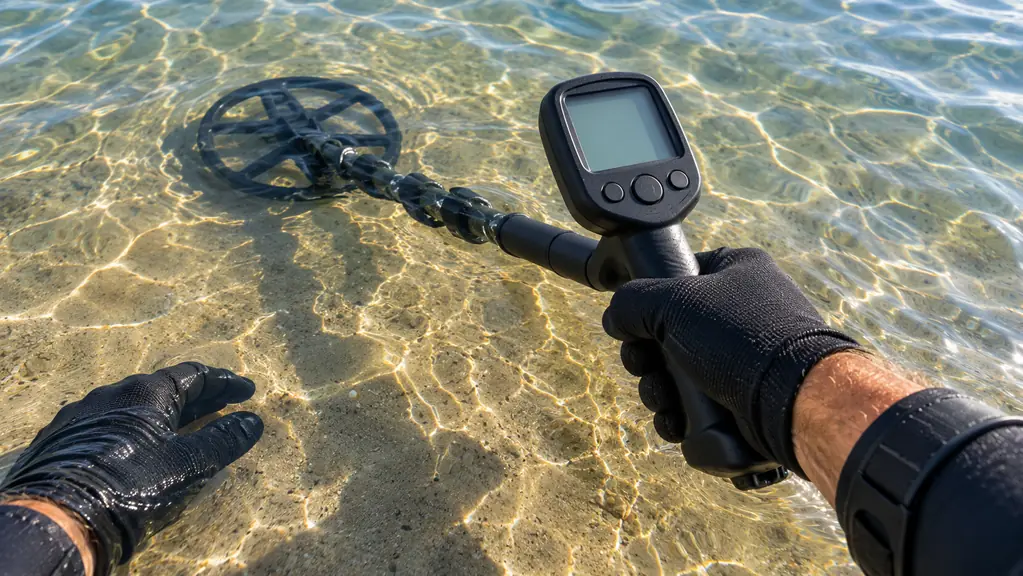
What it is, plainly: a pinpointer and a small detector in one body, IP68 rated and waterproof to 200 feet, though the deepest I have taken it is about 60. It runs pulse induction at 3 kHz, which is the reason it holds steady in salt sand where a land machine will chatter at you all morning. There are four programs on it and I use two of them. The search coil is 5.5 inches, the unit measures 15.3 inches extended, it weighs about a kilogram, and there is an LED display. After five minutes of no activity it sounds an alarm and the display flashes. That alarm has saved me a walk back down the beach more than once.
None of that is the reason I reach for it. I reach for it because it does not care whether it is in my hand on dry sand or a foot and a half under moving water, and because the signal is simple enough to act on without stopping to think. The tone changes, you scoop, you sweep the sand you lifted, you find it or you move on. No screen full of numbers to read while a wave is pushing you off your mark.
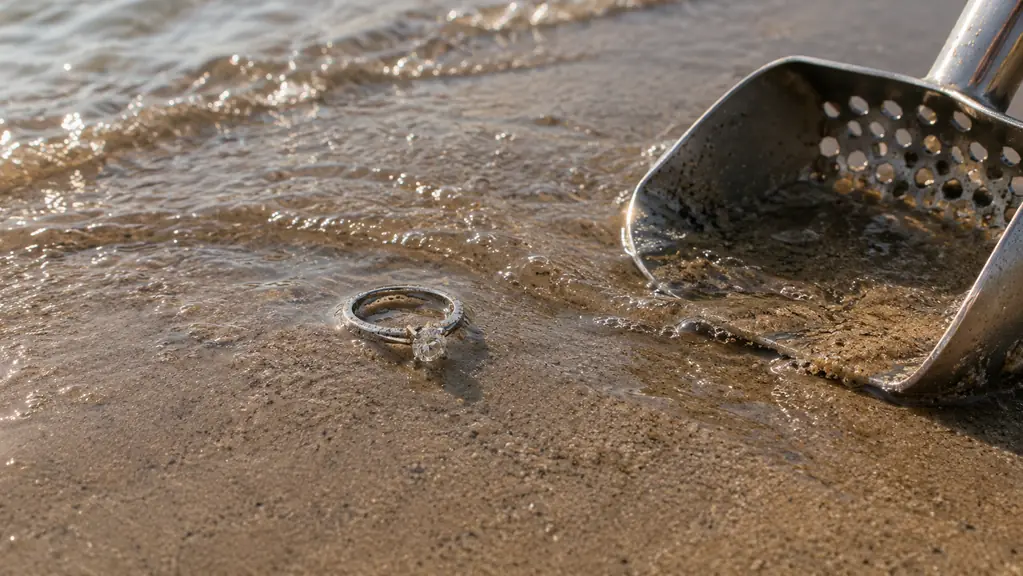
Nineteen minutes of digging. The third scoop of wet sand came up with a ring in it, stone and all.
The pinpointer that pulled a ring out of wet sand in nineteen minutes
Pulse induction at 3 kHz, waterproof to 200 feet, four programs and a lost alarm. It is the one piece of gear I will not hunt sand without.
Amazon Check Today's Price on Amazon →We started at the edge of the wet sand where she thought she had been standing, and I worked it in lanes the way you do, slow and overlapping, about a foot apart. The first two signals were a bottle cap and a length of pull tab. The third was the ring. Nineteen minutes from the moment I put the coil in the water. It was maybe four inches down in packed sand, exactly where a strainer could never have reached, and we found it because the tone stayed flat and steady through the salt water instead of breaking up on every wave.
She put it on right there at the waterline. I am not going to pretend that is the usual outcome. Most mornings the sand gives up bottle caps, tent stakes, sinkers and a pocketful of clad coins, and I go home, rinse everything, and hang it on the line under the carport to dry. But that morning is why the tool stays in the bag. Finding a ring for a stranger once a year is worth more to me than anything I have ever dug up and sold.
The Part Nobody Mentions
Now the honest part, because I would rather you hear it from me than find out on the beach. It is a pinpointer that happens to be a small detector, not the other way around. On open dry ground it will not cover any real area and it will not give you useful depth. It cannot tell you a ring from a beer cap before you dig, so on a trashy beach you will dig a lot of trash. If your goal is to walk a wide flat and cover ground, buy a full machine and use this to finish the job.
The other thing nobody mentions is that the alarm is genuinely annoying. Five minutes of stillness and it starts up. In a bag on the ride home it will make you want to take the battery out. On a beach at dusk, when you have set it down to dig and wandered off, it is the difference between finding your gear and filing a report.
What I'd Tell You If We Were Sitting at My Kitchen Table
I would tell you that most of the gear in a dive bag is not worth getting worked up about, and this is one of the few pieces that is. If you dive from shore, if you work the sand around docks and swim beaches where the rules allow it, and if you have ever watched something shiny disappear into the wash, the NOKTA DETECTION TECHNOLOGIES PulseDive earns its place. Check your local rules before you dig anywhere, because plenty of beaches and every protected wreck are off limits, and no tool is worth a citation.
I would also tell you not to buy it expecting a magic wand. It finds metal. It does not find the thing you wanted, at the depth you wanted, on the schedule you wanted. What it does is turn a hopeless search into twenty minutes of digging. Dee has heard me say this across the kitchen table more than once, and she does not dive and does not care about detectors, and even she agrees that a tool which gives a stranger her ring back has done its job.
The tool that turns a hopeless search into twenty minutes of digging
Waterproof to 200 feet, pulse induction at 3 kHz, four programs, and an alarm that tells you where you left it. Mine has about ninety dives on it and it still reads clean.
Amazon Check Today's Price on Amazon →