
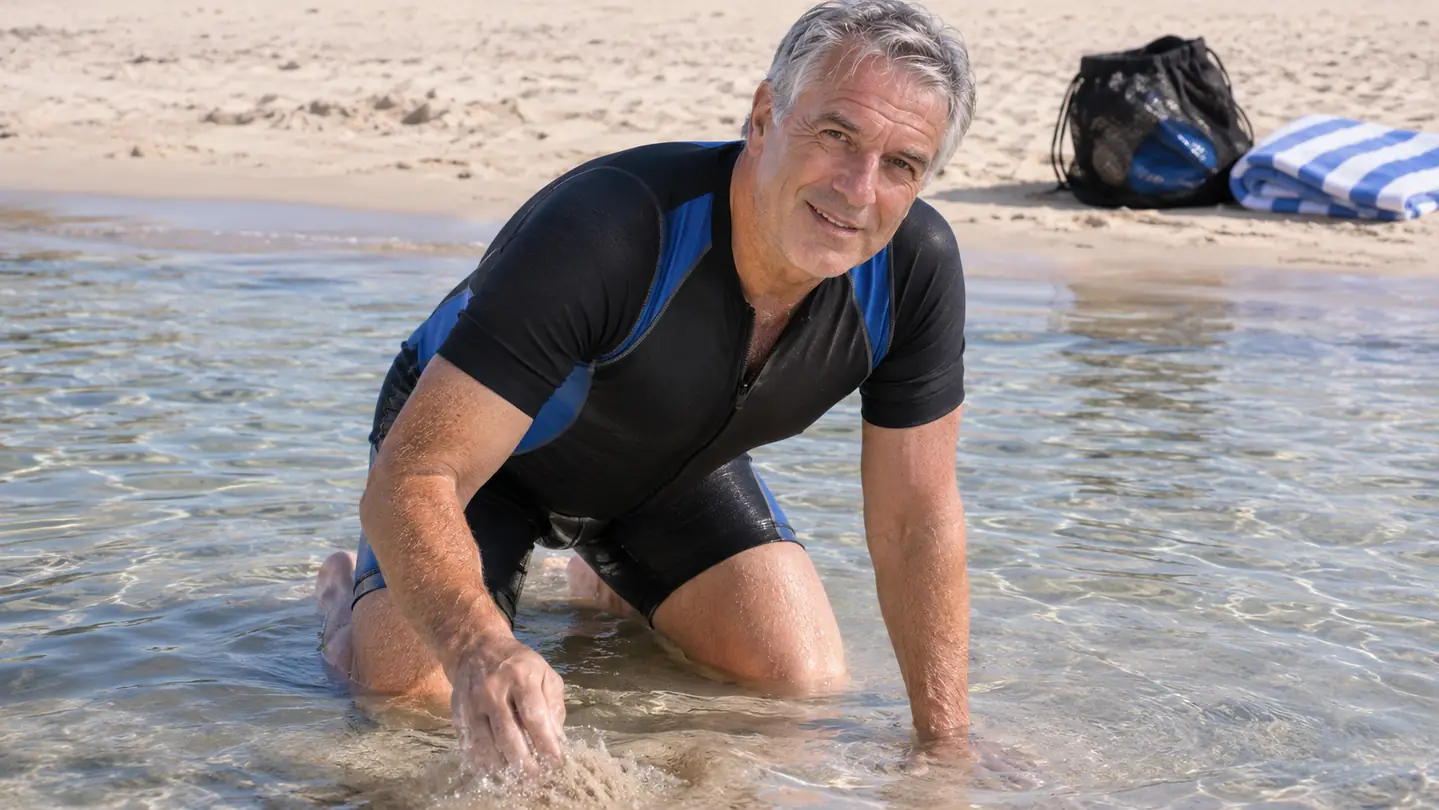
Three years I hunted the sand at the public swim beach with a land detector sealed inside a dry bag, and three years I came home with sinkers, pull tabs and one very patient hermit crab. The machine worked fine. The problem was that I could not take it below the waterline, and the waterline is where people lose things. Rings come off in cold water. Brass fittings work loose off docks. Coins slide down the slope into waist-deep sand and stay there, and a dry bag sitting on the beach will never see them.
So in the spring of last year, when the old mesh bag split down the seam, I rebuilt the whole kit in one go. One of the five things I bought was the PulseDive from NOKTA DETECTION TECHNOLOGIES, a hand-held unit rated to 200 feet. About 90 dives later, here is what it has actually done for me, in the order it matters.
The tool that goes where the sand goes
Pulse induction at 3 kHz, IP68, waterproof to 200 feet, a 5.5 inch search coil and four programs. Mine rides in the mesh duffle wrapped in a towel and gets rinsed in the carport tub after every trip.
Amazon Check Today's Price on Amazon →It goes under the waterline, which is the entire point
The listing rates the PulseDive to 200 feet and gives it an IP68 rating. I have never had it past 60, and most of my hunting happens between waist deep and about 30 feet, which is where the sand is and where people drop things. In 18 months of that I have had no water inside, no fogged display and no corroded contacts. The seal and the coil cover get rinsed in fresh water at the carport tub after every trip, same as everything else in the bag.
Pulse induction does not argue with salt
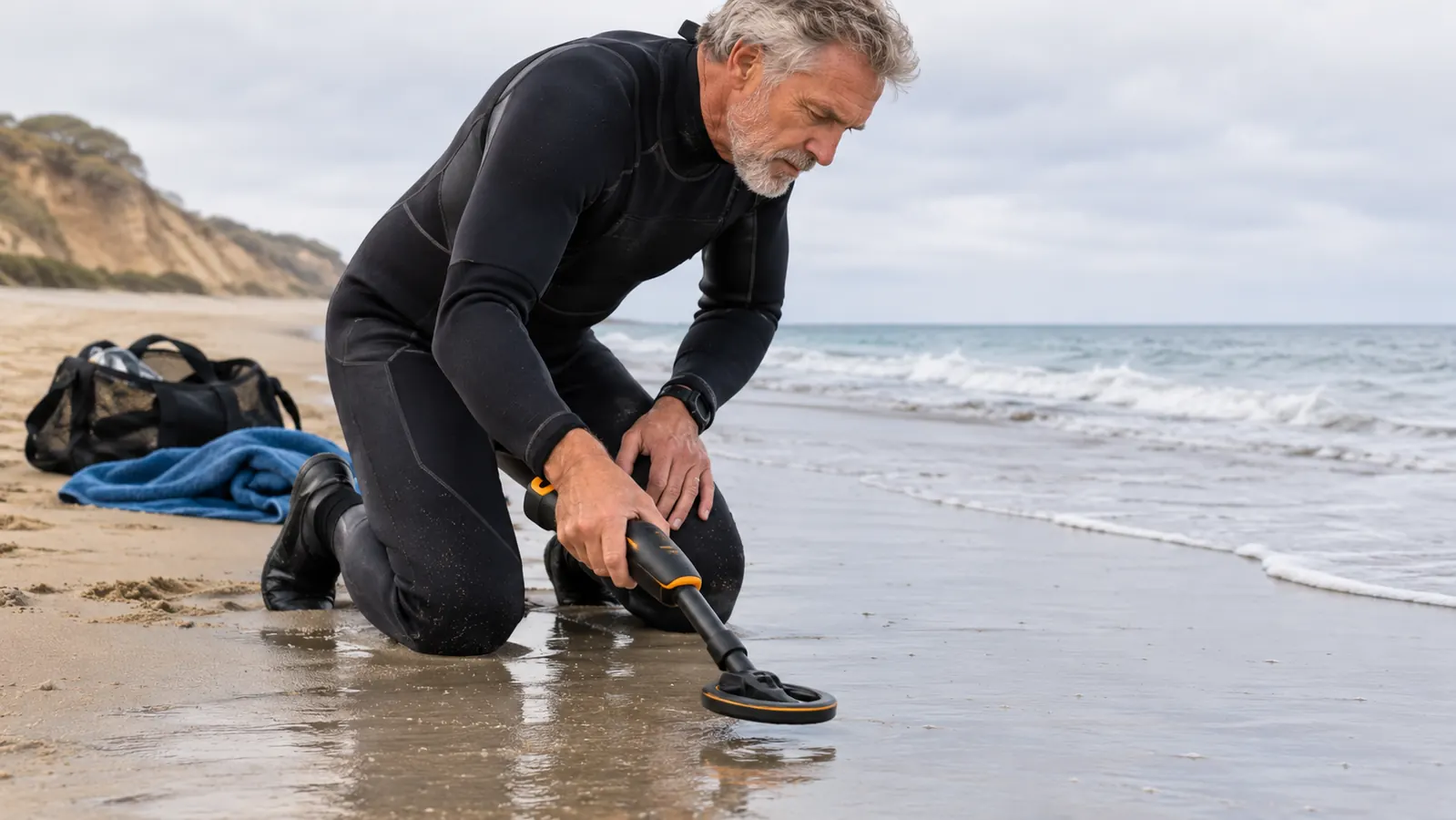
The operating frequency is 3 kHz pulse induction, and in salt water that matters more than any number printed on a box. A conventional machine sees wet salt sand as a target and complains at you the whole dive, so you turn the sensitivity down until it finds nothing. This one sends a pulse and reads what comes back, so the salt drops out of the picture. The tradeoff is honest. It does not tell you much about what the target is. You dig, or you do not.
The small coil fits inside the hole you just fanned
The search coil is 5.5 inches, which the metric side of the spec sheet lists as 14 centimeters. That sounds tiny until you are elbow deep in a hole you opened with your hand and need to know whether the target is still in it or rolling down the slope. A small coil sees a small area, and a small area is exactly what you want when the target is somewhere inside one scoop of sand. It also slips along the edge of a limestone ledge without the unit levering out of your hand.
Two tools in one hand, not two tools on the belt
It is sold as a 2-in-1 set, a hand-held detector with a replaceable scuba coil, and the package includes a spare coil and a coil cover. I use it the way I use a pinpointer on dry land. Sweep a loose grid over the sand, close in once I get a hit, then dig. One tool doing both jobs means one less thing clipped to me on a dive where I already carry a light, a bag and a knife.
The lost alarm has already saved it twice
After five minutes of inactivity the unit sounds an alarm and the LED starts flashing. That is the feature I did not think I needed and now will not buy a detector without. I set it down in the sand to fan with both hands, forgot it, and got the alarm while it sat half buried. Both times I had it back in my hand before the tide did. If you hunt alone or work a beach with any current on it, this is the difference between a bad afternoon and losing the tool.
Twice now the lost alarm has fired while the PulseDive sat half buried in sand I had just fanned. Both times I got it back before the tide did.
Four programs, and setup happens once on the beach
The spec sheet lists four programs. I have found two that suit my sand and my water and I have not needed the rest, which is not a complaint. The point is that you sort it out at the surface, standing in ankle-deep water, and then you leave it alone. Nobody wants to be reading a menu at 30 feet with a limited air supply and a hand full of detector. Set it the way you set a dive computer and forget it.
It survives the deck, the duffle and the rinse tub
NOKTA DETECTION TECHNOLOGIES builds it in a plastic body that weighs about 1 kg, and rates it to 200 feet with an IP68 rating. I judge it by what happens when it gets dropped on a fiberglass deck, left in the mesh bag in the back of the 4Runner, and hosed off in the carport tub. Eighteen months of that and the only real wear is on the coil cover, which is replaceable and comes with a spare in the box.
It packs flat along the bottom of a mesh duffle
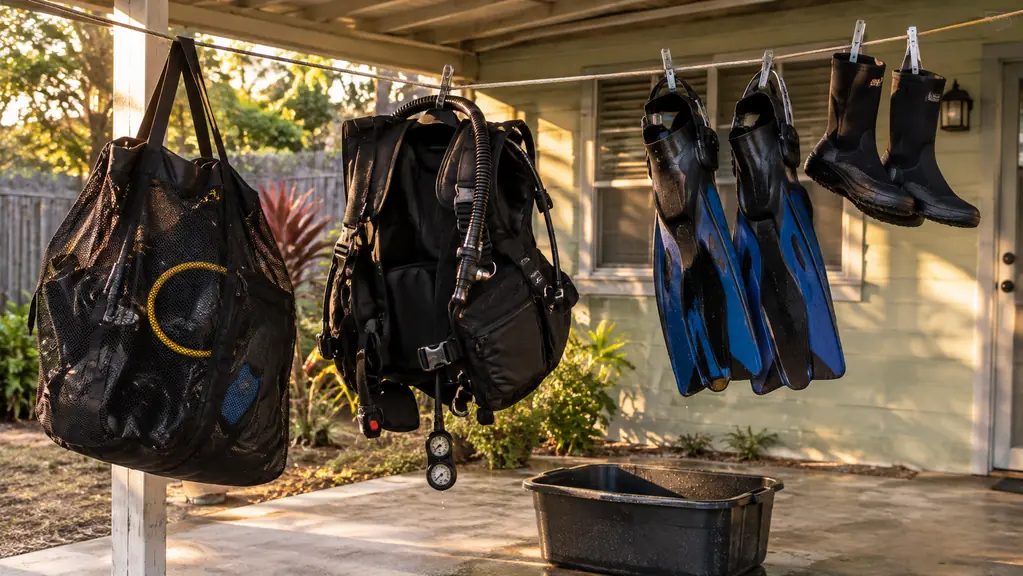
Extended length is 15.3 inches, so it lies flat in the bottom of my Bulex duffle with the fins and boots on top of it. I wrap it in a towel so the coil does not knock against the boot soles, and it has ridden in the 4Runner and on charter boats about 90 times without a mark. A full-size land machine in a dry bag does not fit in a duffle, and it cannot come in the water with you anyway. That is the practical reason this one gets packed.
It runs on batteries I can carry in a dry box
The power source is batteries, ordinary ones, and I keep a spare set in a small dry box in the duffle. A detector that dies at 30 feet is a plastic stick with a wire on it. That has not happened to me, but carrying spares costs me nothing and takes one more item off the list of reasons a dive gets cut short. On a charter you do not get to go back to the car, so the spares come with you or they do not exist.
It made shallow shore dives worth doing again
Most of my diving runs 20 to 60 feet, from charter boats and from shore, and the shore dives were the ones that used to feel like practice for something better. Now a flat sand bottom with nothing on it is a hunt. Five years of selling brass boat hardware, old coins and the occasional ring at weekend flea markets has taught me that finds come from volume rather than luck. The PulseDive from NOKTA DETECTION TECHNOLOGIES lets me put in that volume in water I can reach on a Tuesday, without a charter booking and without a boat.
What I'd Skip
Skip the dry bag routine. If you are sealing a land machine in plastic and carrying it to the beach, you are already doing the hardest part of the dive for no return, because the targets are under the water. Skip the idea that a big search coil is better. A wide coil covers ground, but it also sees every piece of junk within a foot of the hole, and in salt water you will spend your bottom time chasing bottle caps. And skip any lanyard that runs from the unit to your wrist. Mine goes in the bag or in my hand, and a loop of cord around the wrist is one more thing to snag on a ladder.
Then be honest about what this tool is not. The 5.5 inch coil is a close-work coil. If your plan is to sweep a football field of open sand from a boat, this is the wrong machine and you will be frustrated by lunchtime. It is a hand-held unit that finds what is in front of your hand, and it weighs about 1 kg, which you notice on a long dive with a light in the other hand. NOKTA DETECTION TECHNOLOGIES sells it as a pinpointer that happens to be waterproof to 200 feet, not a search machine. Buy it for what it does.
The one piece of kit I rebuilt the bag around
Waterproof to 200 feet, IP68, pulse induction at 3 kHz, four programs, a lost alarm at five minutes and a 5.5 inch coil for close work in sand. Mine has about 90 dives on it and still gets packed every trip.
Amazon Check Today's Price on Amazon →