
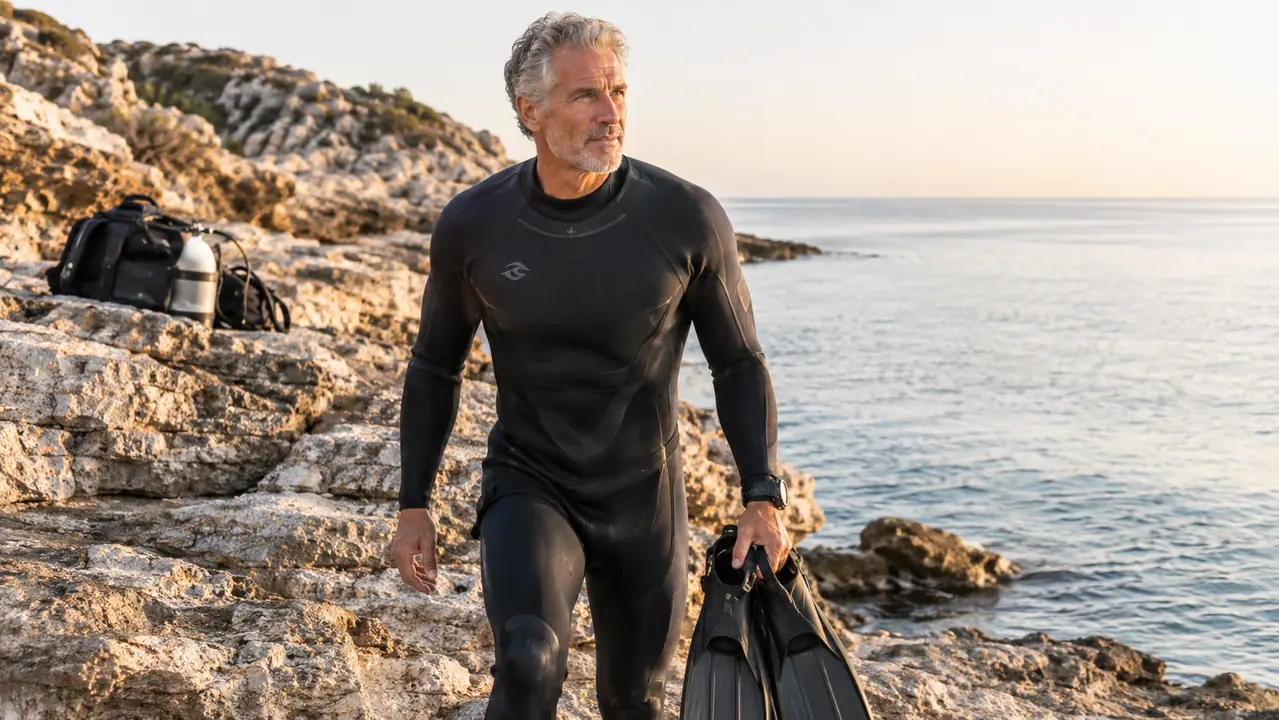
Shore diving looks like the easy version of diving until you have done a season of it. There is no mate to take your fins, no ladder waiting at the end, and the entry is usually a shelf of rough limestone the tide has chewed into something you would not walk on barefoot. My water here in Tavernier runs about 71 degrees in January, and the walk from the car to the edge is longer than anyone mentions on the chart. For years I did that walk in thin surf booties. They were fine on sand and useless on rock. I would get to the water, sit down, and find the sole had rolled under my arch on the way in. Small thing. It makes for a long walk back.
What changed it was not technique. It was a pair of Cressi neoprene boots with a zippered closure and an anti-slip rubber sole. I bought them in the spring of last year, about 18 months ago, when the old mesh bag split and I rebuilt the whole kit in one go. They have roughly 90 dives on them now, worn with open-heel fins every single time. Nobody gets excited about boots. They are the piece of gear that decides whether the rest of the dive is pleasant or whether your feet are arguing with you for two days afterward. Here is the order I do things in, including the parts I got wrong first.
The pair that ended the walk-in problem
Cressi neoprene boots with a zippered closure and an anti-slip rubber sole. Same pair I have worn on roughly 90 shore dives from limestone entries and hot docks. Size them against your fin pocket before you order.
Amazon Check Today's Price on Amazon →Step 1: Put the boots on at the car, not at the water
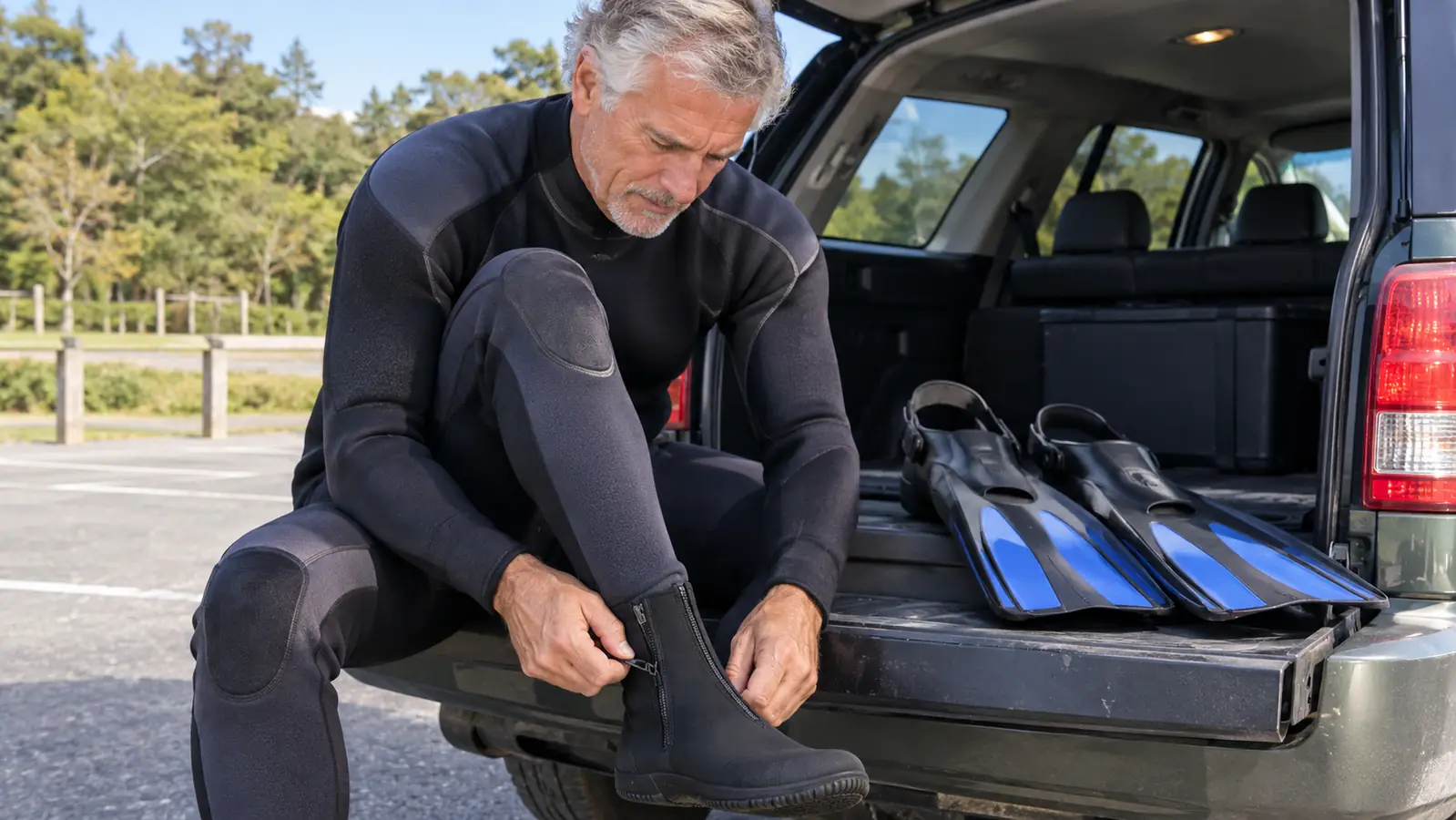
The mistake I see most at an entry is a diver walking down in sandals with the boots in a bag. The bag goes on the rock, the sandals come off, and now he is standing on broken limestone in bare feet or thin socks while he wrestles a zipper with wet hands. I did that for a year. Now the boots go on at the back of the 4Runner and stay on until I am back at the 4Runner. The parking area at most shore entries is asphalt that has been in the sun since morning, then broken rock, then sand. None of that is a place to be barefoot, and none of it gets better with a tank on your back.
The anti-slip rubber sole is doing more work on land than it ever does in the water. In the water the fin does the propelling and the boot only has to hold your foot in place. On land the boot is your shoe. I wear mine down dock ladders that are slick with algae, across boat ramps at low tide, and along the limestone shelf at the edge of the reef, and the sole grips all of it well enough that I stopped thinking about it. Stopped thinking about it is the highest compliment I can give a piece of gear.
The other half of the walk is your hands. A rough entry is a two-point contact job: one hand on the rock, feet doing the rest. I wear 3mm gloves on any rough entry, all year, and a good deal more from November through April. The point is that the entry is a whole-body problem and boots only solve the bottom of it. If you are sliding down a limestone ledge on your backside, you are already past where better footwear would have helped. Boots let you walk in upright, carrying your own load, and that is the whole trick.
Step 2: Settle the fit on dry land, because you cannot fix it in the water
The Cressi boots close with a zipper and carry an adjustable strap over the instep, and both of those get set before I am wet. Put them on dry, with the fin nearby, and check three things. The toe should not touch the end of the boot. Your arch should sit flat with no wrinkle of neoprene bunched under it. The heel should not lift when you press your weight forward. If any of those is wrong, change the size or redo the strap, because you will not manage it with a tank on your back, a fin in one hand, and surf breaking at your knees.
The fit type on these is regular, and they are a tall boot, so they come up the calf far enough to tuck under a wetsuit leg without a gap. That matters more than people expect. A gap at the top of the boot in January water is cold water pumping in and out with every kick, and at 61 I feel January water a lot more than I did at 47. The zipper should run up smooth and sit closed without pressure on the ankle bone. If it takes two hands and a grimace to close, the boot is too small, and no amount of breaking in will fix that.
Too loose is its own problem and a quieter one. A boot that shifts inside the fin pocket lets your foot slide on the downstroke, and by the end of a 45 minute dive your arch is cramping and you are not sure why. I had that with the old booties and blamed the fins for two seasons. It was never the fins.
Step 3: Match the boot to the fin pocket, not the fin to the boot
An open-heel fin grips the boot, not your foot. That means the outside dimensions of the boot are part of your fin fit, and changing boots is like changing foot size. When I moved to the Cressi boots from thin surf booties I had to open the fin straps a notch, and on the first dive with the old setting I could feel the fin rocking at the ankle. Rocking is wasted energy, and you feel it in your calves before you feel it anywhere else. Two minutes of adjustment on the tailgate saved me a week of sore legs.
The test is simple and takes no tools. Boot on, fin on, look at the pocket. The boot should fill it without rubber bulging out at the sides, and the heel should sit down into the heel pocket rather than riding high against the strap. Then flex your ankle. If the fin moves with your foot and the boot does not slide inside it, the fit is right. If the boot slides, the fin is too big for it, and no amount of strap tightening will hold that for a full dive.
One more thing about fit that nobody mentions. Boots change the equation for the fin size you need, not just the strap setting. If you were diving thin booties before and you go to a tall neoprene boot, try your fins again in shallow water before you commit to a long dive. I got lucky and only needed the strap. Cal was not so lucky and ended up with a different fin entirely, which is a cheaper discovery at the dock than at 60 feet.
Step 4: Rinse them the same day, every time
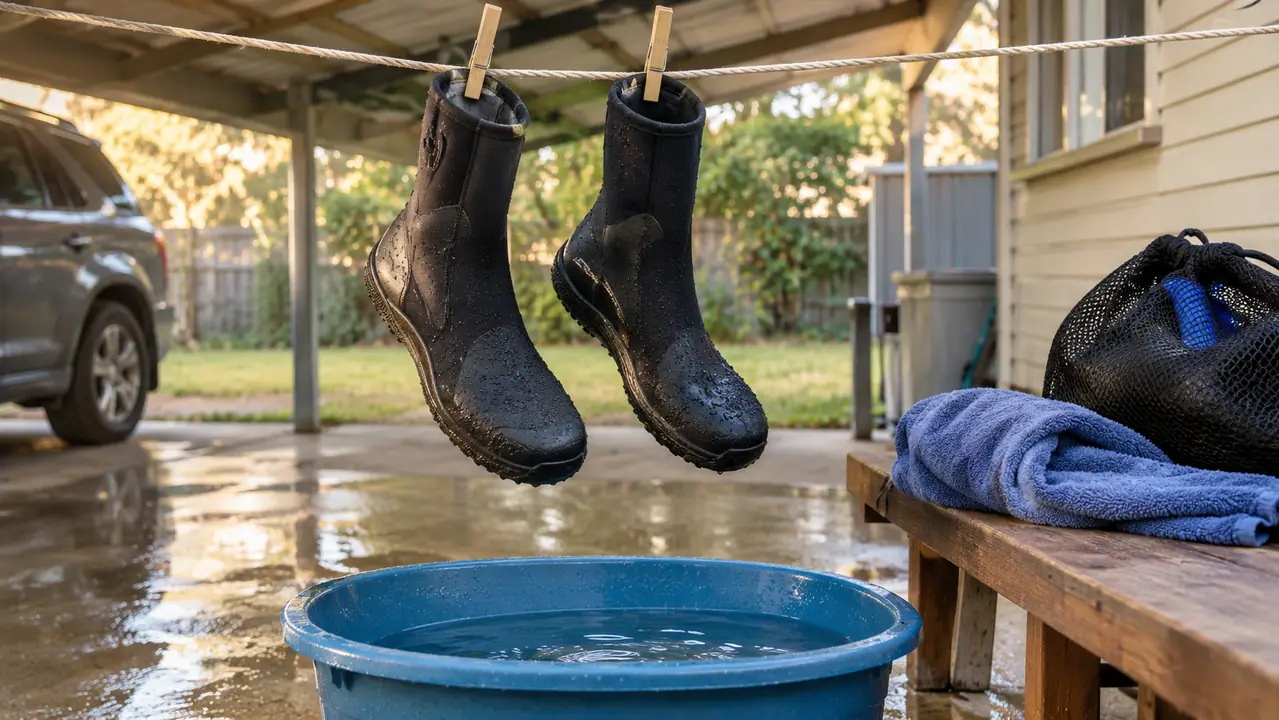
Neoprene and rubber do not mind salt water. They mind salt crystals sitting in the seams and in the zipper teeth for a week. The care instruction on the Cressi boots is hand wash only, and that is exactly what mine get. The rinse tub under the carport, cool fresh water, the zipper worked open and shut a few times under the surface so sand flushes out of the teeth, the insides flooded and dumped twice. No soap, no machine, nothing harsh, no detergent that leaves residue against your skin for the next dive. It takes about two minutes a boot and it is the entire maintenance routine.
Then they hang on the clothesline under the carport, upside down, zipper open so air moves through. Not out in the Florida sun, which will cook neoprene until it goes stiff and cracks at the flex point. Never in the dryer, not even on the low setting. Mine dry overnight in summer and might take a full day in January. If I am diving two days running I rinse them anyway, wet or dry, because the salt is the thing I am managing, not the water. The routine is boring and that is why it works.
Step 5: Watch the zipper and the sole, because that is where they go
After roughly 90 dives the two places I check are the two that fail first on any boot. The zipper, because sand works into the teeth and one pulled tooth ends the boot. The sole seam, because a boot that starts peeling at the toe lets sand in and then flaps on the walk back. Mine are still sound at 18 months, with the neoprene softened a little around the ankle, which is normal and honestly more comfortable than new. I check both after every rinse, while the boot is still wet and I can see the whole seam and the full length of the zipper.
The signal to replace them is not a date on a calendar. It is a sole that has lost its grip on wet limestone, or a zipper that will not stay closed under load, or neoprene worn thin enough at the heel that you can feel the fin pocket through it. Any one of those and the boots have stopped doing the job they were bought for, which is to keep your feet out of the argument. I would rather buy boots than explain to Dee why I am limping for three days after a two tank morning.
What Else Helps
The boots solve the walk and the fin fit. They do not solve a bag that holds water and sand. I carry mine in a mesh duffle that drains, 37 inches long, and the boots, fins, gloves, mask, wetsuit, light and detector all go in one load. The whole thing drips dry on the carport instead of stewing in the back of the 4Runner. A plastic tote looks tidier and smells like a bad decision by Thursday. If your boots come home in something that does not drain, that is the next thing to fix, and it costs less than the boots did.
Two smaller habits worth keeping. First, keep a spare pair of dry socks in the 4Runner. Not for the dive, for the drive home. Wet neoprene feet in an air conditioned car for 40 minutes is how a good dive turns into a stiff ankle the next morning. Second, do not leave the boots sitting in the sun on the tailgate while you eat lunch. That is the single fastest way to shorten their life, and it is the one mistake I still make when I am hungry and careless.
Roughly 90 dives on this pair, and the sole has not rolled under my arch once. That is the review.
Your feet meet the rock first and get thought about last
Cressi neoprene boots, zippered, with an anti-slip rubber sole. Bought in the spring of last year, about 90 dives on them, still the pair I pull on at the back of the 4Runner. Check the size against your fin pocket before you order.
Amazon Check Today's Price on Amazon →