
If you dive warm water from a boat, walk a hot dock, and want one pair of boots that handles the ladder, the sand and the ride home without any fuss, buy the Cressi boots. That is the short answer and I will stand behind it. I have worn this pair of Cressi neoprene boots on roughly 90 dives out of Tavernier and Key Largo over the past year and a half, and they have not split a seam, not lost a zipper pull, and not once made me regret them on a wet aluminum ladder. The Mares Equator is a decent boot. It is a different boot, built for a diver who walks further to the water and wades colder than I do, and I will give it its due further down.
Before the table, one piece of housekeeping. I own the Cressi pair. I do not own the Mares Equator and I have never had my foot in one. What I know about it comes from the published Mares listing and from my dive buddy Cal, who has handled more boots than I have and has an opinion about every one of them. Where I am working from paper instead of my own feet, I will say so plainly. A comparison that pretends otherwise is not worth the paper it is printed on.
| Cressi Neoprene Boots | Mares Equator Boots | |
|---|---|---|
| Closure | Full zipper with an adjustable strap that takes up slack as the neoprene compresses | Side zipper, and that is all the published listing describes |
| Sole | Anti-slip rubber sole, flat and grippy on a wet ladder | Molded rubber sole with a deeper tread pattern |
| Ankle coverage | Listed as a tall boot, comes up well above the ankle | Sits lower on the ankle |
| Material and care | Neoprene and rubber, hand wash only | Neoprene upper with a rubber sole, cared for the same way any neoprene boot is |
| Best for | Boat diving in warm water, hot docks, sandy shore entries | Rocky shore entries and long walks to the water in cooler conditions |
Where the Cressi Boots Win
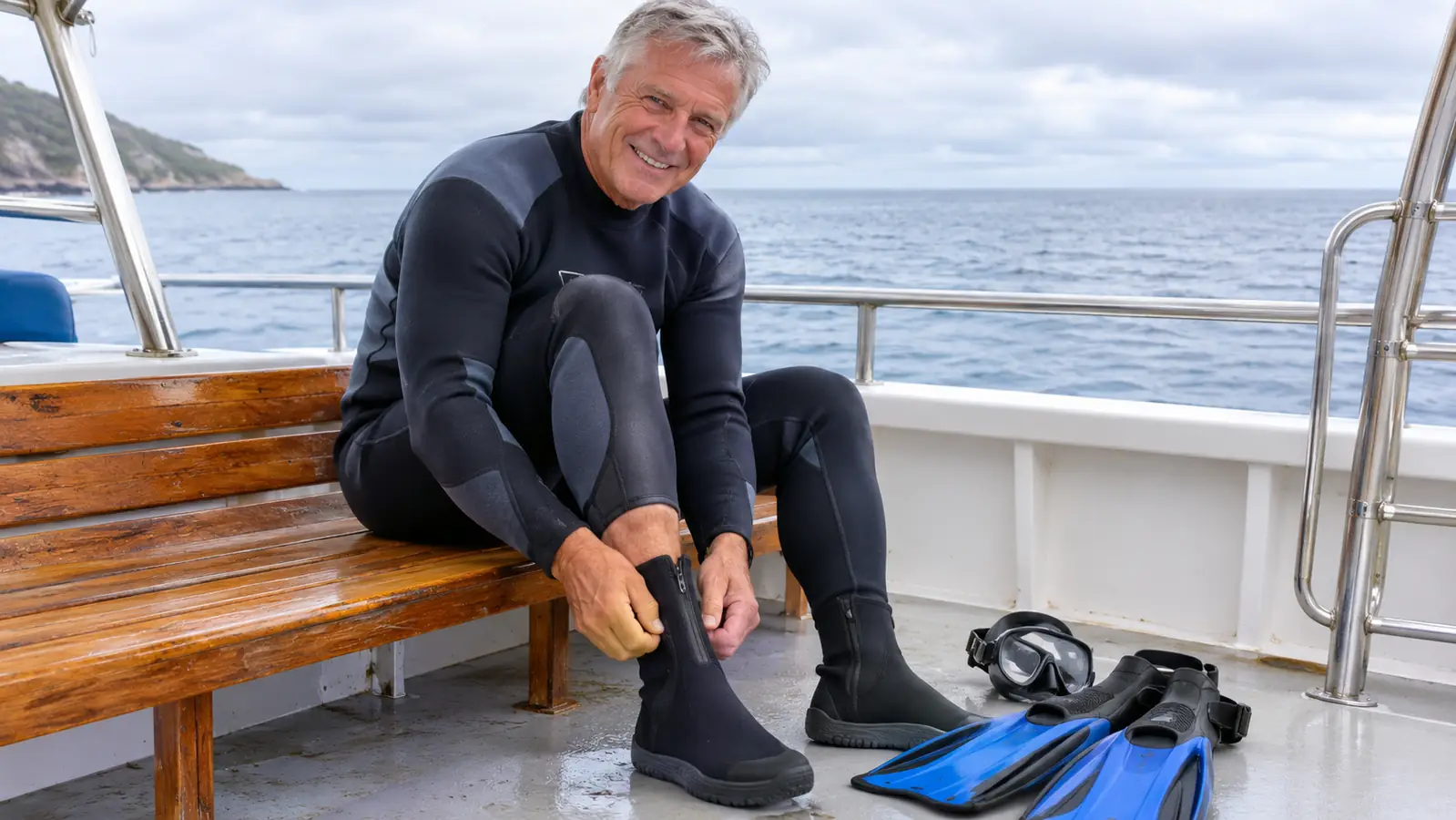
The closure is the first thing, and it is the thing nobody talks about. Mine has a full zipper down the side and an adjustable strap, and that strap is the part that earns its keep. Neoprene compresses. A boot that fits like it was poured on you in April fits like a loose sock by August, and a loose boot inside a fin strap is how you get a foot cramp at 60 feet with a camera in one hand. The strap takes up that slack in about four seconds. I tighten mine a notch somewhere around midsummer every year and let it back out in the fall. The Mares listing describes a side zipper and stops there, so on adjustability the Cressi is the more forgiving boot.
Second is coverage. The listing calls these tall boots and that is accurate. They come up well above the ankle, which matters more than people think on a boat ladder, because the rung is narrow and the boat is moving and the boot that ends at your ankle bone gives you nothing to brace against. Third is the anti-slip rubber sole. It is flat, it grips wet aluminum, and it is thin enough that I can feel the rung under my arch. That is not a complaint. I want to feel the rung. I also wear these on the hot concrete of the dock in July, and on the limestone at the state park ramp, and they handle both without me thinking about my feet at all.
Last August I came up the ladder at the end of a two tank morning with the boat rolling a couple of feet and both hands full, a camera in one and a fin in the other. The rung was wet, the deck hand had his hand out, and I made four rungs without thinking about my feet once. That is the whole test, and it is not a test you can run in a shop. The rung on that boat is maybe an inch and a half wide. The sole is flat, the rubber is soft enough to bite it, and the tall upper keeps the whole thing from rolling over at the ankle when you weight it. I have also crossed the marina asphalt at two in the afternoon in July, when a barefoot walk across it is out of the question, and these handle that too. Two different jobs, one pair of boots.
Where the Mares Equator Wins
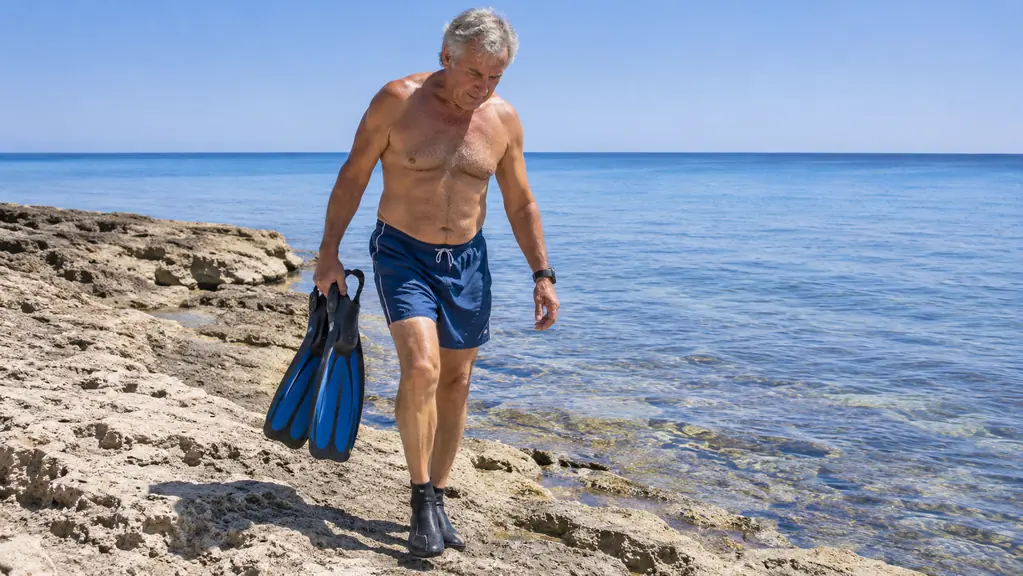
The sole is where the Equator takes it, and I am not going to pretend otherwise. The published listing shows a molded rubber sole with a deeper lug pattern than the flat anti-slip sole on my Cressi pair. If your entry is a rocky shore, a coral rubble beach, or a hundred yards of uneven ground from the parking lot to the water, deeper tread wins. I dive mostly from charter boats and public swim beaches where the walk is short and the bottom is sand. Cal walks in off the rocks up in the Panhandle twice a year and he has told me more than once that a flat sole is a young man's sole. He is not wrong.
Second, and this follows from the first, the Equator reads as a boot built for harder entries and cooler water. As I read the listing it is aimed at the diver who is standing in the shallows getting ready rather than stepping off a swim platform, and that diver wants more underfoot and more around the ankle than a warm water boat boot gives. I have not tested it, so take my read as a read and not a measurement. What I can tell you is that when my Cressi pair finally gives out, I will look at the Equator honestly if my diving changes toward more shore entries. Until then I am not going to buy a heavier boot to solve a problem I do not have.
The boot with 90 dives on it and the log to prove it
Tall coverage, a zipper that still runs, an adjustable strap that takes up the summer slack, and listed at about 1.9 pounds. If your diving looks like mine, this is the pair.
Amazon Check Today's Price on Amazon →Eighteen Months of Salt Water
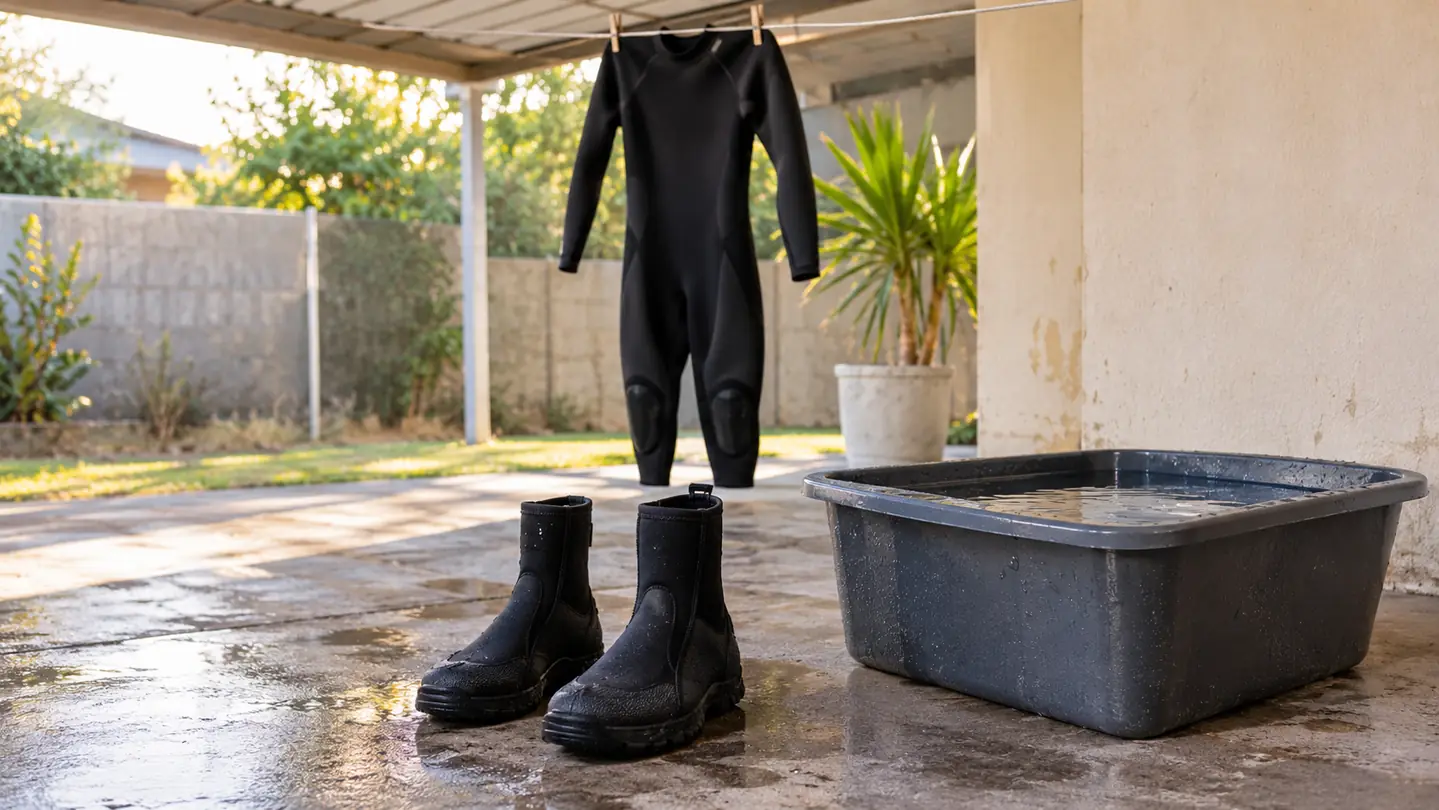
Here is what 90 dives actually did to them. Every dive ends the same way at my house. Boots come out of the mesh duffle, go into the rinse tub under the carport, get filled and emptied twice, and hang on the line to dry. Not in the sun, not in the 4Runner overnight, not balled up in a bucket. Salt is patient. Leave a zipper sitting in dried salt for a week and it will remind you about it in a month.
The seams have held. No split at the heel, no separation where the upper meets the rubber sole, and no thinning at the toe where the fin pocket rubs. The zipper still runs the full length without a catch at the curve, and the pull is intact. The sole has worn at the outer heel edge, which is normal for a man who stands on a ladder the way I do, and the grip is still there. The neoprene has softened since the first month, which is not a fault. It is what neoprene does when it gets used.
To put the calendar around it: this pair came home in the spring of last year, the same week my old mesh bag split and I rebuilt the whole kit in one go. So the 90 dives run through one full summer, a winter of lighter use, and most of a second summer. The winter is where a boot either holds up or it does not, because from November to April the boot sits in the carport more than it sits in the water, and a boot put away wet in October is a boot you find out about in April. Mine went up dry every time and came down soft every time. That is the difference between a boot that lasts a year and a half and one that lasts a season.
One note on care, because the listing says hand wash only and I want to be clear about what that means in practice. Mine have never seen a washing machine and never will. If a boot goes in the machine, the agitation is what kills it, and the heat of a dryer will shrink neoprene and cook the glue. A hose, a tub, a clothesline. That is the whole maintenance program, and it is the reason the zipper on my pair is the same zipper it was 18 months ago.
Ninety dives, one rinse after every one of them, and the zipper still runs like it did the first week. That is not luck. That is a hose and a clothesline.
Sizing and the Mistake I Made
I bought my street shoe size and it was right, but it was snug for the first four or five dives, and I spent the first two of those wondering if I had made an error. I had not. Neoprene gives. What you want out of the box is a boot where your toe is not touching the end and your heel is not lifting when you walk, and then you let the boot do the rest over a month. What you do not want is the mistake I made years earlier with thin surf booties, which was buying a size up so they would feel roomy. Roomy boots slide, sliding boots rub, and rubbed skin in salt water is a week of misery for a problem you paid for.
One practical thing that saved me a return. Bring the fins you actually dive to the shop, or if you are ordering online, put the boots on at home and put your fins on over them before you take the tags off. A boot that feels perfect barefoot can be a fight inside a fin pocket, and the fit between boot and fin matters more than the fit between boot and foot. The Cressi is a fairly slim boot through the instep, which suits my open heel fins well, but that is a matchup I checked rather than assumed.
I gave a whole summer to those cheap surf booties before this pair, back when I still thought a bootie was a bootie and the thin ones would do for warm water. They were fine in July and useless by November. The roomy size meant my foot slid forward on every kick until the toe wore through against the fin pocket, and I dove most of that summer with a hot spot on my big toe that I kept telling myself was nothing. It was not nothing. It was a boot that did not fit inside the fin, which is a different problem from a boot that does not fit the foot, and it cost me a season to learn the difference. The Cressi pair ended that, mostly because it fits the foot first and then the fin.
Who Should Buy Which
Buy the Cressi pair if your diving looks like mine. Warm water, boat or beach, a ladder you have to climb with your hands full, a dock that is too hot to cross barefoot, and a rinse tub at the end of the day. It is a tall boot with a zipper and an adjustable strap, an anti-slip rubber sole, neoprene and rubber throughout, hand wash only, listed at about 1.9 pounds. It is the boot for the diver who wants to put it on, dive, hose it off and forget about it. That describes most recreational divers I know, Cal included, and it describes me for 90 dives and counting.
Buy the Mares Equator if you walk. Rocky shore entries, a long carry from the parking area, cooler water, and a preference for more tread under your foot than a flat sole gives you. I have not worn it and I will not pretend I have, but the published listing points at a heavier duty boot for harder ground, and on that one dimension it is the better tool. If you are standing in the shallows getting suited up rather than hopping off a swim platform, look at it honestly. If you are stepping off the transom of a charter boat in 84 degree water, you already know which one you are buying.
There is a middle case worth naming, because most divers I know live in it. If you dive a mix of boat and shore, and your shore entries are packed sand and public swim beaches rather than rock, the Cressi pair is still the right boot. The flat sole does fine on packed sand, the tall coverage is what you want on the ladder either way, and you are not carrying weight you do not need. Cal walks in off the rocks and I do not, and that is the real dividing line between these two boots. Not brand loyalty, not what the shop happened to have on the shelf. Where your foot lands when you start the dive.
One pair, rinsed in the tub, on the line, ready for Saturday
Tall neoprene boots with a zipper that has survived 18 months of salt water and a hose. Mine are still going. Check today's price and see if the size you need is in stock.
Amazon Check Today's Price on Amazon →