

The dock at the charter basin in Tavernier does not look dangerous. It is just pressure-treated lumber, gray from salt, with a cleat every eight feet. In August, at two in the afternoon, it will sting the bottom of your feet through a pair of thin surf booties. I know because I stood on it with a tank on my back and a fin bag over my shoulder, shifting my weight like a man on hot sand, while the mate waited to take my gear.
I had been diving that same dock for years in cheap surf booties, the kind with a split toe and a sole about as thick as a nickel. They were fine in the water. On land they were a compromise I kept making. The Cressi neoprene boots were not on my radar until I rebuilt my kit last spring, when my old mesh bag split and I bought five pieces at once. The boots were one of them. I have about 90 dives on them now, and the hot dock is still the test I judge them by.
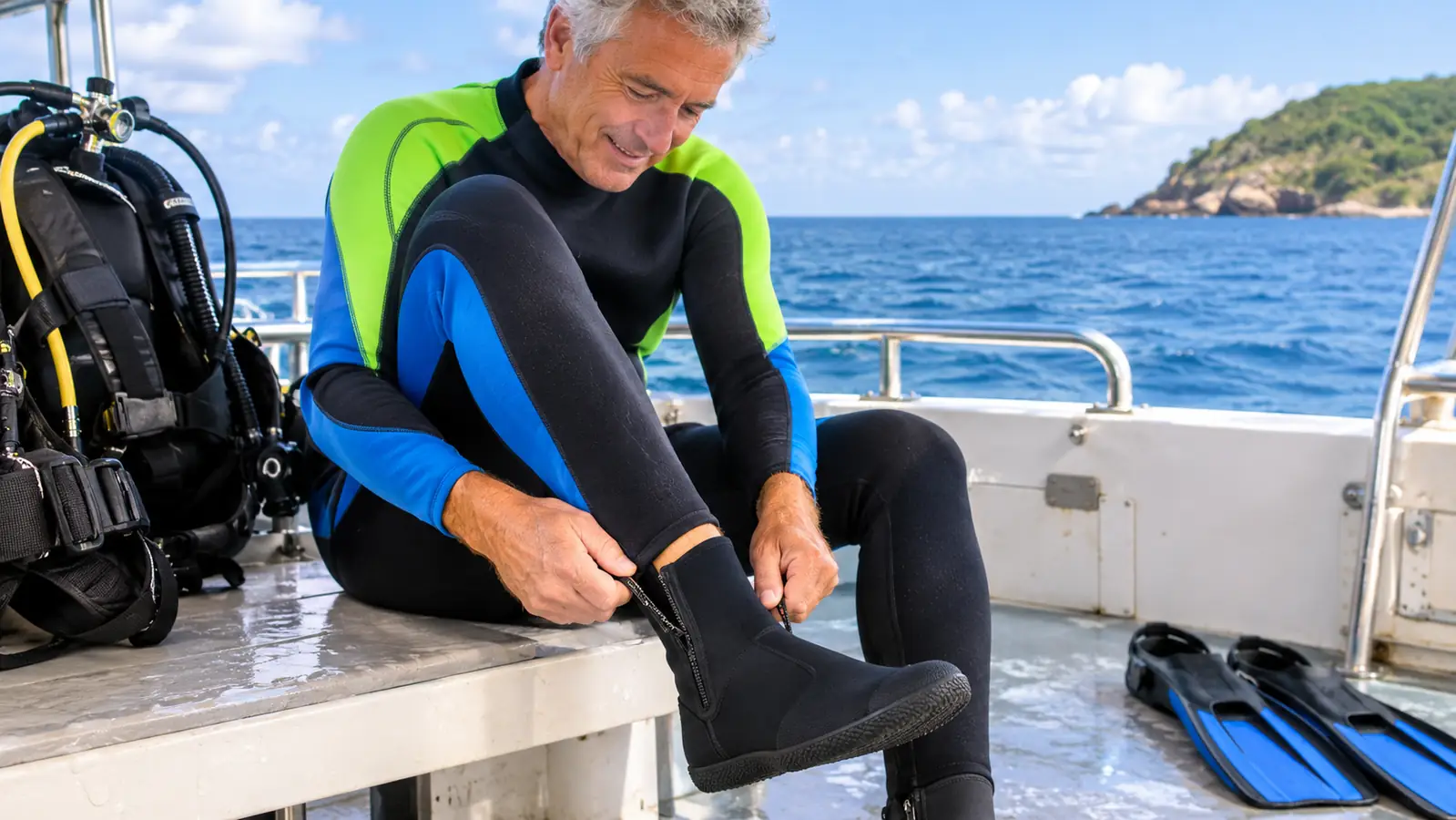
Here is what changed. The Cressi boots have a rubber sole with an anti-slip tread, and a zipper up the side. That sounds like a small thing until you are walking down a wet aluminum ladder with your fins in one hand. The sole gives you something to stand on. The zipper means you are not wrestling a wet boot over your heel while the boat rocks. I am 61 and I do not bend like I did at 47. That zipper matters more every year.
They are neoprene, so they are not dry boots. You will get out of the water with them wet, and they will stay wet until you hang them. The listing says hand wash only, and I believe it. I rinse mine in the tub under the carport, hang them on the clothesline, and let the breeze do the rest. A pair of tall neoprene boots is not a hiking shoe. It is a piece of dive gear that happens to make the walk to the water safer.
The first time I wore them on the dock, I noticed the heat less. Not because the dock got cooler. Because there was a layer between my foot and the lumber. On the limestone entries I use when the tide is right, the rubber sole grips better than the old soft booties. On the boat, I can step out of them and into my open-heel fins without fighting the boot. That is the whole job. It does it.
The dock did not get cooler. My feet stopped caring.
Put a rubber sole between your feet and the hot dock
These are the Cressi neoprene boots I wear on every charter and every shore entry, about 90 dives in. If your feet are taking the heat before you even get wet, start here.
Amazon See Today's Price on Amazon →I have used them with open-heel fins on reef dives, wreck dives seen from the outside, and night dives on guided charter trips. The zipper has not failed. The neoprene has softened a little, which is what you want. The sole is still bonded. After 90 dives, the only wear I can point to is some scuffing on the heel from ladder rungs. That is normal. Nothing has peeled, and nothing has come apart at the seam.
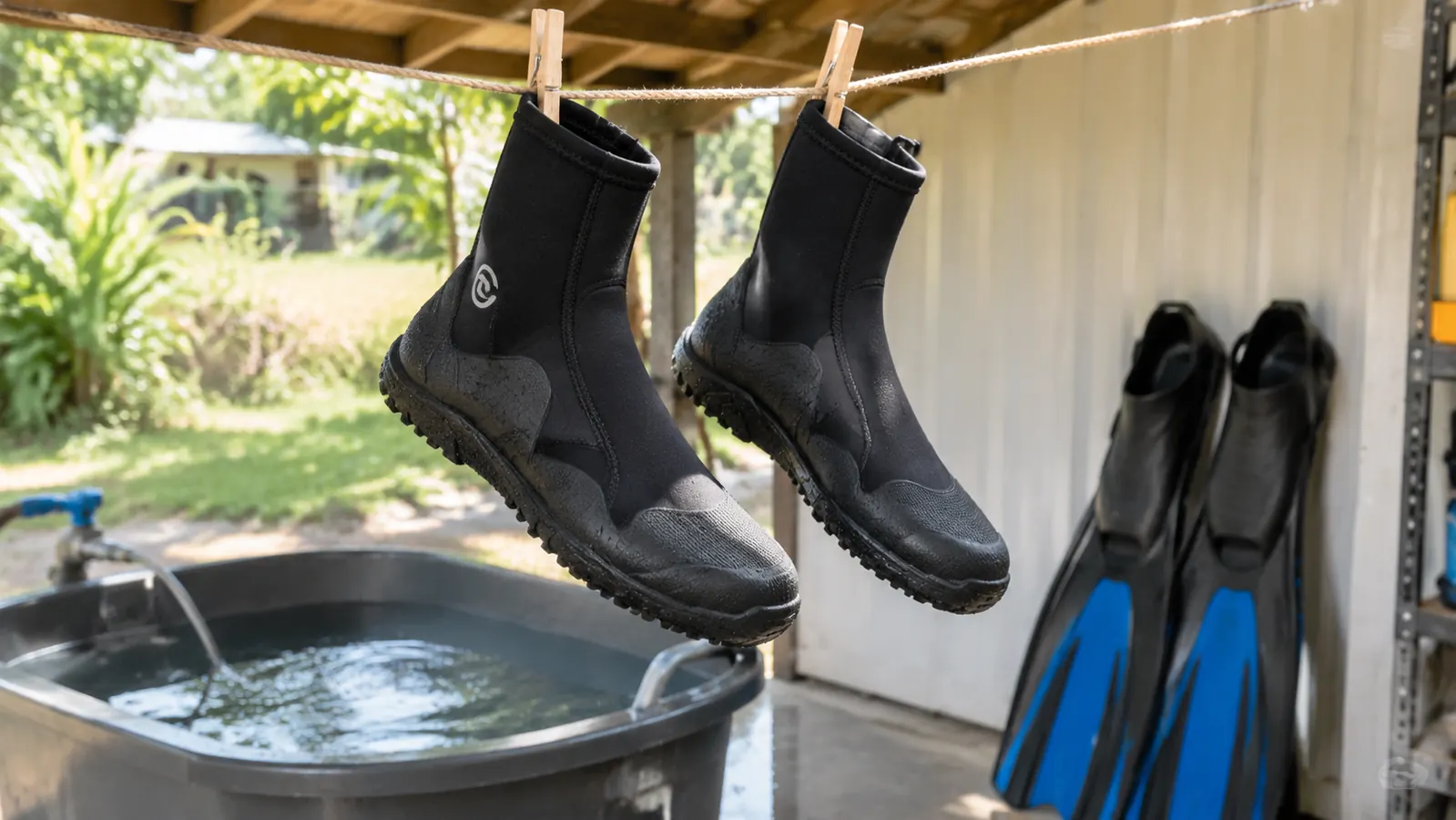
The downside is simple. They hold water. If you leave them in the 4Runner overnight, they will smell like low tide by morning. I do not care how good the boot is, neoprene does that. Plan on rinsing and hanging them. The hand wash instruction is real. Do not put them in a machine and hope. A five-minute rinse at the tub under the carport is the difference between gear that lasts and gear you replace.
They are also a tall boot. That is good for protection and bad for packing light. In the Bulex duffle they take up a corner. I still carry them because the alternative is a thin bootie that does nothing on a hot dock. If you only dive from a boat with a padded deck and you never walk a limestone shore, you can get away with less boot. I do both, so I do not. The tall cut also means more neoprene around the ankle, which some divers will feel as warmth in summer. I notice it on the walk back, not in the water.
I would not call them a warm-water boot in the sense of being built for tropical heat. At 71 degrees in January I am glad to have the neoprene. In August I am glad to have the sole. They are not insulated like a cold-water boot, and I would not pretend they are. They are a recreational dive boot for people who walk to the water and want their feet intact when they get there.
What I'd Tell You If We Were Sitting at My Kitchen Table
If you were sitting at my kitchen table, I would tell you to stop buying dive boots like they are an afterthought. The boot is the part of the kit that touches the dock, the ladder, the limestone, and the sand. A bad one makes every entry a negotiation. The Cressi boots are not fancy. They are neoprene with a rubber sole and a zipper, hand wash only, and they have held up for about 90 dives. That is the whole case. If your feet are taking a beating before you even get wet, put the boot first and skip the next gadget. Check the size chart, rinse them, hang them, and go diving.
Your feet meet the dock before they meet the water
The Cressi neoprene boots are the pair I keep in the 4Runner. Zippered, rubber sole, built for the walk as much as the dive.
Amazon Check Availability on Amazon →