

Short answer first, because that is what you came for. The Mares Avanti Quattro Plus is the stronger fin. It moves more water per kick, the foot pocket is perforated to cut drag on the recovery stroke, and the bungee strap means you are not fighting a buckle with cold hands on a moving deck. The Cressi Pro Light is the smarter buy for a lot of divers. It costs about half what the Mares costs, it carries a two year limited warranty, and its softer dual material blade is easier on legs that are already tired by the second tank.
I have about 60 dives on the Mares and roughly a year of ownership. I dive out of Tavernier, mostly shore entries and two tank charters in 20 to 60 feet, and the Quattro Plus has been on every scuba dive since I bought it, worn over a pair of 3mm boots. I do not own the Cressi Pro Light. Everything I say about it comes off its published listing, and I will say so again when it matters. What follows is what the Mares does in salt water, what the Pro Light does on paper, and which one I would hand to a diver standing in a parking lot with a decision to make.
The Two Fins Side by Side
| Mares Avanti Quattro Plus | Cressi Pro Light | |
|---|---|---|
| Cost | More than the Pro Light | About half the cost of the Mares |
| Blade material | Tecralene blade, four rib structure | Polypropylene with a soft elastomer, dual material |
| Water flow | Channel Thrust inserts, four channel design | Full length side rails |
| Foot pocket | Perforated to cut drag | Elastomer, no perforations listed |
| Strap | Bungee | Quick release buckles |
| Warranty | Full manufacturer warranty, term not stated | Two year limited warranty |
| Made in | Not listed | Italy |
| Best for | Divers who want push and do not mind the work | Long boat days and tired legs |
Where the Mares Avanti Quattro Plus Wins
The blade is where the money goes, and the Quattro Plus puts it into moving water. The listing describes a four rib structure and a four channel design, with Channel Thrust inserts built into the blade to push more water rearward on the downstroke. What that means in the water is simple. A firmer blade with more surface returns more push for the same amount of leg. On a two tank charter I notice it on the second tank, when the legs are warm and the kick has settled into a rhythm. I cover the same distance on a slower cadence than I did on my old pair.
The perforated foot pocket is the detail nobody puts on the front of the box and everybody feels. A solid pocket scoops water on the recovery stroke, and that scoop is drag you pay for with your thighs. Mares perforates the pocket to let that water through. I cannot measure it with a gauge, but I can tell you the fin does not fight me on the way back up, and on a long swim out to a ledge that matters more than any brochure line about power transfer.
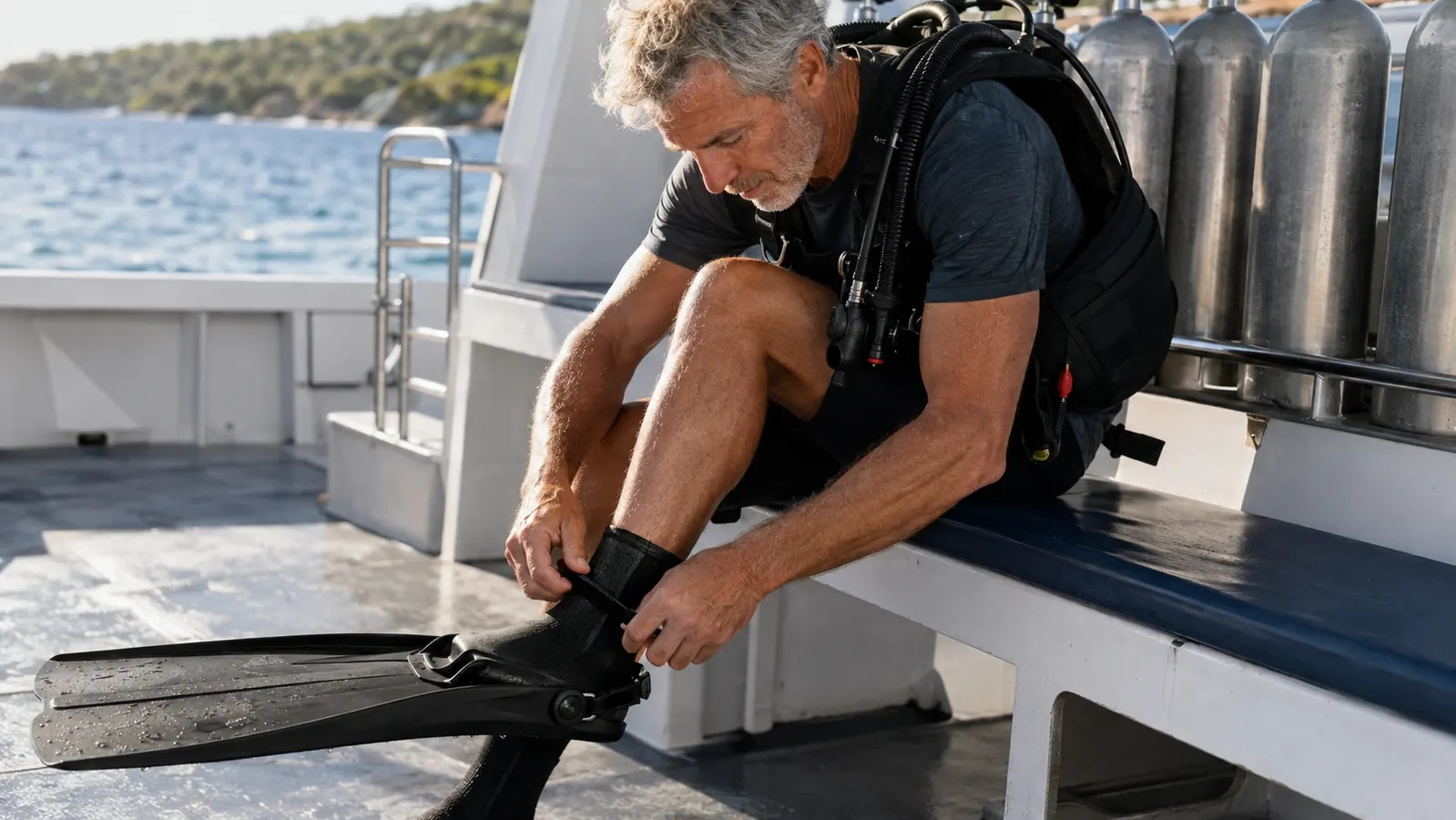
The bungee strap is the third thing, and I will be honest that this is preference as much as it is engineering. My old fins had buckle straps, and I spent years opening them a notch here and closing them a notch there with cold fingers. The bungee goes over the boot and comes off in one pull. I set it on the first dive and have not touched it since. On a rolling deck with a light in one hand, that is worth something no spec sheet will ever tell you.
The foot pocket itself is a straightforward fit over a 3mm boot. The listing calls the fit type regular, and that matches what I found. I did not have to go up a size to get my boot in, and I did not have slack around the heel once the bungee was set where it wanted to sit. My old pair were the long buckle strap fins, about 26 inches, and I spent years opening a strap a notch on one side and closing the other, chasing a fit that never quite settled. The Quattro Plus settled on the first dive and has stayed settled through 60 more. For a piece of rubber worn over a boot in salt water, that is a longer run of good behavior than I expected when I paid for it.
Where the Cressi Pro Light Wins
Start with the money, because that is where most divers start. The Pro Light runs about half the cost of the Mares. Half is not a small gap between two pieces of gear that do the same job in the same water. If you are building a kit from nothing, that difference buys the boots, the light and a spare mask strap you will be glad you own the day one snaps.
It also carries a two year limited warranty, stated plainly in the listing. The Mares listing says the fin comes with a full manufacturer warranty and does not spell out the term. If a warranty you can read in one sentence matters to you, Cressi gives you one and Mares gives you a promise with no number attached to it.
The blade is dual material, polypropylene with a soft elastomer, built with full length side rails and an elastomer foot pocket. That softer build is friendlier to tired legs and to long surface swims, and the quick release buckles give a positive click and a set position that plenty of divers prefer to a bungee. It is made in Italy. I have never put a foot in one, so I will not pretend to tell you how it feels. I will tell you what Cressi lists and what that build is generally for, and you can judge the rest.
The fin I reach for on a two tank charter
Sixty dives on the Avanti Quattro Plus and it has not given me a reason to swap it out. If your legs can drive a firmer blade, this is the fin that pays you back for the work.
Amazon Check today's price on Amazon →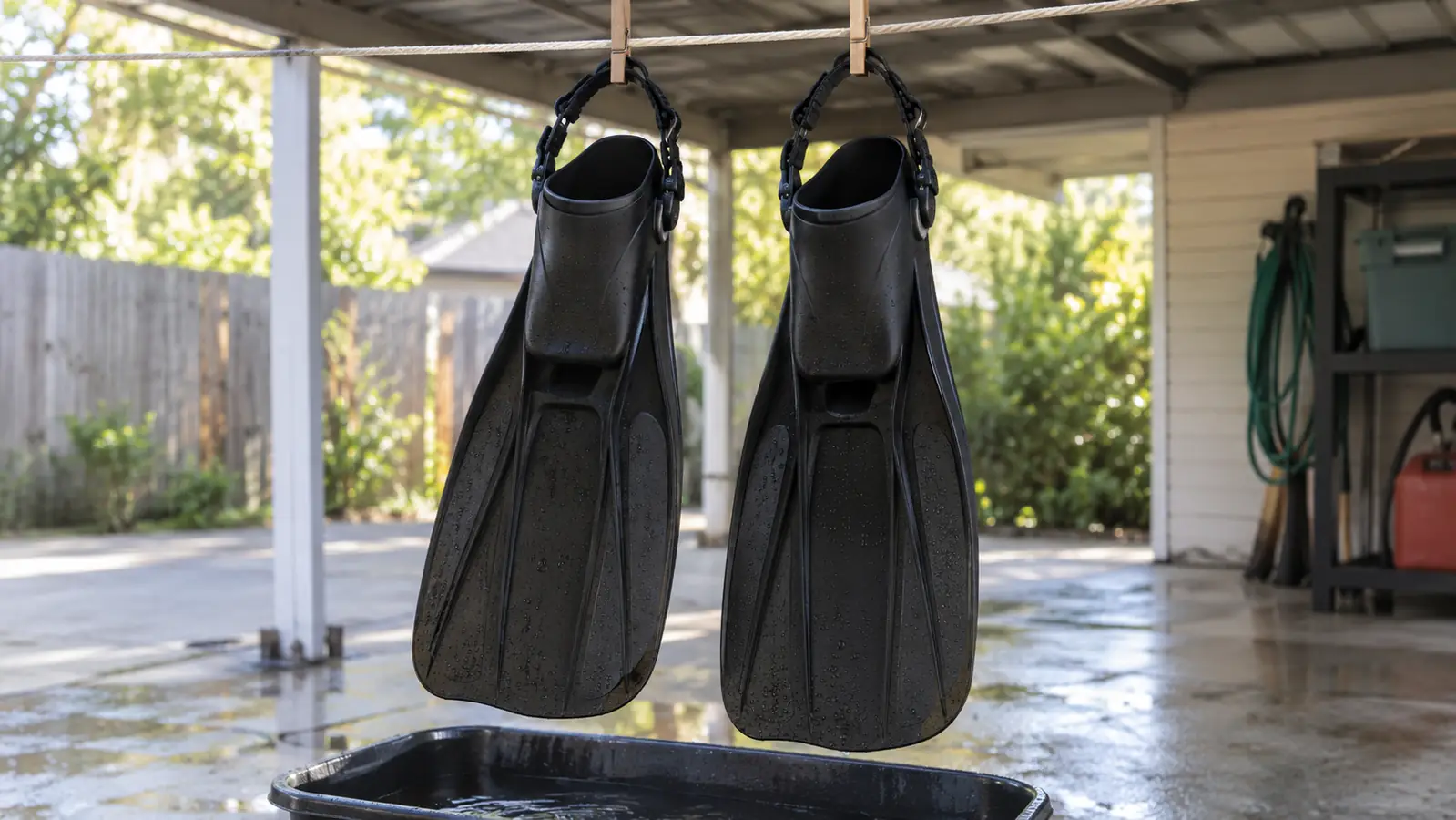
What 60 Dives Taught Me About the Quattro Plus
Sixty dives in salt water is enough time to find the weak points on a piece of gear. Mine gets rinsed at the carport tub after every trip, hung on the line to dry, and carried in a mesh bag that drains instead of holding water against the blade. The strap has not frayed. The foot pocket has not split where a boot heel rubs it. The elastomer has not gone soft or taken a set. The only adjustment was the one on the first dive, and that was me learning where the bungee sat best over the boot.
Take one morning last spring as an example of how it goes. I walked in off the limestone at a public entry, boots on, fins in my hand, and put them on in waist deep water the way I always do. Water was in the high seventies. I swam out a hundred yards or so, worked a slow frog kick for close to an hour over sand, dug a handful of holes with my mask on my face, and came back in. The fins came off in the water and I walked out in boots. Nothing about that morning was interesting, which is the point. The gear did not ask for attention, it did not rub anywhere, and it did not loosen off on the swim back in against a light chop. That is what I want out of a fin at 61 years old.
The blade is stiff. That is the trade and I will not dress it up. It gives you push and it asks for leg in return, and on a day with current or a long swim into a head sea my legs know they were working. If you have knee trouble, or you dive once a year on a cruise and nothing else, a softer fin will treat you better. I would rather say that plainly than sell you a fin that is wrong for your legs.
On sand hunts I use a slow frog kick and kneel on the bottom to dig. The four channel blade behaves well in that mode. It does not scoop a face full of sand on the recovery, and the fin stays where I put it while I fan the bottom with one hand. My mask stays on my face the whole time. The fins stay behind me and out of the hole, which is exactly where they should be.
Sixty dives, one strap adjustment on the first dive, and nothing since.
What I Liked
- Four rib blade with Channel Thrust inserts moves more water per kick
- Perforated foot pocket cuts drag on the recovery stroke
- Bungee strap goes on and comes off with cold hands
- Tecralene blade has held up over 60 salt water dives
- The fit settled on the first dive and has not moved since
- Well behaved on a slow frog kick over sand
Where It Falls Short
- Costs about twice what the Cressi Pro Light costs
- Stiff blade is real work on tired legs
- No heel pull tab on the foot pocket
- Heavy enough that I notice it in the gear bag
- Listing states a warranty but not its term
Reading the Specs Without the Brochure
The Mares blade is Tecralene, with a soft thermoplastic rubber foot pocket, and it has stood up to salt water and sun. It is the reason a four rib blade can be firm without going brittle. The listing files the closure as a buckle and the fin arrives with a bungee strap. I have not found a buckle to fight on mine, so I will leave that contradiction where I found it.
The anti-parachute perforated foot pocket is the piece of the listing I would point a new diver at first, because it is the one claim you can feel on your very first dive without knowing anything about fin design. Water trapped in a solid pocket has to be pushed back out on the recovery stroke, and the leg pays for it. Perforations let it drain. The four rib structure is the other half of the same idea. Ribs stiffen the blade down the middle and let the edges flex, which is how a firm fin can still come back up without a fight on the way.
The Pro Light sheet is tidier. Dual material blade, full length side rails, elastomer foot pocket, quick release buckles, made in Italy, two year limited warranty. Both listings are written for different sizes, so I will not compare weights or lengths between them. Anybody who tells you fin A is lighter than fin B after reading two listing pages is guessing, and you should treat it that way.
Who Should Buy Which
Buy the Mares Avanti Quattro Plus if you dive regularly, you have reasonable leg strength, and you are tired of replacing gear every couple of seasons. It suits shore entries where you walk in wearing boots and pull fins on in waist deep water, and it suits a charter where you sit on the bench to gear up and never stand up in fins. It suits a diver who wants the kick to do the work and does not mind paying for the blade that makes it happen.
Buy the Cressi Pro Light if the budget is real, if your legs are not what they were, or if most of your diving is warm water travel with a lot of surface swimming. That softer dual material blade and the two year warranty make a strong case for a diver who gets two trips a year and wants a fin that will still be serviceable on the third. It is also the friendlier choice for anyone who has been away from the water for a while and is building back up.
A last word on the warranty question, because it is the one place the Pro Light clearly beats the Mares. Cressi publishes a two year limited term. Mares publishes a full manufacturer warranty and no number. If a fin fails at month twenty, you know exactly where you stand with Cressi, and you are making a phone call with Mares. That is a real advantage and I am not going to pretend otherwise. It just is not the advantage that decides the purchase for a diver who gets in the water forty times a year and wants the blade that does the most work per kick.
Either way, spend your attention on the boot first. A fin that fits badly over a thin boot will rub you raw no matter what the blade costs. Get a 3mm boot that fits, try the fin over it, and pick the one that does not move around on your foot. The fin is the engine, but the boot is the mount, and a bad mount wastes a good engine.
Buy the blade once and stop thinking about it
Fins are not where you want a bargain that quits in a season and a half. If the Quattro Plus fits your leg strength and your boot, it is the last open heel fin most recreational divers will need to buy.
Amazon See current price on Amazon →