

Shore diving around Tavernier is mostly a walk. You park, you pull on boots, you cross limestone and sand, and you put your fins on in waist deep water because standing on one leg in the shallows with a tank on is a good way to fall. I have been using a pair of Mares Avanti Quattro + open heel fins for about a year now, roughly 60 dives, almost all of them shore entries or sand hunts. They are not the lightest fins in my carport and they are not the softest. They are the pair I reach for when the entry is rough and the bottom is sand.
I am 61, retired from marine electrical work, and I dive for fun and for lost metal. That means my fins have to do two jobs: get me through a shore break without a fight, and let me hold a slow frog kick over sand while I scan for a signal. The Mares fins do both. Here are ten reasons they suit shore divers, plus the one case where I would leave them at home.
Open heel, bungee strap, built for a boot
The Mares Avanti Quattro + is the pair I wear with my 3mm boots on shore entries and sand hunts. Four channels in the blade, a perforated foot pocket, and a bungee strap instead of a buckle fight.
Amazon Check Today's Price on Amazon →The foot pocket takes a real dive boot
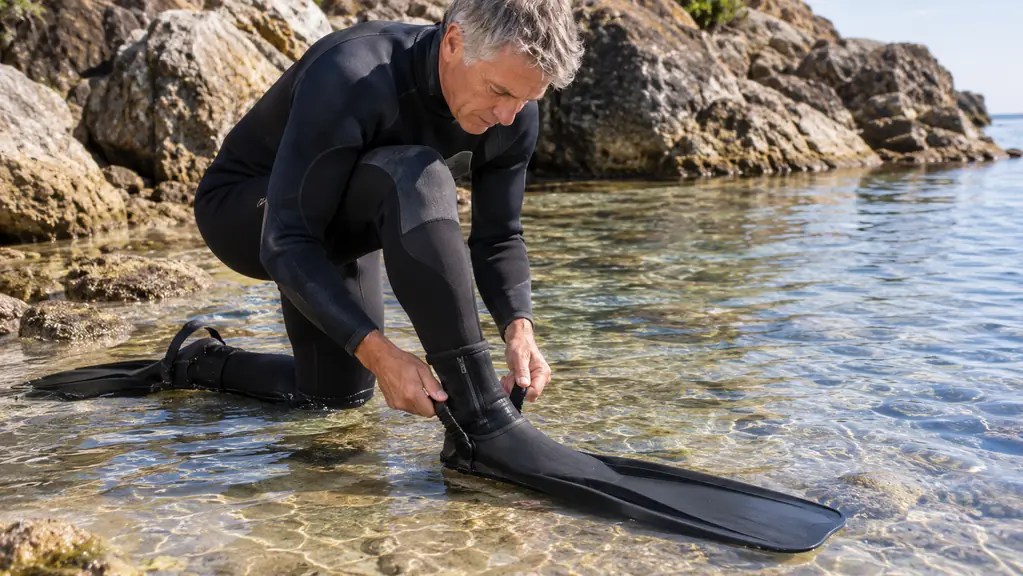
My shore entry starts with 3mm Cressi boots on my feet. The Mares foot pocket is built for an open heel fit, so the boot goes in and the strap goes over the heel. I walk the limestone in boots, wade to waist deep, and put the fins on there. No bare heel rubbing on sand, no trying to shove a boot into a full foot pocket that was never made for it. If your entry is rock, gravel or a hot dock, this is the reason to go open heel.
The bungee strap ends the buckle fight
My old fins had long buckle straps. I fought them on the boat and in the water. The Mares pair uses a bungee strap, which pulls on and off without me opening a buckle or finding the right notch. I set the strap once on the first dive and have not changed it. On a shore entry I can put the fins on in waist deep water without taking my mask off or balancing on one leg.
Four channels move water instead of just shoving it
The blade has a four-channel design and Channel Thrust inserts. In plain terms, the blade guides water back through the channels instead of letting it spill off the sides. I feel it most on the second half of a frog kick, when I am trying to cover ground into a mild current without sprinting. It is not a free ride. You still do the work. The fin just makes the work count.
The perforated foot pocket cuts drag
The foot pocket is perforated. Mares calls it anti-parachute, and that is a fair description. A solid pocket catches water on the recovery part of the kick. The holes let some of it through. On a long surface swim back to the beach, I notice the difference in my ankles more than my legs. It is a small thing that adds up over 60 dives.
Enough blade for a slow frog kick over sand
Most of my hunting is in 10 to 30 feet over sand. I wear the Mares fins with boots, drop to the bottom and use a slow frog kick so I do not blind myself with silt. The blade has enough surface to move me without a fast flutter. When I kneel to dig, the fins stay behind me and out of the hole.
I have about 60 dives on my pair. The strap has not moved since the first day, and I have not had to baby the foot pocket.
They behave on a charter swim step
On a charter I sit on the bench or the swim step to put fins on. I do not stand up in them. The open heel and bungee strap make that easy: boot on, fin on, strap over the heel, then into the water. When I come back, I take them off in the water, pass them up and climb the ladder in boots. I never climb a ladder in fins. The Mares pair is simple to handle in that order.
The weight is honest, and you feel it
These are not a feather. On the walk from the 4Runner to the water, I feel them in my hand along with the bag and the detector. In the water, that weight is part of why the blade does not flutter. If you want a fin that disappears on your feet for a snorkel, this is not that fin. If you want a fin that holds its shape on a kick, the weight is the trade.
They pack long, so plan the 4Runner
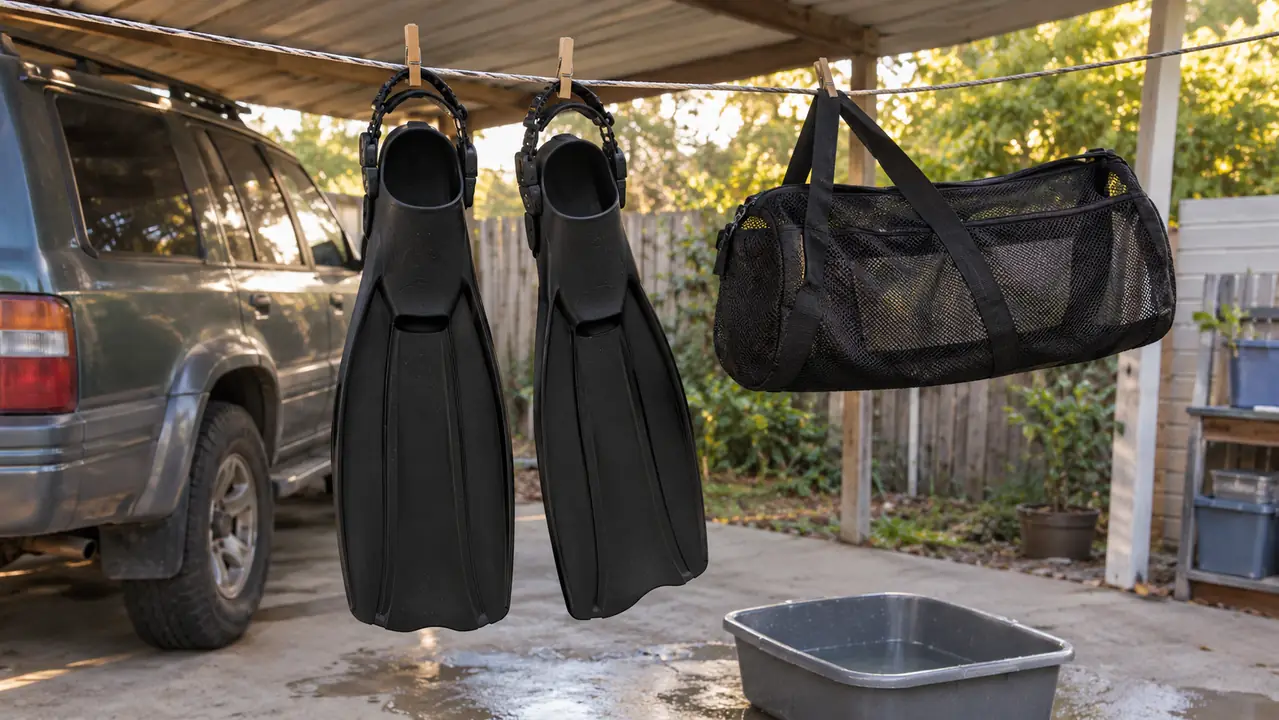
They do not fold into a ball. They ride in the Bulex bag in the back of my 4Runner. On a charter boat they take up a strip of deck. That is normal for an open heel scuba fin. If your car is small and your gear pile is large, measure the space before you buy. The length comes with the blade.
They push back when the current picks up
I am 61 and I do not sprint anymore. In a mild current, the Mares fins let me keep a steady kick and still make progress. They are stiffer than a soft snorkel fin. On a long swim with tired legs, I feel that. I would not call them a lazy fin. I would call them a fin that rewards a deliberate kick. For shore diving, where you often have a swim out and a swim back, that is the right trade for me.
Regular fit and a full manufacturer warranty
The Mares fins are listed as a regular fit, with a full manufacturer warranty. I have a regular foot and the standard size works with my 3mm boots. If you have a wide foot or wear thick cold water boots, try the fit before you commit to a long dive. The warranty is the kind of thing you hope never to use. It is also the reason I trust the brand more than a no-name fin.
What I'd Skip
Here is what I would skip. If your water time is warm, barefoot and entirely snorkeling from a beach, a full foot snorkel fin is lighter and packs easier. My Cressi Rondinella fins do that job for me in summer, and I never wear them with boots or on a scuba dive. If you only snorkel in 3 to 8 feet inside the swim area, you do not need an open heel scuba fin. Also skip the Mares pair if you want a fin you can stuff into a small travel bag and forget. These are long, they have a real blade, and they want a boot. They are shore diving tools, not travel slippers.
If your entry is rock, sand or a ladder, go open heel
The Mares Avanti Quattro + has the foot pocket, the bungee strap and the blade for shore work. Wear your boots, walk in, put them on in waist deep water. Check today's price and the current size options on Amazon.
Amazon Check Today's Price on Amazon →