
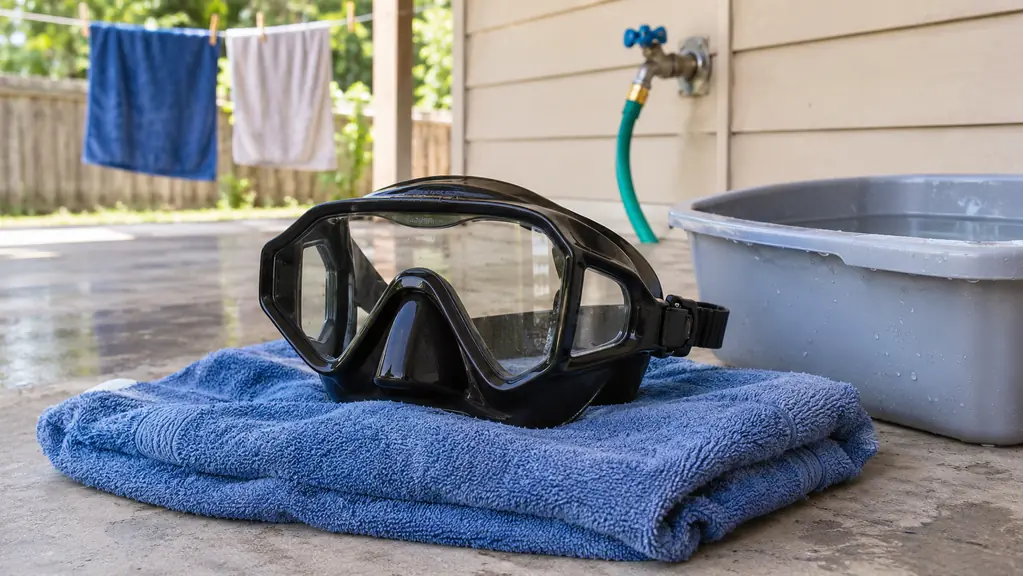
A new dive mask that fogs is not a mystery, and it is not a reason to spit in the lens or wave a lighter at it. The glass comes out of the factory with a thin film on it, and your face puts warm, wet air into a cooler pocket. Until you strip that film and learn one repeatable routine, every dive starts with a cloudy view and a minute of guessing. I keep an EXP Vision Pano 3 as a spare mask, and I prep it the same way I prep any mask: plain toothpaste, a fresh water rinse, a strap set once, and a drop of mild dish soap before the dive. No flame. No hoping.
I am 61, retired after 33 years as a marine electrician, and I live in Tavernier. I dive from charter boats and from shore, mostly 20 to 60 feet. About 10 months ago, on a morning charter out of Tavernier, my buddy Cal's mask strap snapped in his hands while he was gearing up on the bench. He sat out the first dive while the mate found him a strap. I ordered the EXP Vision Pano 3 that week. It has about 15 dives on it now, all shallow sand hunts in 10 to 20 feet in daylight. It is not my main mask.
Prep it once at the carport and stop fighting fog on every dive
The EXP Vision Pano 3 is a three-window spare with tempered glass, a soft silicone skirt and an adjustable strap. Mine has done 15 shallow sand hunts since I prepped it with toothpaste and a dish soap routine. It is not my main mask, but it is the one that goes in the bag as a backup.
Amazon See the current listing on Amazon →The Prep Routine I Use on a New Mask
The order matters. Inspect first, set the strap second, strip the factory film third, check the seal fourth, and only then build a defog habit. If you set the strap after you scrub, you will handle the lens with toothpaste on your fingers. I do these steps at the carport, in daylight, with the mask on a towel. It takes about 20 minutes the first time and five minutes after that.
Step 1: Inspect the mask and set the strap before it gets wet
Open the box at the carport, not on the boat. The Pano 3 comes with the mask only, so I set it on a clean towel beside the rinse tub. I look at the skirt for folds or grit, check that both buckles move, and make sure the glass sits flush. The listing says three lenses and tempered glass, with a food grade liquid silicone skirt and a plastic frame. That matches what I see: one front lens, two side windows, a soft skirt and an adjustable strap with buckle closures.
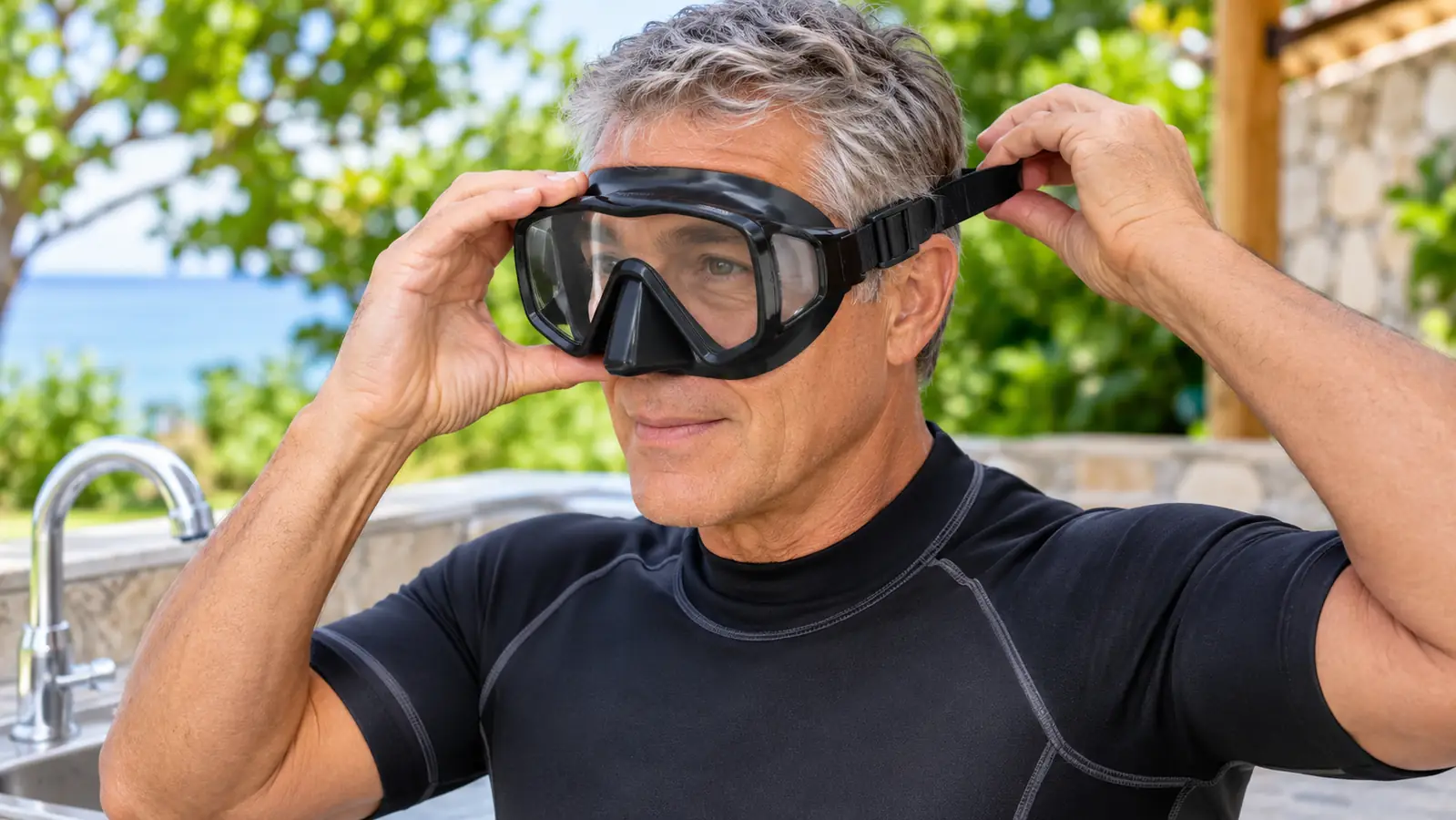
Then I set the strap. I put the mask on my face without pulling it tight, and I move the strap so it sits across the crown of my head, above my ears. Snug, not tight. A tight strap causes leaks, and a leak is not a seal problem you can fix by cranking harder. I set mine at the carport before the first dive and have not moved it since. That is one less thing to fiddle with on a boat.
I also look at the side windows before I do anything else. On a three-window mask they are the feature I care about on a sand hunt, and a scratch or a smudge there is easy to miss in a shop. The Pano 3 arrived with clean glass. If yours does not, deal with it before the first dive rather than on the boat. The listing says tempered glass, and I treat it like glass: no keys in the same pocket, no mask tossed loose in the bag.
Step 2: Scrub the lenses with plain toothpaste, never a flame
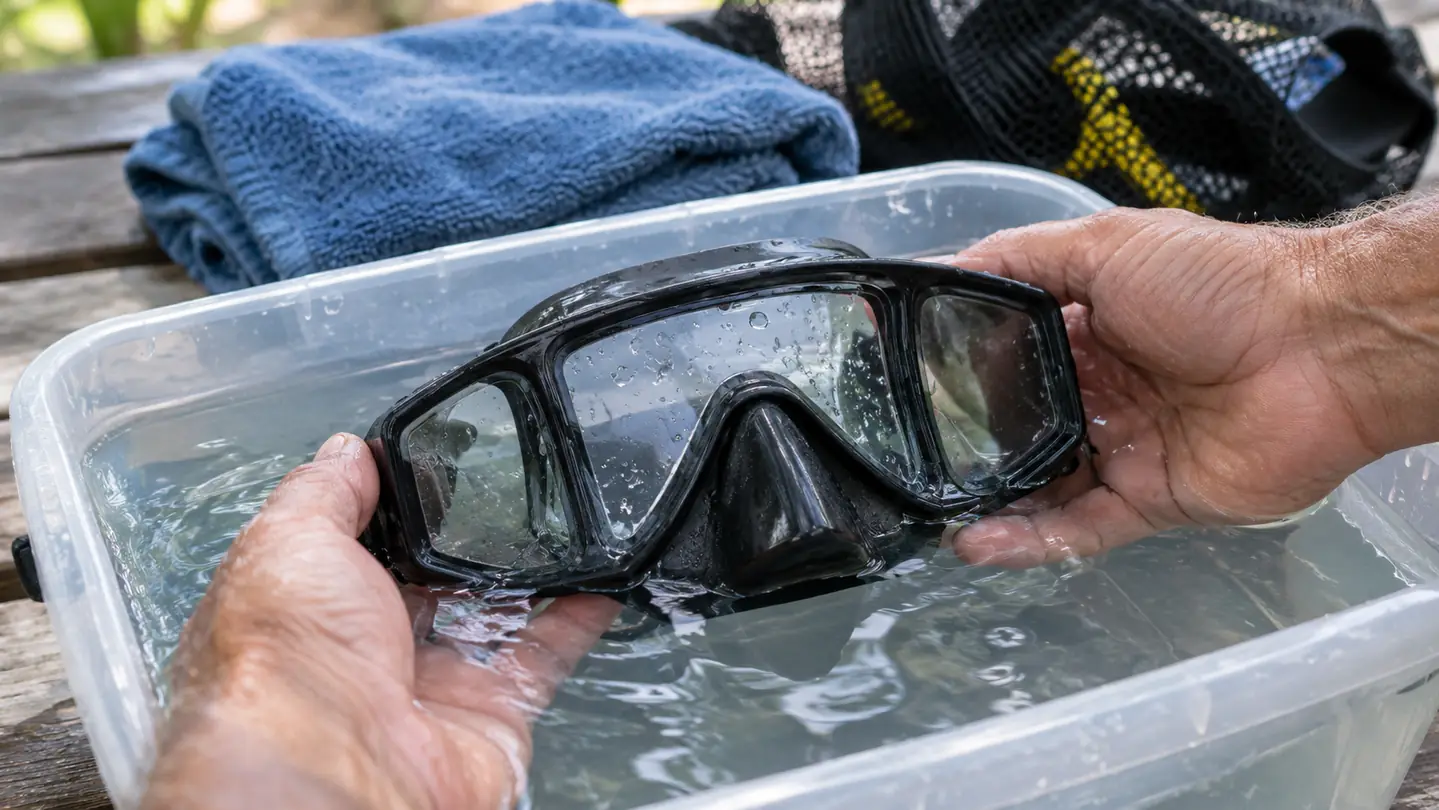
The old trick of burning the lens with a lighter is a good way to crack tempered glass or ruin a skirt. I use plain white toothpaste, the gritty paste, not a gel. A pea-sized dot on each lens, a fingertip, and a gentle scrub on both sides of the glass. The point is to lift the factory film, not to polish the lens. I do this over the rinse tub so the paste does not end up on the carport floor.
I scrub for about a minute per lens, then rinse with fresh water and look at the glass at an angle. If water still beads in patches, I do it once more. The Pano 3 needed two rounds before the glass stopped holding a film. I have done this with every mask I own, including my main Cressi Matrix, and it has never hurt a lens. No flame, no abrasive cleaner, no toothpaste with whitening beads if I can avoid it.
One caution from the listing: it warns against dropping the mask and against jumping into the water wearing it. I treat the prep the same way. The mask stays on the towel, not on the edge of the tub. I never jump in wearing it. I walk in from the beach.
Step 3: Rinse, dry, and check the seal at the carport
After the toothpaste, I rinse the mask in fresh water and set it lens up on a towel to dry. I do not wipe the inside of the lens with a rag. A dry rag can leave lint or oil, and both make fog worse. I let it air dry, then check the seal. I put the mask on my face without the strap and press the skirt gently to see if it sits flush. If it lifts, I check for hair under the skirt or a fold in the silicone. I am clean shaven, so I do not have to fight beard hair, but I still check.
The Pano 3 has more air inside than my Matrix, so it takes more clearing. That is not a defect, it is the trade for the side windows. I also check the side windows for smudges. The side windows are the reason I use this mask on sand hunts, because they let me scan the bottom without turning my whole head. A smudge on one of them defeats the point.
Step 4: Defog with a drop of mild dish soap on every dive day
The factory anti-fog coating on my Pano 3 did not last. It was gone within the first handful of dives. That is common, and it is why I do not rely on a coating. My routine is a drop of mild dish soap in the mask, a fingertip spread across the inside of each lens, a quick rinse in fresh water, and then a shake. I do not rinse it so hard that I take all the soap off. A thin film is what I want.
On the boat I keep a small bottle of dish soap in the Bulex bag. I defog before the first dive and again after lunch if the mask has been sitting. I do not spit in the lens. I do not use shampoo. Dish soap is cheap, it cuts the oils from my skin, and it rinses clean. If the mask fogs anyway, I check the strap and the skirt before I blame the soap. A leak lets water in and warm air out, and that makes fog.
Step 5: Rinse after salt water and store it lens up
Salt water dries into crystals. Those crystals can scratch glass and they can stiffen a silicone skirt over time. When I come off the charter boat or out of the shore entry, the mask goes into the 4Runner and comes out at the carport rinse tub. I rinse it in fresh water, inside and out, and lay it lens up on a towel under the carport. I do not leave it in the sun for hours. I do not put it away wet.
The Pano 3 comes with no case. I bought a small hard case separately and it rides in the Bulex bag as the spare. In the case it stays lens up and away from the detector and the fins. If I am on a sand hunt, I set it lens up on the towel when I take it off, not face down in the sand. The listing warns against dropping it, and a mask on the sand is one fin kick away from being stepped on.
I never lend it. Nobody else has tried it, and the spare is for my own strap or lens, not a loaner. That is not selfish on a boat. A spare that fits no one else is still the spare that gets me in the water if my main mask fails. I check it before every trip, even if it has not been used since the last one. The Pano 3 feels a little heavier on my face than the Matrix, and I want to know that before I am on a ladder.
I dry the mask in the shade, not on the dashboard of the 4Runner. Heat is hard on silicone and on any coating. I set it lens up on the towel under the carport and let the air do the work. If I am traveling, I dry it before it goes in the hard case. A mask put away wet smells like a bait bucket after a week. That is not a gear problem, it is a habit problem. The habit is part of the prep.
What Else Helps
A hard case, a small bottle of dish soap, and a clean towel do more for a mask than any additive. I keep the towel separate from the one I use on my hands. Cal's snapped strap is the reason I bought a spare mask. I do not rely on the boat having one.
Hair is the other thing. I check my hairline before every dive. A single hair under the skirt can let water in, and once water is in, fog follows. I also check the side windows on the Pano 3 for sunscreen. Sunscreen on the glass is a film, and a film is a fog magnet. A drop of dish soap and a rinse handles it. I do not use a flame, and I do not use toothpaste after the first prep. Toothpaste is for the factory film, not for every weekend.
The factory anti-fog on my EXP Vision Pano 3 quit inside the first handful of dives. Toothpaste for the film, dish soap for the dive, and a fresh water rinse after: that is the whole system.
What I Liked
- Three windows help me scan sand without turning my head
- Tempered glass and a soft silicone skirt feel solid for the price
- Adjustable strap with buckle closures set once and stayed
- Low cost for a dedicated spare
Where It Falls Short
- More internal air than my main mask, so it takes more clearing
- Factory anti-fog coating did not last
- No case in the box
- Feels a little heavier on the face than my Matrix
Who This Spare Suits
The Pano 3 suits a recreational diver who wants a second mask in the bag and does not want to spend a lot on it. It suits shallow sand hunts, snorkeling, and a backup for a charter. It does not suit someone who wants one mask for everything. My Matrix is still my main mask. The Pano 3 sits in the Bulex bag with a hard case and comes out when I want the side windows or when I want a spare on the boat.
It also suits a diver who will actually prep it. If you are not going to scrub the factory film and use dish soap, any mask will fog. The Pano 3 is no different. The listing has a satisfaction policy through EXP Vision after-sales service, and the mask is sold as one mask, no case. Read that before you order. If you want a case and a strap set at home, plan for it.
A clear mask is a prepped mask, not a lucky one
If you need a second mask for shallow hunts or a charter backup, the EXP Vision Pano 3 is the one I keep in the bag. Prep it once at the carport, keep a dish soap bottle handy, and rinse it after every salt water day. Check the listing and the satisfaction policy before you order.
Amazon See the current listing on Amazon →