
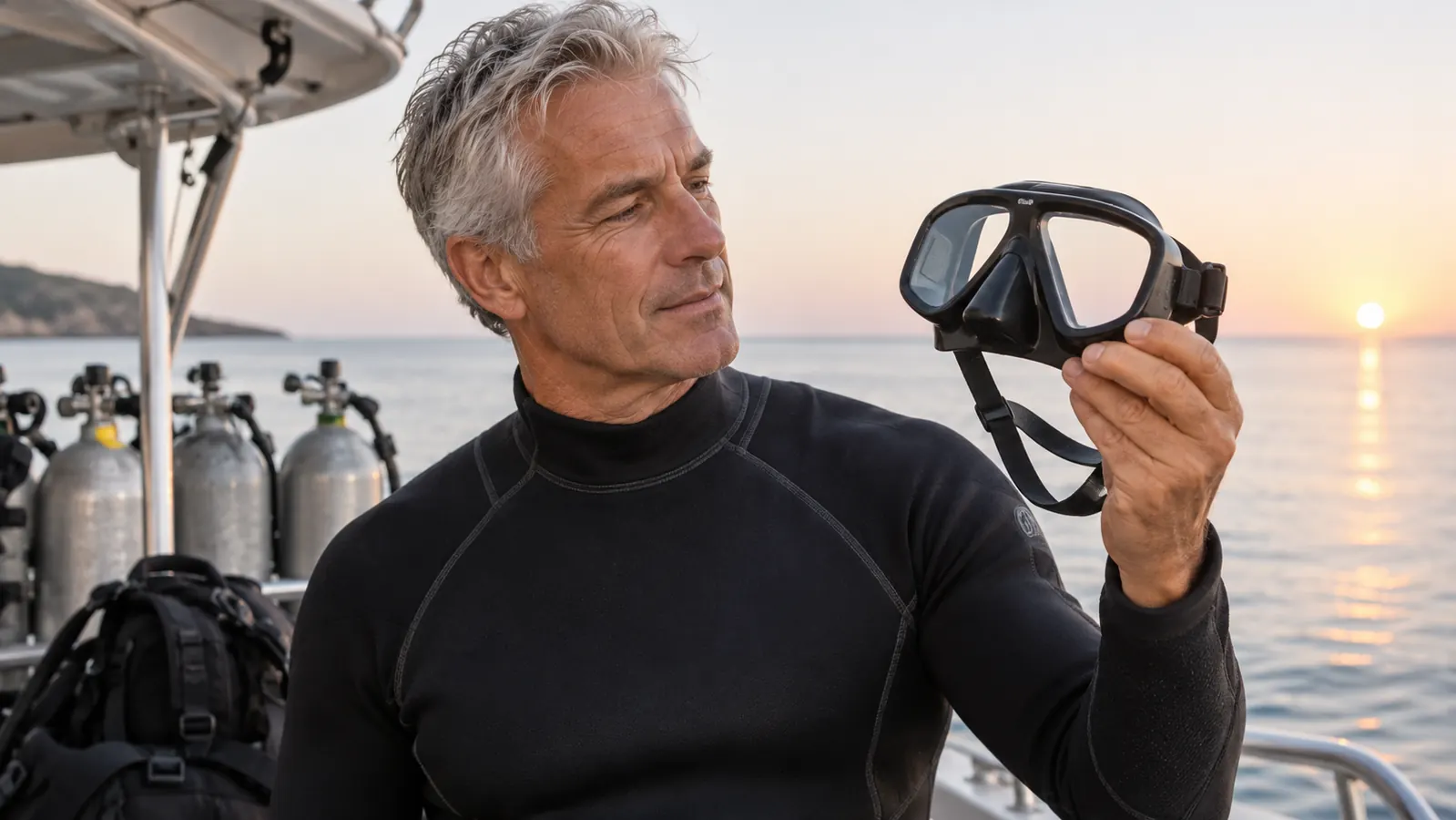
The strap on Cal's mask snapped in his hands on the bench of a charter boat out of Tavernier. Morning trip, boat on a mooring, everyone geared up and ready. Nobody aboard had a spare strap. The mate found one, but not before Cal sat out the entire first dive with a full tank and nothing to do but watch the rest of us go over the side. I had no second mask on that boat either. That is the part that stayed with me. A mask strap is a nothing part until it is the only thing between you and a wasted morning on the water. I ordered the EXP Vision Pano 3 that same week and dropped it in the bag as a spare.
I have somewhere around fifteen dives on the EXP Vision Pano 3 now. Every one of them was a shallow sand hunt in ten to twenty feet of water, in daylight, working a swim beach or a dock bottom with a detector in one hand and my eyes on the sand. It has never been on a charter trip. It has never been past twenty feet in my hands. My main mask is a Cressi Matrix and it is still the main mask. So this is not a review from a man who switched and never looked back. It is a review from a man who bought a backup, used it enough to learn its habits, and can tell you plainly where it holds up and where it does not.
The Quick Verdict
Wide side vision for scanning sand, tempered glass in all three windows, and a price that makes a second mask sensible. It holds more air than a low-volume mask, and the factory anti-fog was gone inside the first handful of dives. Buy it as a spare, not as your only mask.
Amazon Check Today's Price →A snapped strap should not cost you a whole morning on the water
This is the mask that lives in my bag so a broken strap or a scratched lens does not end my day. Three tempered glass windows, food grade silicone skirt, adjustable strap. Check today's price on Amazon.
Amazon Check Today's Price on Amazon →How I've Used It
I bought the EXP Vision Pano 3 about ten months ago, the week of the Cal strap business, and it has had a working life rather than a shelf life. Fifteen dives across ten months is not a lot and I will not pretend it is. Most of them were summer and fall mornings when the water was flat and the visibility was good enough to spot a ring in the sand from three feet away. Those are the days the spare comes out instead of the Matrix. Not because I like it better. Because a spare that never gets wet is a spare you do not actually know.
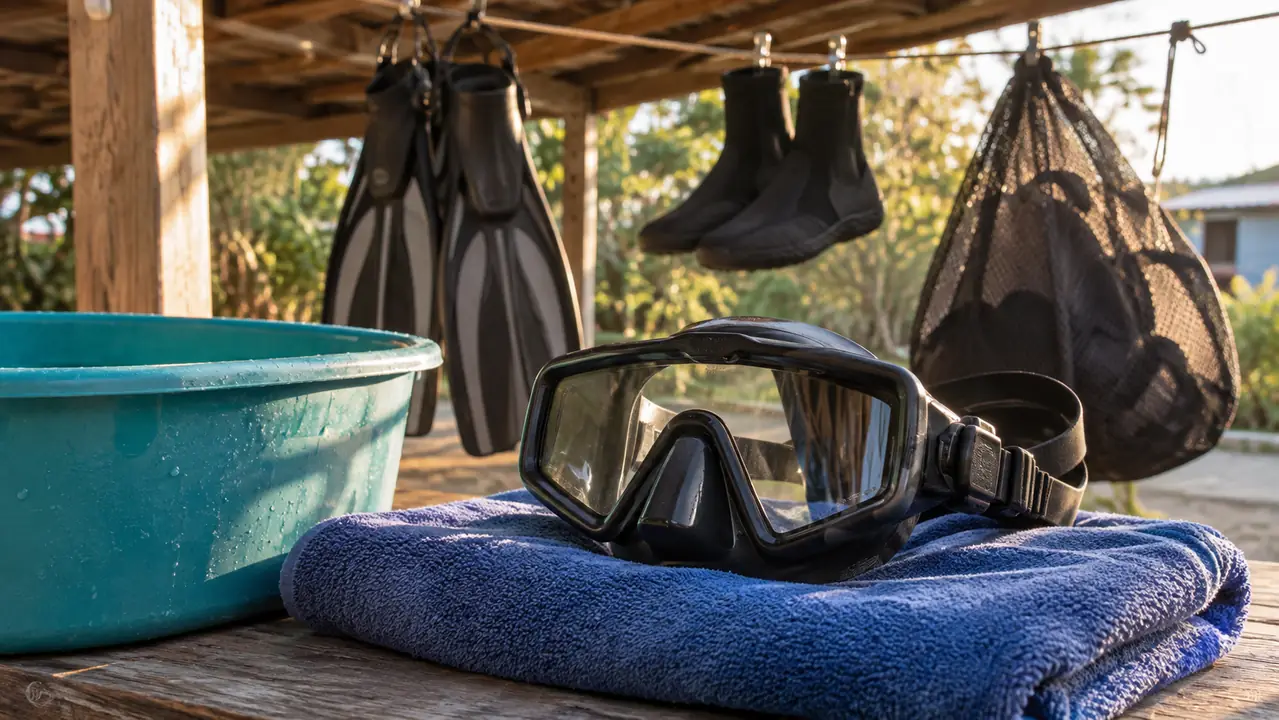
It rides in the Bulex mesh bag inside a small hard case. The mask does not ship with a case, so I bought one separately and I would tell anyone to do the same. A three-window mask rattling around a duffle with fins and a metal detector is a scratched lens waiting to happen, and the listing itself warns against dropping it. When it comes out of the water it gets laid lens up on a towel beside the carport rinse tub, and it gets a fresh water rinse before it goes back in the case.
Before the first dive I scrubbed the lenses with plain toothpaste, the way I do every new mask, and I set the strap at the carport so it sat where I wanted it. It has not moved since. The strap crosses the crown of the head above the ears, snug and not tight, same as any mask. Tight straps cause leaks. That is not a Pano 3 problem, it is a diver problem, and I have been that diver more than once.
What the Three Windows Do When You Are Scanning Sand
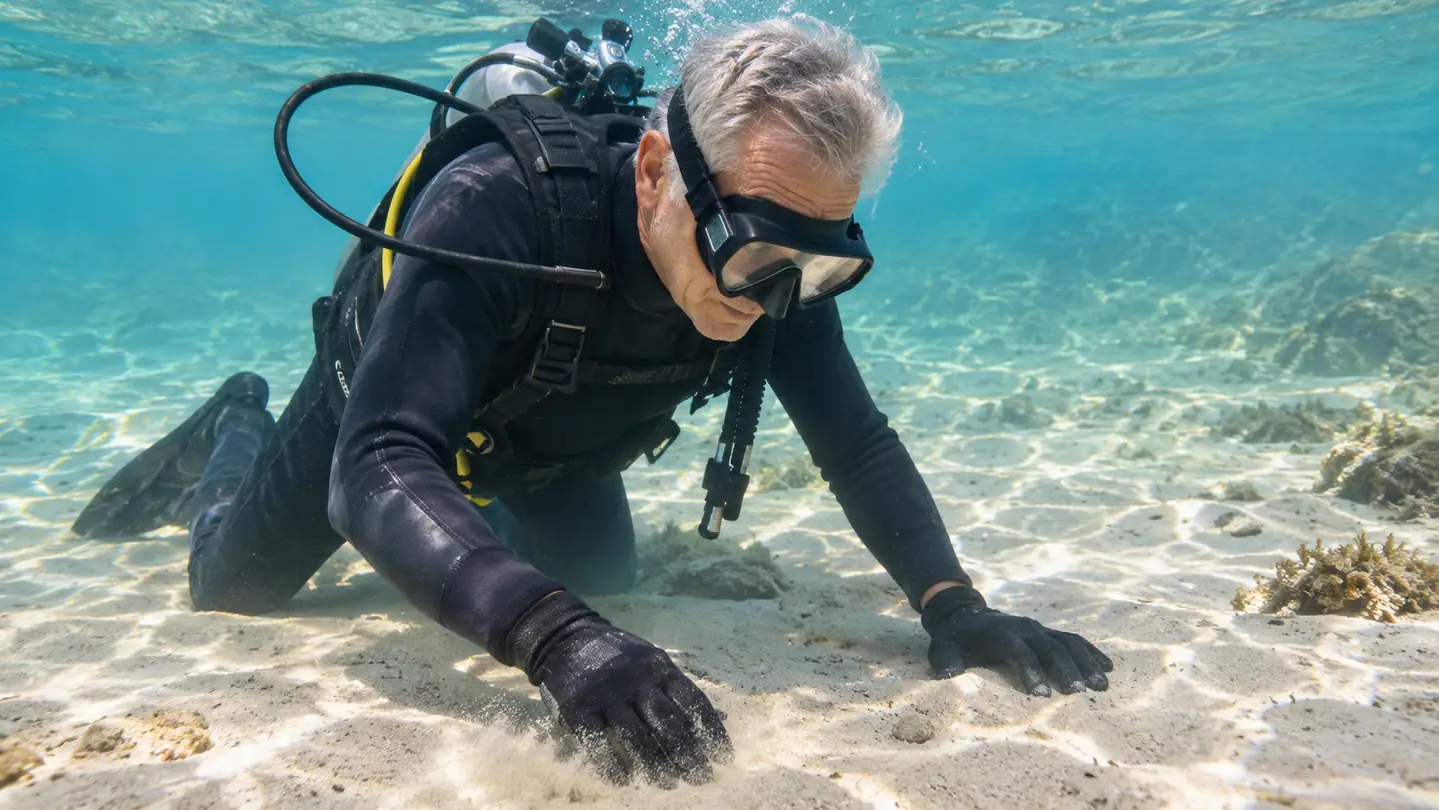
The reason I reach for this mask on a shallow hunt is the side windows. A single lens mask gives you a tunnel with good forward vision and almost nothing at the edges, and that is fine when you are swimming a line. When you are kneeling on sand with a detector in one hand and a scoop in the other, your head is down and your eyes are working a strip about as wide as your shoulders. The two side windows open that strip up. I find scoop marks and small glints at the edge of my view that I would otherwise have had to turn my head to catch. It is a small thing. It is also the whole reason the mask stays in the bag instead of the closet.
The listing calls the view panoramic, and the seller's copy mentions a 180 degree field. I do not repeat that as fact, because I have not measured it and I am not going to claim a mask lets you see the back of your head. What I can tell you is that the side windows are tempered glass, same as the front, and they do widen what you can take in without turning. Whether that is worth anything to you depends entirely on whether you spend your dives looking down at a flat bottom or out at a wall.
The front lens is tempered glass, the skirt is food grade liquid silicone, the frame is plastic, and the strap is adjustable with a buckle closure. I never jump in wearing it. I walk in from the beach. The listing warns against jumping into the water wearing it, and it warns against dropping it. Take both seriously. There is more frame here than on a frameless mask, and more frame means more to catch the water on the way in.
The Specs, and What the Box Does Not Include
Here is what the listing actually says, because a fair amount of budget mask marketing does not survive a look at the spec sheet. Three lens design, three windows, tempered glass, food grade liquid silicone skirt, plastic frame, adjustable strap, buckle closure. Included components: one mask. That is the whole line. It means no case, no pouch, no spare strap. The warranty is a satisfaction policy through the seller's after sales team rather than a fixed term, so read it properly before you buy rather than after something goes wrong.
For what it is worth, the listing carries a rating in the low fours across more than four thousand reviews. That is not proof of anything except that the mask is not a disaster in a box, and I would rather tell you what I found in ten months of use than lean on a star average.
What the specs do not tell you is the thing that matters once you are in the water: how much air is inside the mask. My Cressi Matrix is a low volume mask, two lenses, close to the face. The Pano 3 sits differently, with more space between the glass and my eyes. More air inside a mask means more air to move when it needs clearing. I noticed that on the first shallow dive and I still notice it now. It is not a defect. It is a trade, and the trade is a wider view for a bit more work.
The Two Faults I Found
The first fault is the anti-fog. The factory coating on the lenses was done inside the first handful of dives. That is common enough on budget glass and it is not a reason to send anything back, but if you buy this mask expecting to spit in it and go, you will be disappointed by the second week. I prep it the way I prep any mask now. A drop of mild dish soap, a fresh water rinse, shake it out, and put it on a dry face. It stays clear for a normal dive. It does not stay clear if I put it on a sweaty face in a hurry at the dock.
The second fault is the air volume, and it belongs on the list even though I have already covered it. A mask holding more air takes more clearing, and on a day when you are working a sandy bottom and knocking the skirt loose every twenty minutes, that adds up. There were a couple of hunts where I came up more tired in the face than I would have with the Matrix. Getting the strap right and keeping hair out of the skirt narrows the gap. I am clean shaven, which helps, and I still run a thumb around the seal line before every entry.
No mask fits every face, and a three-window frame fits fewer faces than a soft frameless one. Do a seal test before you buy, or buy from somewhere that takes returns without an argument. That advice is not specific to EXP Vision. It is just true of masks.
Where the Pano 3 Stops and My Main Mask Starts
My Cressi Matrix has about a hundred and eighty dives on it and the only seep it ever gives me is when hair gets under the skirt. It cost more than the Pano 3 and it is worth more to me, mostly because of the downward view. I read my gauges through the bottom of that mask without lifting my head. The Pano 3 gives me a wider horizontal view and a less useful look straight down, because the front window sits further out and the frame takes up more of the low angle.
So the split is simple. Deeper than twenty feet, on a charter, on anything with current or a long swim out, the Matrix goes on. Shallow sand, flat water, a couple of hours of kneeling and scanning, the Pano 3 earns its place in the rotation. If I only owned one mask it would be the Matrix. If I only owned one mask and had a tight budget, it might be the Pano 3, and I would want to try the seal first and I would buy a case the same day.
What I Liked
- Three tempered glass windows with genuinely useful side vision for scanning a flat bottom
- Silicone skirt seals well on a clean-shaven face once the strap is set right
- Simple adjustable strap and buckle that has not moved in ten months
- Cheap enough that keeping a second mask in the bag stops being a decision
- Preps easily with a drop of dish soap once the factory coating is gone
Where It Falls Short
- Holds more air than a low-volume mask, so clearing takes more effort
- Factory anti-fog was done within the first handful of dives
- No case, pouch or spare strap in the box, just the one mask
- Feels a little heavier on the face than a two-lens mask
- It will not suit every face
Fifteen dives, ten to twenty feet, all of them sand hunts. The side windows are why it stays in the bag. The air volume is why it is not my main mask.
Who This Is For
This is a good mask for a diver who already has a main mask they trust and wants a second one without spending main mask money. It is also a reasonable first mask for a snorkeler or a new diver who wants tempered glass and a wide view and is not ready to commit to a low volume scuba mask. If your diving is shallow, flat, warm and slow, and a lot of it is spent looking down, the three windows earn their keep.
It suits the sand hunter in particular. Scanning a public swim beach for a lost ring is a wide, shallow, head down job, and that is the exact shape of work this mask was built for. It also suits the diver who has had a strap let go on a boat and does not intend to spend another morning on the bench watching.
One more thing worth saying plainly. A spare is not a loaner. Nobody else uses this mask. Cal has his own gear, Dee does not dive, and the Pano 3 exists so that a snapped strap or a scratched lens on my own face does not cost me a morning. If you are buying it to hand around a boat, that is a different purchase and I am not the man to advise it.
Who Should Skip It
Skip it if you want one mask and only one. A low volume two lens mask is a better everyday scuba mask for most people, and the extra clearing effort is real on a long dive. Skip it if you are hard on gear and will not buy a case, because none is included and the listing is clear that dropping it is a bad idea.
Skip it if your face is narrow, if you have not done a seal test and cannot return it, or if you want a mask that stays fog free out of the box for a full season. It will not, and the fix is a bottle of dish soap and a routine you actually follow.
The second mask you hope you never need
Three tempered glass windows, food grade silicone skirt, adjustable strap, and a price that makes a backup sensible instead of indulgent. If a strap snaps on the boat, this is what keeps your morning. Check today's price on Amazon.
Amazon See Today's Price on Amazon →