

Three years ago I bought the Cressi Matrix because the mask I had been diving for about six years, a single big window I paid very little for, had started seeping at my right cheek. Not flooding. Seeping. A thin line of salt water that crept in around the twenty minute mark and pooled in the low corner of the lens until I stopped and cleared it. I cleared that old mask more times in my last year with it than I have cleared the Matrix in three years. That is the review in one sentence, and everything below is the detail behind it.
I am 61, retired, and I live in Tavernier, so nearly every dive I make is warm salt water between 20 and 60 feet. I dive from the local charter boats and I dive from shore. I also hunt lost metal in the sand at public swim beaches, which means I spend a great deal of time looking down. The Matrix has been on my face for about 180 dives now, every scuba dive I have made since the day I bought it, and it is the mask I reach for without thinking about it. It is not the cheapest mask on the wall at the shop, and I have never once regretted it, which for me is an unusual sentence to write about gear.
The Quick Verdict
Three years, about 180 dives, and the skirt still seals on the first try. The downward view is the reason I keep reaching for it. The reasons to hesitate are what it costs against a plain budget mask, and the fact that no mask fits every face.
Amazon Check Today's Price →The mask that stopped costing me air
About 180 dives on the Cressi Matrix and not one leak I could blame on the mask. If your current mask seeps at the cheek and you are tired of clearing it, look at today's price and then do the seal test on your own face.
Amazon Check Today's Price on Amazon →How I've Used It
I bought it about three years ago to replace that old single window mask. The first dive with it was a two tank charter out of Tavernier. I made one strap adjustment between those two dives, moved the strap up a little onto the crown of my head where it belongs, and I have not touched the strap since. Three years of boat rides, rinse tubs and carport clotheslines without fiddling with it.
It goes on every scuba dive, charter or shore. On sand hunts it goes on any time I am deeper than about 20 feet, and it stays on my face the entire time I am down, including while I am kneeling in the sand digging. Waist deep wading hunts are the only outings it stays behind, and that is because I am not putting my face in the water on those.
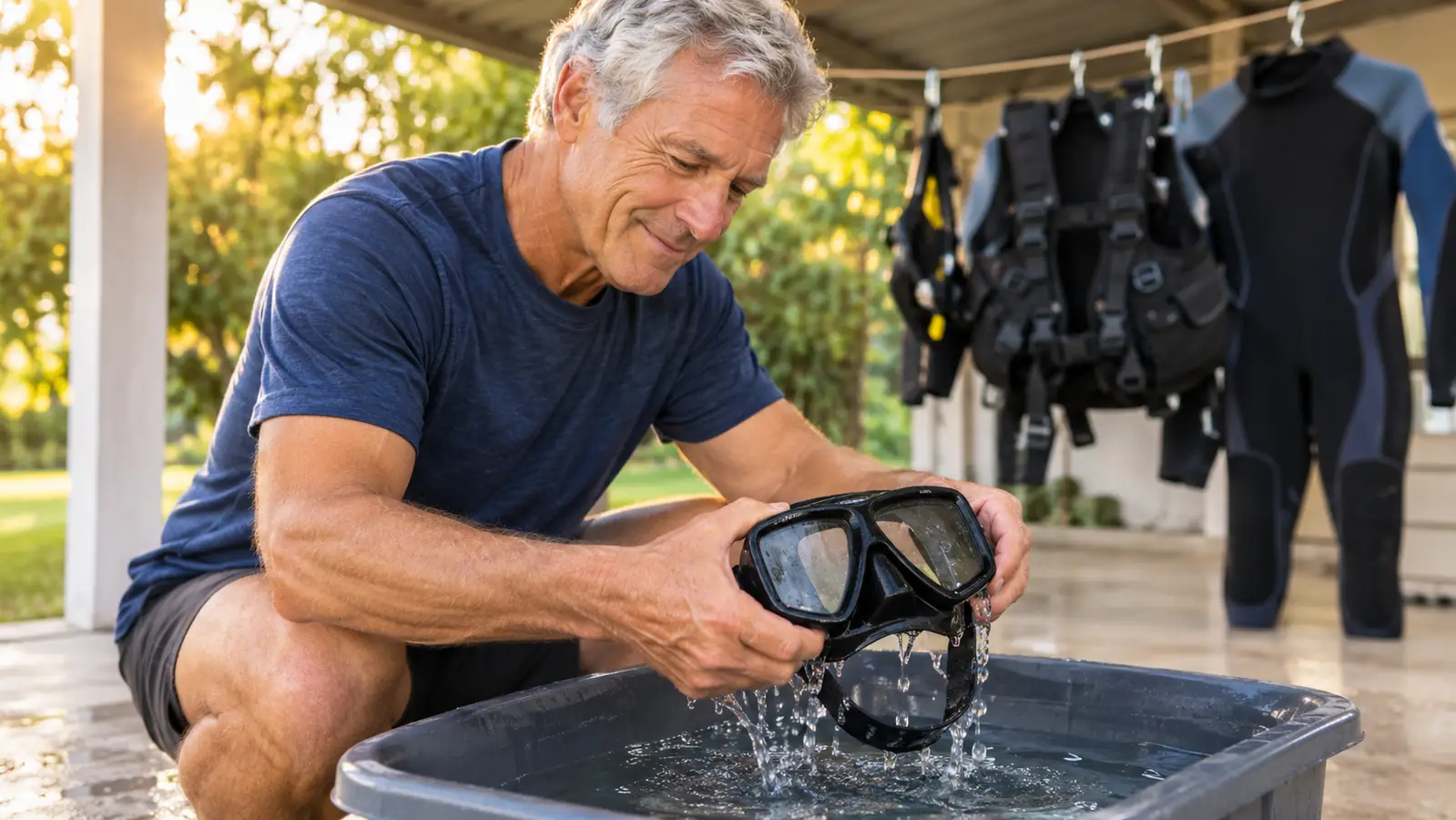
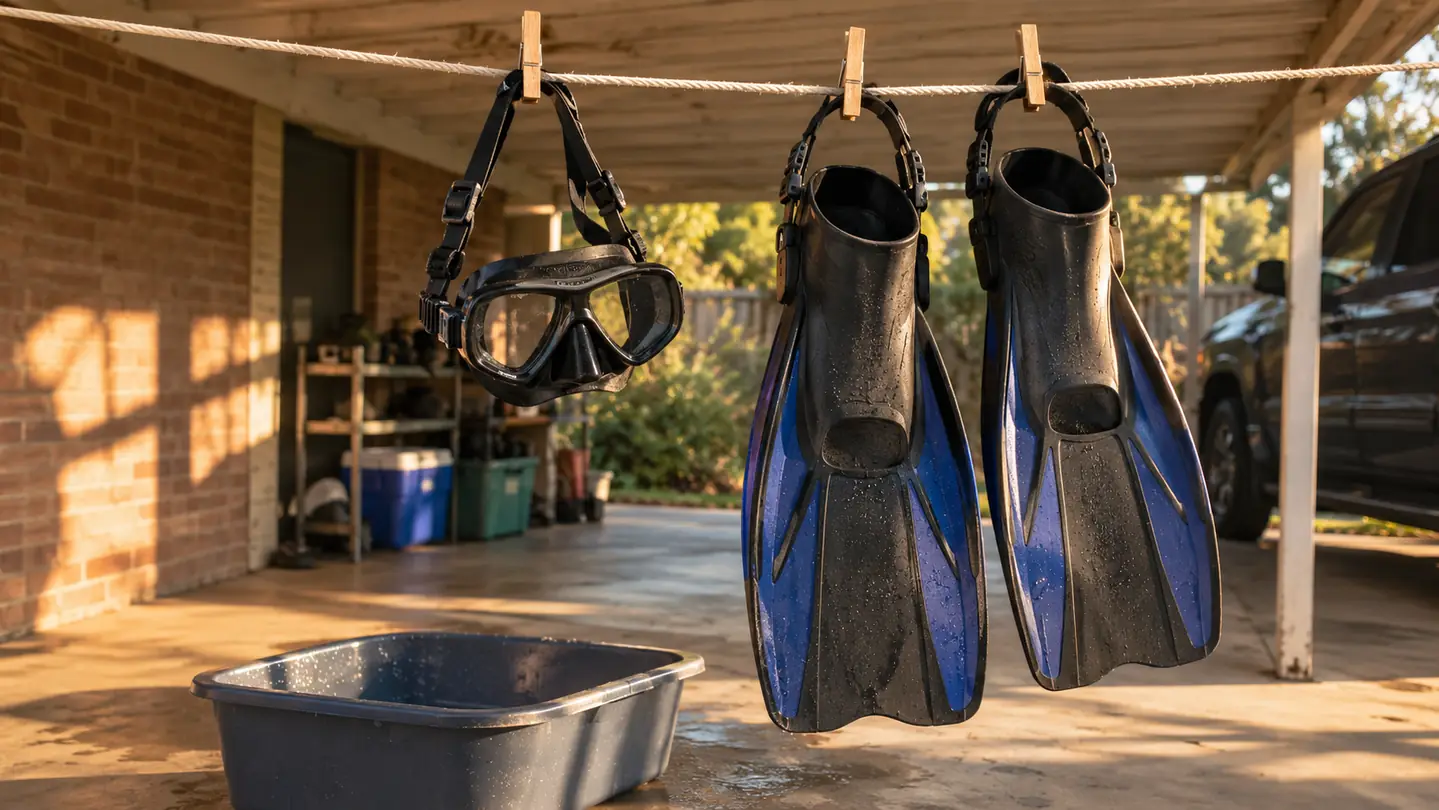
It rides in my mesh bag rolled in a towel. It came with no case and I never bought one, so the towel is the case. Three years of that and the lenses are still clear. At the carport it gets a fresh water rinse in the tub before it goes on the line, which is what I do to everything else in the kit, and I am convinced that rinse is why the skirt still feels the way it did in the first month.
What Three Years of Salt Water Actually Did
Salt water is patient and it wins eventually, so the honest question about any mask is what it looks like after a few hundred dunks. Here is what I can tell you about mine. The silicone skirt is still soft and still sits flat against my face, with no hardening at the edges and no cracks where it folds. The frame has not separated anywhere. The two lenses are clear, with no clouding creeping in at the rims. I rinse it every time, I dry it out of direct sun on the line under the carport, and I never leave it sitting in a bucket of fresh water overnight.
The features list says the skirt is hypoallergenic silicone with a wide sealing surface and the frame is silicone as well. The warranty is two years limited. Mine is well past that and it is still doing the job. I am not going to tell you a mask is indestructible. I am telling you this one has been wet, salty, rinsed, dried and stuffed into a bag about 180 times and nothing on it has degraded in a way I can point at.
The one part that has changed is the strap, and only in a good way. It has softened up and it now holds exactly where I set it. I check it before every dive the way I check everything, and it has not slipped on me once.
I made one strap adjustment between the two dives on my first charter and I have not touched it since. That was three years ago.
The Downward View, and Why I Care About It More Than Field of View
Every mask listing shouts about field of view, and most divers nod along without knowing what they are actually buying. I know what I am buying now, because the Matrix changed how I dive. The lenses are inclined and inverted tear drop shaped, which is Cressi's patented design, and the practical result is that I can look down without lifting my head. On a charter that means I read my gauges and my computer with a glance instead of tilting back. In the sand it means I see the bottom a few feet in front of me while I am swimming level.
That downward view is why this mask stays on my face and the spare stays in the bag. When I am hunting, I swim a slow line and watch the bottom. A shape that reads as a coin or a thin ring shows up better through the lower part of a lens than through the middle of a big flat window. The old mask was like looking through a porthole. This one is more like looking through a windscreen that is angled down at the road.
The field of view is wide, laterally and low, and that is a real thing you notice on a dive where your buddy is off to your side. But the downward part is what I would pay for again if I had to start over.
The Skirt, the Seal, and the One Adjustment
The seal is the whole mask. Everything else is comfort. The Matrix has a soft silicone skirt with a wide sealing surface, and on my face it seats with almost no strap tension at all. That matters, because cranking a strap down is the most common cause of the seep I see on boats. A diver tightens to stop a small leak and creates a worse one. I set mine across the crown of my head, above the ears, snug and no more, and it holds.
It will seep if hair gets under the skirt. I am clean shaven, so this is a small problem for me, but it does happen if I am careless pulling the mask on, and the fix is to lift the skirt and clear the hair rather than tighten anything. Beyond that I have had no leak I could blame on the mask since that first charter.
I will not tell you it will seal on your face, because I have no way to know that. Every face is different, and a mask that seals on a 61 year old man in Tavernier can leak on someone with a different brow and cheekbone. Do the seal test before you buy. Press it gently to your face with the strap hanging loose and see whether it holds on its own. This one is low internal volume, on par with the better freediving masks, which also means there is less air inside to clear when you come back up.
What I Do to It After Every Dive
Nothing clever. At the carport I rinse it in the tub with the hose, shake it out, and hang it on the line under the carport where the sun does not bake it. Then it goes back into the mesh bag rolled in the towel, and the bag drains in the back of the 4Runner. That is the whole routine. I do not use a mask box, I do not soak it overnight, and I do not leave it on a hot dashboard, which is the fastest way I know to ruin a silicone skirt.
Before a dive I use a drop of mild dish soap and a rinse, same as I have done since my open water class. The lenses have never given me a fogging problem that normal prep did not solve. I scrubbed them once with plain toothpaste in the first week, never a flame, and I have not needed to do it again.
The glasses question comes up now and then, usually at the flea market when someone spots the mask in the back of the vehicle. I do not wear glasses in the water and I have never used prescription lenses, so I have nothing useful to say about them. I would rather say that than guess at it.
Where the Matrix Gives Ground
Three things. The first is cost. It is not the cheapest mask on the wall and I am not going to pretend the difference does not matter to a diver building a kit from nothing. The second is the close lens position. The lenses sit nearer my eyes than the old single window did, and it took me three or four dives before that stopped feeling strange. Not uncomfortable, just different, and I noticed it most on the very first dive at the surface.
The third is fit. This mask will not suit every face. I have heard from divers who could not get a seal with it at any strap tension, and I believe them. A mask is the one piece of gear where your own face is the specification, and mine is not yours. It is also a two lens mask, so anyone coming off a single window has a small adjustment to make, looking through two lenses rather than one. It stopped bothering me inside the first week.
Two more things worth saying plainly. It comes with no case. The box has a mask in it and that is all, so if you want a case you buy one, and I never did. And if you are weighing it against something like the ScubaPro Spectra, understand that I have never owned that mask and neither has my buddy Cal. Anything I would tell you about it comes off a published listing, not off my face, and I would not rate how it sits on a person I have never seen wearing it.
What I Liked
- Seals on the first try and keeps sealing, about 180 dives in salt water
- Inclined inverted tear drop lenses give a downward view that is genuinely useful for gauges and for reading sand
- Low internal volume, so there is less air to clear
- Soft silicone skirt with a wide sealing surface, comfortable on very little strap tension
- One strap adjustment in three years and nothing since
- 2-year limited warranty, made in Italy
Where It Falls Short
- Costs more than a plain budget mask
- The close lens position takes three or four dives to get used to
- No case included, so you will want a towel or buy one separately
- Will not fit every face, which makes the seal test essential
Who This Is For
This is for the recreational diver who is on a boat or in the water often enough that a seeping mask is a real nuisance rather than a minor annoyance, and who wants to buy one mask and stop thinking about masks. It suits anyone who spends a lot of time looking down: gauge readers, divers working a subject on the bottom, and people like me who hunt the sand. It also suits a diver who has already been through a cheap mask, knows exactly what the difference is worth, and would rather spend once.
Who Should Skip It
Skip it if you are outfitting a family or a club and need several masks at once, because the cost adds up fast and a plain mask that seals will get a new diver through an open water course just fine. Skip it if you have a very wide or very narrow face and have never found a two lens mask that would hold. Skip it if you want a backup you can fold flat into a pocket, because that is a different job and a different design. And skip it if you will not do a seal test before you buy, because no review on the internet, mine included, can tell you whether a mask will hold on your face.
Three years is a long time to keep a mask you do not like
The Matrix has been on my face for about 180 dives and I have never had a reason to replace it. If your mask is seeping at the cheek and you are tired of clearing it, check the current price, then do the seal test the day it arrives.
Amazon Check Today's Price on Amazon →