
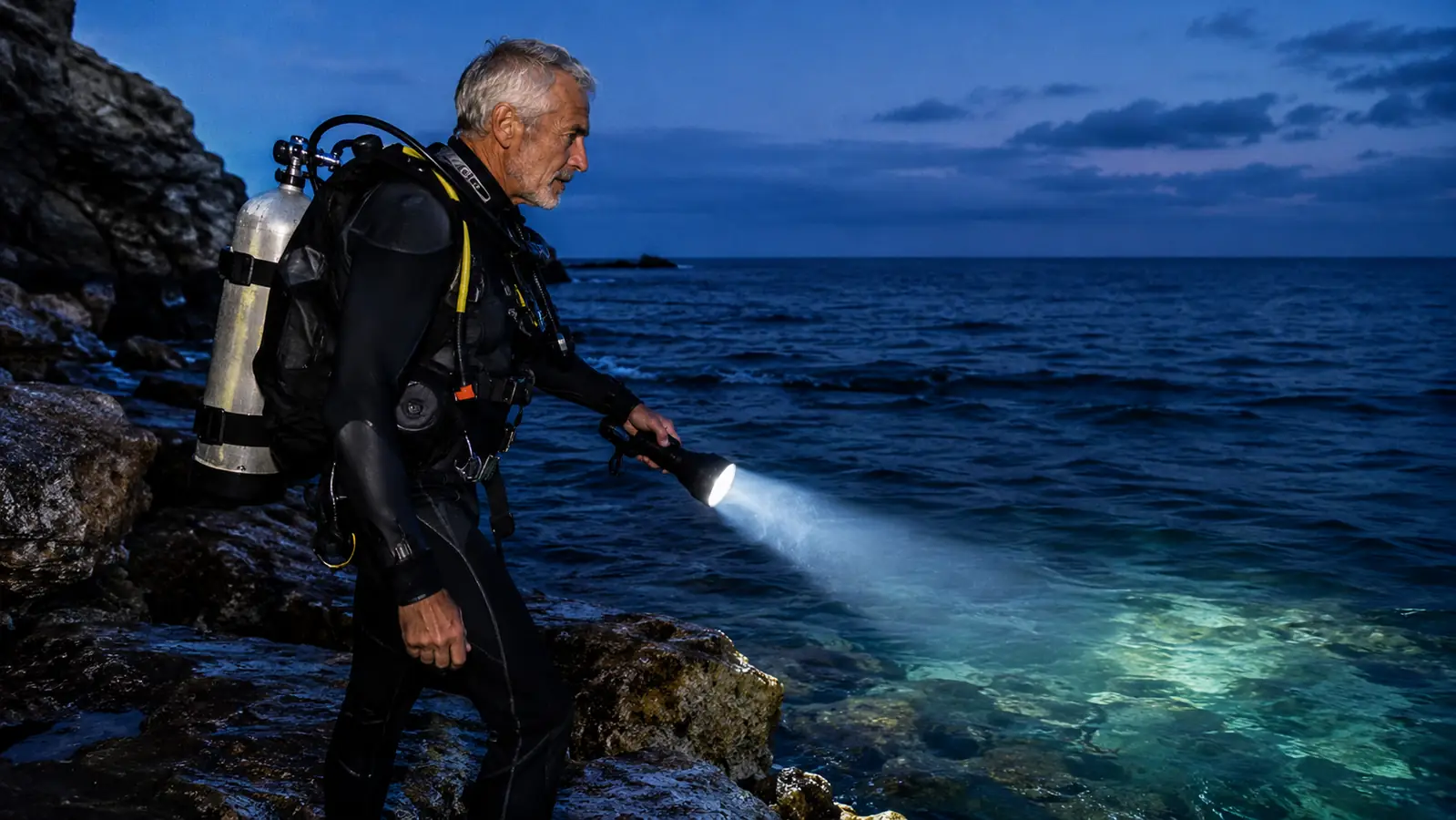
A dive light is the piece of gear nobody puts on the packing list until the first night dive. Mine was a borrowed plastic light from the club. About twenty minutes into a guided night charter it went dim, then it went out, and I finished that dive on Cal's spare, following his beam like a man walking a dark hallway. I swore I would not do that again.
Eighteen months ago my old mesh bag split on the dock and I rebuilt the whole kit in one go. The light I bought to replace the borrowed one was the Genwiss dive light, the GN-T42. It has been on every dive since: night charters, ledge hunting in daylight, and a lot of hours over sand. It is not a perfect light and I will get to that. Here are ten reasons the Genwiss earns the space in the bag, in the order I actually noticed them.
The light that ended the borrowing for good
Rechargeable lithium-ion, five modes, aluminum body. Battery and USB charger come in the box. Mine has about 90 salt water dives on it and still comes up dry inside.
Amazon Check Today's Price on Amazon →It turns a night dive from a swim into a dive
Without a light you are not diving at night, you are swimming in the dark and feeling for the anchor line. With one, a flat sand bottom in 30 feet becomes a place you can actually read. I run high for the first two or three minutes to get oriented and find the group, then drop it down. That first sweep of the beam is the difference between a nervous hour and a good one.
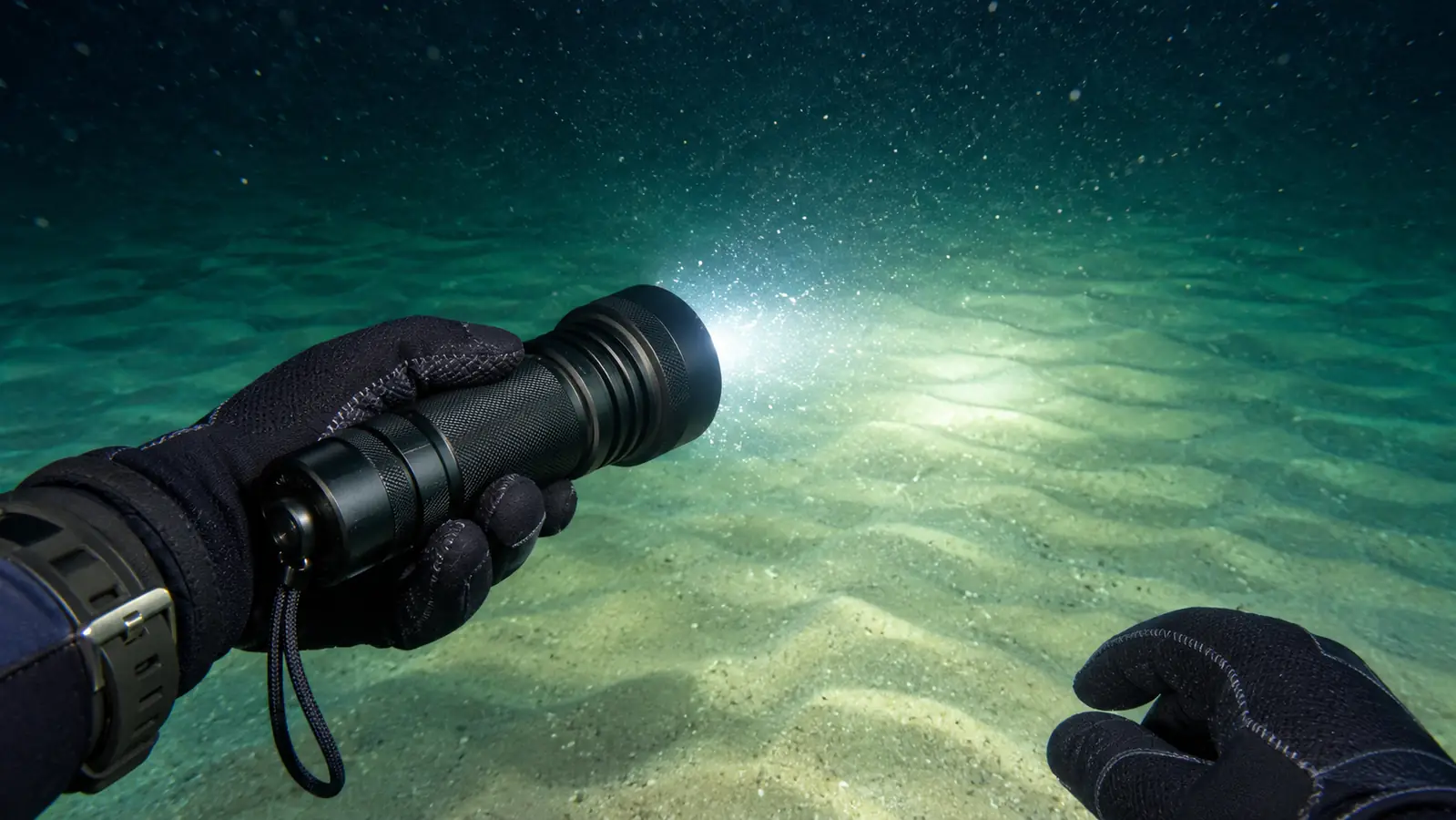
It gets under the ledges where the fish and the lost stuff actually are
In daylight a ledge at 40 feet looks like a black slot cut into the reef. Everything worth seeing is back in that slot, and so is half of what people drop. High mode on the Genwiss reaches into it and you can see the inside of the overhang without putting your hands or your fins anywhere near the coral. I use the light this way on almost every daytime dive, not just at night.
About 90 dives in and it is still on the battery that came in the box
The light is rechargeable lithium-ion and mine came with one battery and a charger. I top it off every few dives rather than every dive, and it has never quit on me underwater. Ninety dives is not a laboratory test, it is just a working count, but it is the count that matters to me. A light that dies at depth is worse than no light, because you planned around having one.
Five modes, and low gets used more than high
High, medium, low, strobe, SOS, cycled with the switch. The listing specs rate it at 1000 lumens on high, and in clear water at 30 feet that is more than you need. High washes out the bottom and ruins your night vision. Most of my dives run on low: checking a gauge, looking at a compass, following a line back to the boat. Save high for the sweep and for the ledges.
Strobe and SOS are there for the day you hope never comes
I have never used either one in anger. That is the point of them. A strobe on the surface at dusk is visible a long way off, and an SOS flash pattern says what you need it to say without you shouting into wind. I would rather carry two modes I never touch than need one and not have it. Test them on the kitchen table, not in the water.
The aluminum body takes the knocks a borrowed plastic light will not
The Genwiss is aluminum alloy with an anti-abrasive coating and it is built to be shock proof. Mine has been dropped on a fiberglass deck, rolled around the cargo area of the 4Runner, and set down hard on limestone more times than I can count. The finish has a few honest scratches. Nothing has cracked, nothing has rattled loose, and the switch still clicks the way it did the first week.
It has not leaked at the depths I actually dive
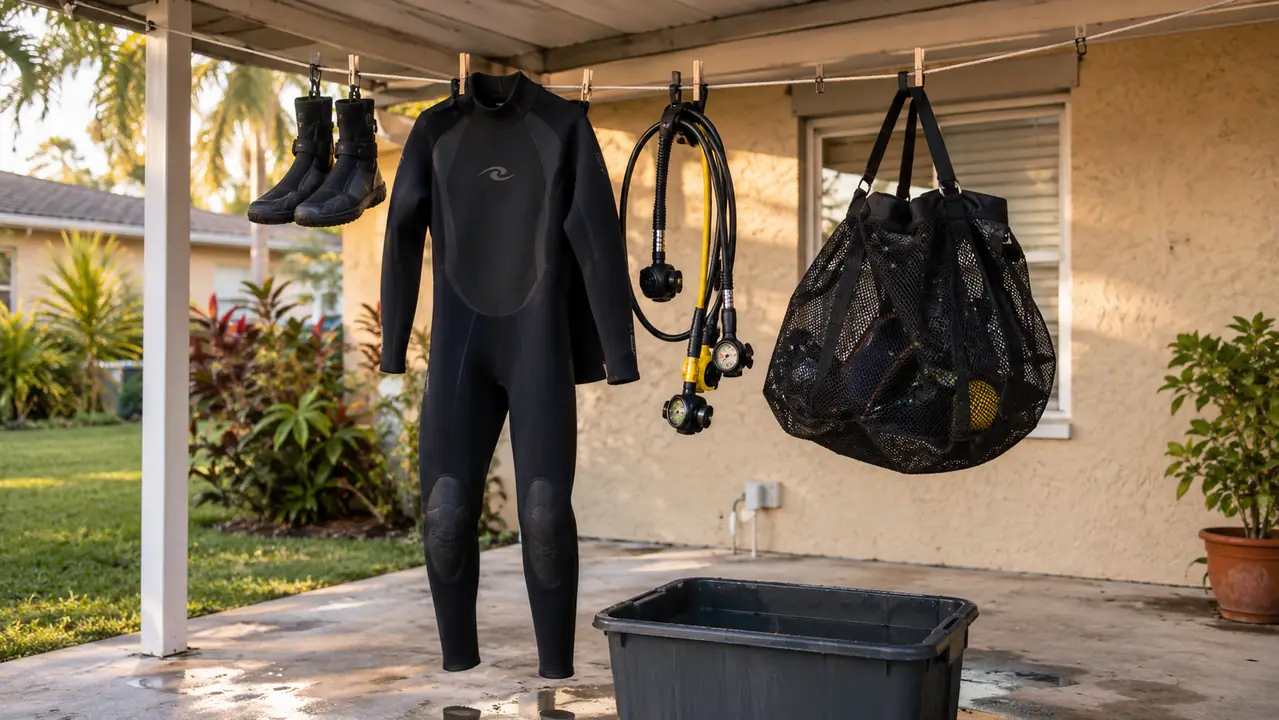
My diving runs 20 to 60 feet and stays there. That light has been wet on every one of those dives, rinsed in the tub under the carport after each trip, and there has never been water in the head or fog behind the lens. I cannot tell you how it behaves past 100 feet because I do not go there and I will not pretend otherwise. Buy it for the diving you do.
The charger plugs into the 4Runner and finishes before I get home
It ships with a USB charger, so it runs off the port in the 4Runner or a wall block at the house. I plug it in on the ride back from the ramp and it is done well before I have the gear hanging on the line. No hunting for a special cradle, no proprietary dock to lose. That sounds small until you have owned a light with a dock you could not find on a Sunday morning.
It rides in the mesh bag and dries on the line without fuss
It weighs 331 grams, which is nothing in a duffle that already holds fins, boots, a wetsuit and a detector. The Genwiss goes in the mesh bag, comes out, gets rinsed, and hangs on the clothesline under the carport with everything else. I do not baby it and I do not store it in a case. Gear that survives being treated like gear is worth more to me than gear that needs a schedule.
It ends the borrowing, which is the real reason to own one
Every charter boat has somebody who forgot theirs, and for years that somebody was often me. Now the Genwiss rides in my bag with a spare battery in the dry box. Dee does not dive and Cal carries his own, so this is not about them. It is about the fact that a light you own is a dive you get to take. The borrowed one already failed me once.
What I'd Skip
I would skip running high for a whole dive. It burns your night vision, it washes out the sand, and it makes every particle in the water look like weather. Use it in bursts. I would also skip judging any light by the biggest number printed on the box, because beam quality and a switch you can work with cold hands matter more than the headline figure. And skip the idea that one light is a safety plan. It is a tool. Your plan is your buddy, your gas, and knowing where the boat is. As for what the Genwiss is not: it is a handheld light for looking at things, not a video light for lighting a whole scene, so if you are shooting footage you want something built for that. It is also one more thing to charge and one more thing to rinse, and I would rather tell you that than pretend the upkeep is zero.
About 90 dives on the battery that came in the box, and no water inside the head. That is the part I care about.
Forty feet down at night is a bad place to find out your light is dim
Five modes, 1000 lumens on high, aluminum body, battery and USB charger in the box. Rinse it, hang it, charge it in the 4Runner. Mine has done that about 90 times.
Amazon Check Today's Price on Amazon →