A long snorkel is not a sprint and it is not a dive. It is an hour of steady surface work in three to eight feet of water, inside the marked swim area, parallel to the beach, with your face down and your legs doing all of the labor. Most people who cut a swim short do not cut it short because they are cold. They cut it short because their legs quit. The fin gets blamed for that, and now and then the fin deserves it, but more often the kick is the problem and the fin is only carrying the message.
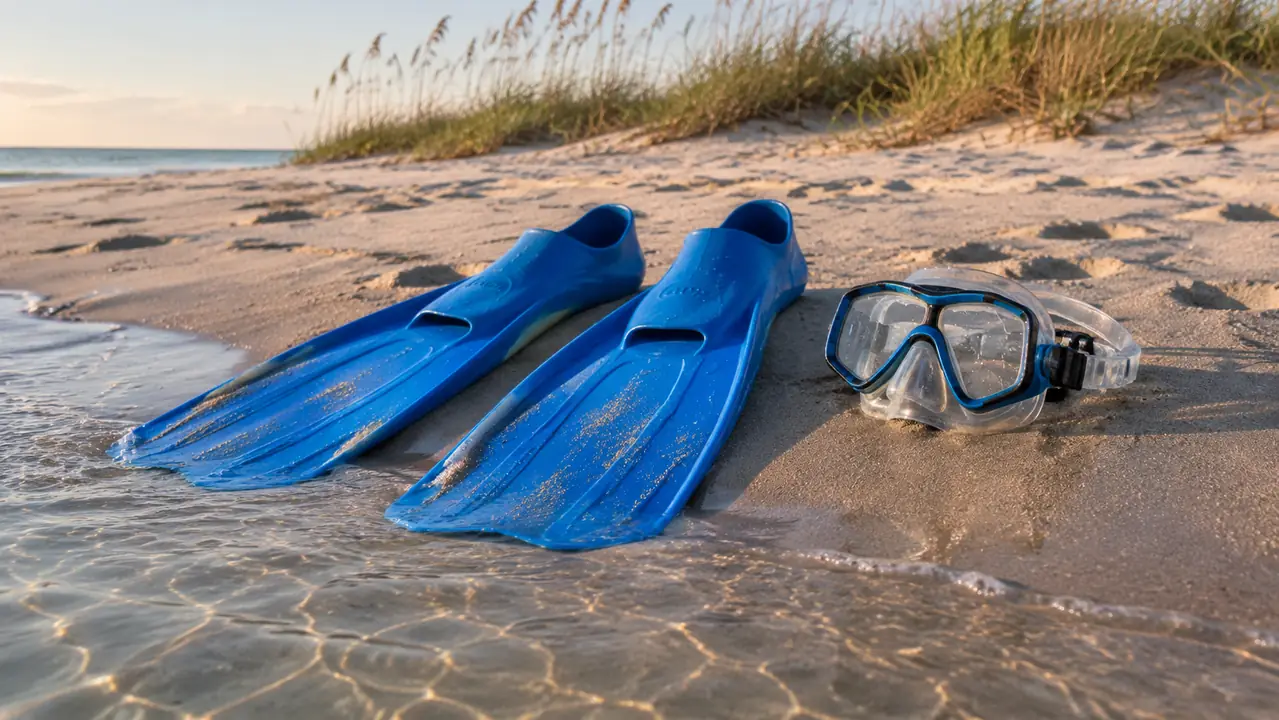
I have been swimming that marked area off Tavernier for years. For most of them I used my old long open heel fins with the buckle straps, the 26 inch pair that now hangs as a spare in the carport. Two summers ago I bought a pair of Cressi Rondinella fins, blue, full foot pocket, soft polypropylene blade, and moved my long summer swims onto those. About 40 outings later I had learned something that thirty-three years of marine electrical work should have taught me sooner. The motor is not the whole system. How you drive it matters as much as what it is. Cressi builds the Rondinella for snorkeling and swimming rather than for fighting current, and the day I stopped asking it to fight current is the day my legs stopped quitting.
Forty summer swims of trial and error, in one pair of fins
The Cressi Rondinella is a light full foot fin with a soft polypropylene blade, a heel pull-tab and a two-year limited warranty. It is the pair I do my long surface swims in, from May through September.
Amazon Check Today's Price on Amazon →Step 1: Get the Fit Right Before You Touch Your Kick
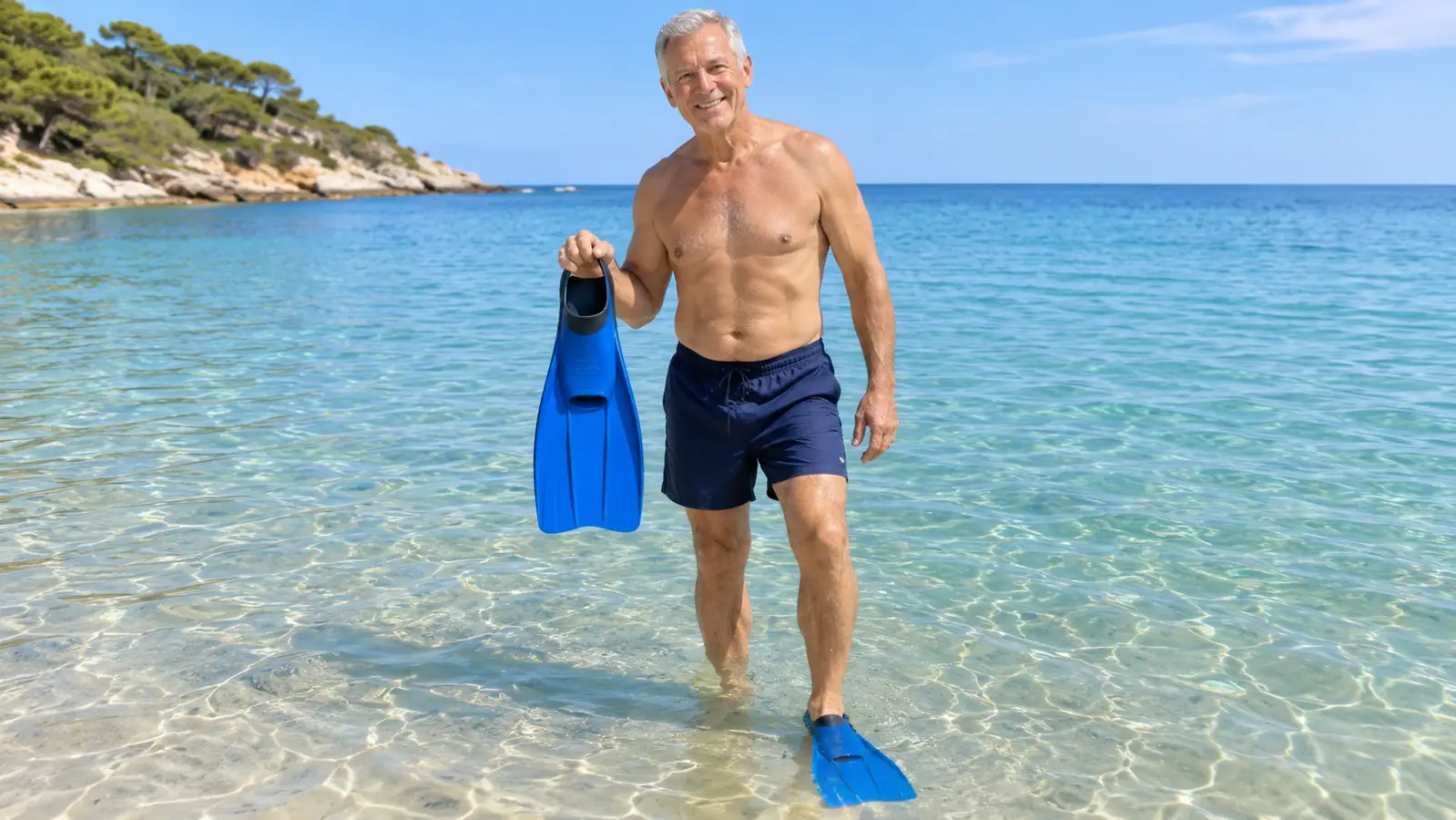
A full foot fin is a different animal from an open heel fin, and the difference is not marketing. There is no strap. There is no notch to open or close. The Cressi Rondinella is a pull-on fin, sized by your shoe size, and it either fits your foot or it does not. On my old pair I could open the strap a notch when my heel started complaining. On these I cannot. That sounds like a limitation, and it is one, but it also forces you to solve the fit problem once instead of fiddling with it every hundred yards.
Put the fin on barefoot and stand on something flat. Your toes should be flat, not curled under. Your heel should sit down in the pocket, not ride up over the edge. The heel pull-tab is there to get you out of the fin, not to stretch it onto your foot. If the pocket is lifting your heel, every kick you take is being driven by your ankle instead of your leg, and your ankle will file a complaint long before your thigh does.
Check the size chart against your bare foot before you order, because a full foot fin has no strap to make up the difference. Sizing by shoe size is the only adjustment these fins offer, so getting it wrong is not a small error. If you have to buy from a listing, buy from one that takes returns, and swim a few laps in the shallows before you commit. Never wear socks under them, and do not try to make them work over a dive boot. That is not what a full foot pocket is built for and it will not end well.
Step 2: Shrink Your Kick Until It Feels Too Small
The first thing most new snorkelers do with a long blade is bicycle. It is instinct. Knees bend, the kick gets deep, and the legs start churning water instead of pushing it. On a stiff fin in a current that will at least get you somewhere. On a soft blade it will wear you out and move you barely at all, because a blade that flexes easily cannot push hard against a deep kick. It folds and comes back.
What worked for me was making the kick smaller than felt natural. Keep the knees mostly straight. Let the motion come from the hip, with a short travel at the ankle and no more. The ankles stay loose and the blade does the rest. It feels like you are hardly kicking. That is the point. On a soft polypropylene blade, small and steady beats big and dramatic every time.
Give it fifteen minutes before you decide it is not working. My first outing in the Rondinella I thought I had bought a fin that was too soft for me. What I had actually bought was a fin that was too soft for the kick I was using. Once I shortened the stroke the fin woke up. It has been that way on every one of the roughly 40 outings since.
I keep a rough count when I swim. I would rather make thirty slow strokes a minute for an hour than sixty fast ones for twenty minutes. That is not a training rule, it is a rule about finishing. Fins have no redline and they will not warn you before your calves do.
Step 3: Slow the Cadence and Let the Blade Finish
A flexible blade needs a moment to load and a moment to unload. If you beat at it, the blade never gets either. You spend the whole swim flipping a piece of plastic back and forth and none of the energy goes into the water behind you.
The fix is to count. Pick a slow count in your head, something like one, two, and let each leg go through the full stroke over that beat. When you feel the blade go slack at the end of a stroke, do not rush to start the next one. Let it sit for half a second. That half second of glide is the part of the stroke that actually moves you, and it is the part everyone skips.
There is a second reason to slow down on a soft blade. When you beat fast, the fin stays up near the surface and the blade breaks the water instead of moving through it. On a long surface swim with your face down, that is exactly what you want to avoid. Keep the blade a foot or so under the surface and let it travel. If you can hear it slapping, it is riding too high.
You will know it is right when the swim gets quiet. My old fins made noise on every stroke. These do not, once you slow down enough for the blade to work. Quiet is not a style preference in the water. Quiet means the water is going backward instead of sideways.
Step 4: Trim Out So the Fins Push Instead of Plow
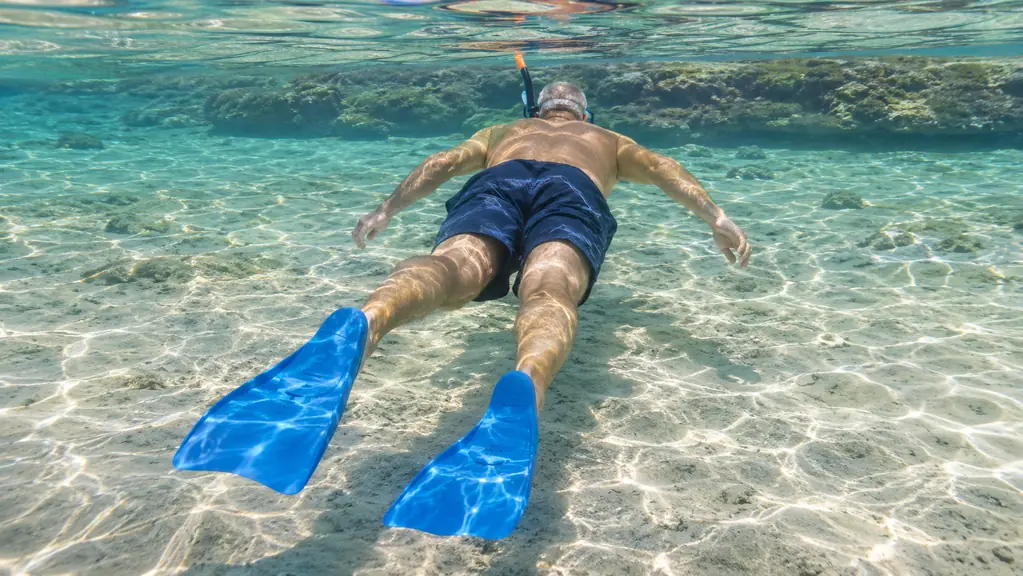
A fin can only push in the direction your body lets it. If your hips are down and your head is up, you are dragging a torso through the water at an angle and your legs are working to hold you up rather than to move you forward. Fins do not fix that. They just make you tired at a worse angle.
Get your hips up near the surface, your head in line with your spine, and your hands still. Still hands matter more than people think. Sculling with your arms while your legs kick is two nervous systems arguing with each other. I put my hands at my sides or fold them under my chest and leave them there.
I check my trim the same way every time. I stop kicking for five seconds and see what my body does. If my feet sink the moment I stop, my head is too high and my hips are dragging. If I stay roughly level, I am where I want to be and the fins are pushing instead of lifting.
This is the step that took me the longest, and it is the one that made the biggest difference on long swims. Twenty minutes of good trim beats an hour of bad trim, and the fins get the credit either way.
After about an hour the Rondinella rubs the back of both heels. That is not a defect. That is a clock, and I turn around when it goes off.
Step 5: Set Your Turnaround Before Your Heels Do
Barefoot fins have a distance where comfort ends, and the Rondinella's is about an hour. Right around the sixty minute mark the back of both heels starts to rub. It is not a blister and at that point it is not a fit problem, it is bare skin against a foot pocket for a solid hour.
So I do not swim until my heels tell me to stop. I pick a landmark, swim out to it, and turn around on the clock rather than on the pain. Most of my outings run 45 minutes to an hour, and I would rather come in at 50 minutes feeling good than at 75 minutes with two hot spots. Setting the turnaround early also means you swim the second half with something left, which is the whole reason the second half is pleasant.
One more thing about the turnaround. If the tide is running and you are swimming into it, turn around immediately. I met a running tide once in these fins, turned around at once, and came in. That is the only time it has happened. A soft blade like this one is made for still water inside the swim area, and I do not ask it for more than that.
What Else Helps
The fins are one part of a system that either works together or fights itself. My mask is the other part I notice most on a long surface swim. A mask that seeps makes you stop, lift your head and fiddle with it, and every one of those stops breaks the rhythm you just spent twenty minutes building. Fit the mask before you worry about the fins.
Rinsing matters more here in Florida than it does in a lot of places, because the sun does more damage to gear than the salt does. Mine come home, get a rinse in the tub under the carport, and lie flat in the back of the 4Runner to dry. They stay out of direct sun when they can. A full foot fin has no strap to rot and no buckle to corrode, which is one reason I like them for beach swimming, but a foot pocket left full of salt water and baking in the sun will stiffen up on you.
Keep them honest about their job, too. The Rondinella is a snorkeling and swimming fin. I do not wear it on a boat and I do not wear it on scuba. My scuba diving happens in boots and open heel fins, and the difference is not snobbery, it is that a full foot pocket and a soft blade are built for surface swimming and that is where they are good. Use them for what they are and they hold up. Mine are two summers in and still lie flat in the back of the 4Runner.
Legs respond to boring things. A fin will not do all the work. A slow kick and a shorter first swim did more for my legs than any piece of gear. That is not the answer most people want, and it is the one that showed up in the water.
Five changes, one pair of fins, and a swim that stops hurting
The Cressi Rondinella is a light Italian made full foot fin with a soft polypropylene blade, a heel pull-tab and a two-year limited warranty. It is what I swim the marked area in, May through September.
Amazon Check Today's Price on Amazon →